About Gastrolobium bilobum R.Br.
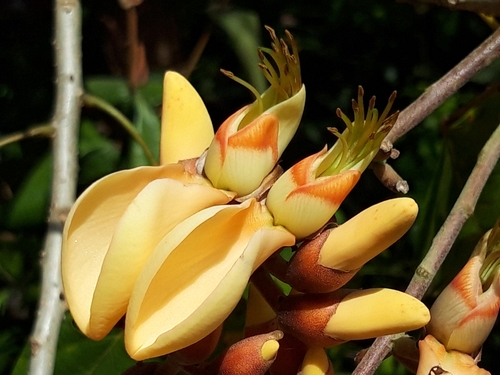
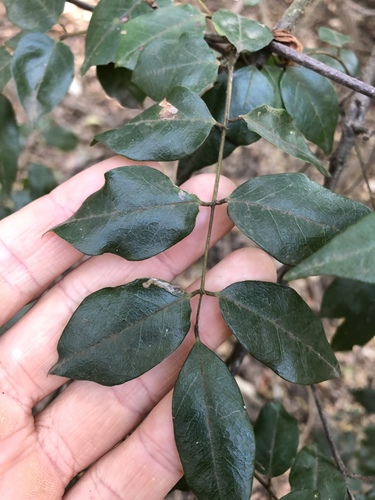
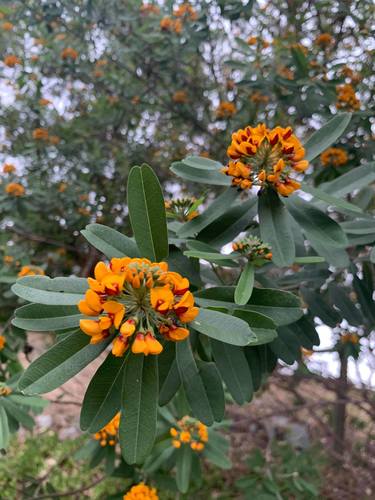
Gastrolobium bilobum, commonly known as heart-leaved poison, is a bushy shrub endemic to south-west Western Australia. It belongs to the family Fabaceae, and is probably the most toxic species in the genus Gastrolobium, containing high levels of monofluoroacetic acid. This shrub can grow up to 4 metres tall. Between late winter and early summer (August to December in Australia), it produces yellow-orange pea-shaped flowers. These flowers have a central yellow area surrounded by a red band, and a maroon keel. Its leaves are cuneiform, obovate, or elliptic. The species was first formally described by botanist Robert Brown, and the description was published in Hortus Kew in 1811. Starting in the nineteenth century, this Gastrolobium species was written about in local press, and this coverage continued into the early and mid twentieth century because of its impacts on agriculture. It has also been analyzed as part of Australian nucleotide and protein sequencing projects. Its common vernacular name has been in use for over 140 years, but it is misleading: the plant's leaves are wedge-shaped, not heart-shaped as the name suggests. It grows in the south-west of Western Australia, most commonly on granite-based soils on peaks, granite outcrops, and alongside rivers. It is found in association with karri forest, marri forest, mallee, and heathland habitats.