About Garberia heterophylla (Bartram) Merr. & R.M.Harper
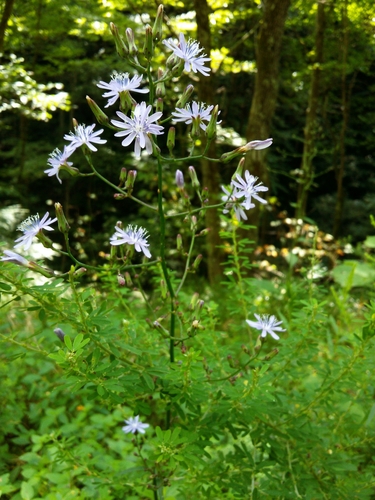
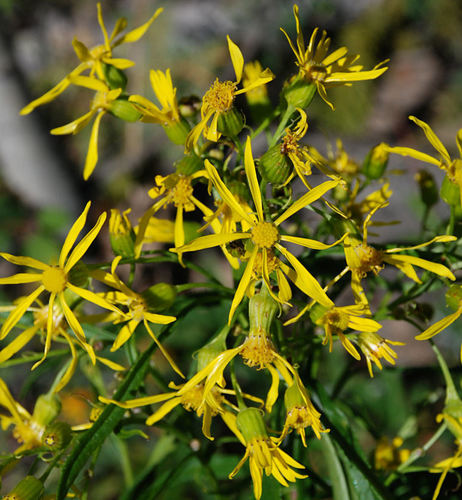
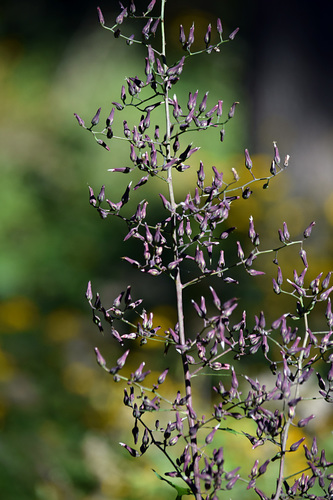
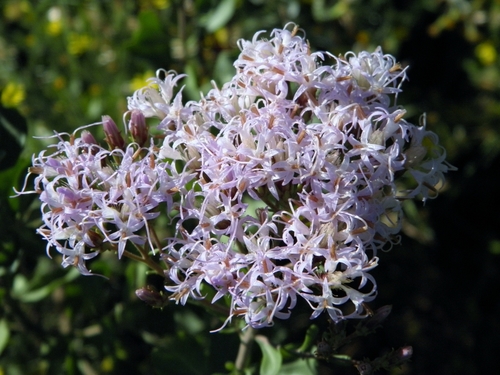
Garberia heterophylla (Bartram) Merr. & R.M.Harper is a shrub that reaches 1 to 2.5 meters in height, with erect, branching stems. New branches are glandular, with a powdery or lightly hairy texture, and become grooved when dry. In young individuals, leaves near the base of the stem may be oppositely arranged, but mature branches mostly bear alternate leaves. The gray-green leaf blades are glandular; when new, they range from sticky to powdery, and grow up to 3.5 centimeters long. Cylindrical flower heads, reaching up to around half a centimeter wide, are arranged in open inflorescences. Each flower head typically holds five aromatic pink or purple disc florets, each up to one centimeter long. The floret tips expand into five lobes, and narrow to threadlike style branches extend out from the florets. The fruit is a rough-textured, ribbed cypsela with a pappus made up of many bristles. Fruits stay attached to the plant, and their long brown pappi make the shrub noticeable among other plants during winter. These pappi also allow wind dispersal of the plant's seeds. This species grows in Florida scrub and related habitat types, including flatwoods, coastal dunes, ridges, hills, and prairie found alongside oaks and pines such as sand pine. It grows in dry, sandy soils with low organic matter content. It can flower almost year-round, with its main flowering season occurring in fall. Garberia heterophylla produces nectar that supports many native bee species: Agapostemon splendens, Anthidiellum notatum, Augochlora pura, Augochlorella aurata, Augochloropsis metallica, Bombus impatiens, Coelioxys mexicana, Coelioxys sayi, Colletes mandibularis, Dialictus miniatulus, Dialictus nymphalis, Dialictus placidensis, Epeolus carolinus, Megachile mendica, Megachile pruina, Megachile xylocopoides, and Xylocopa virginica.