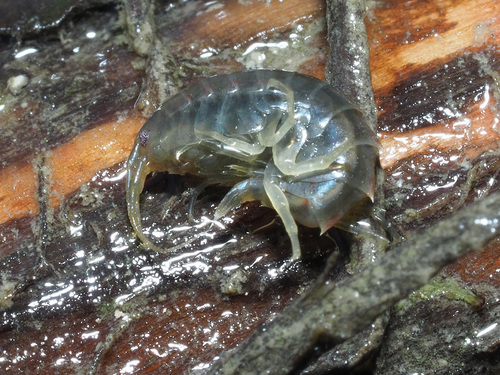
About Gammarus roeselii Gervais, 1835
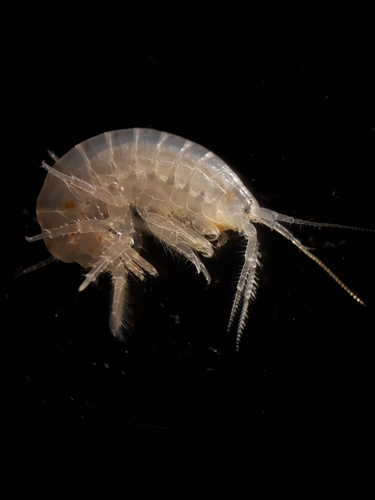
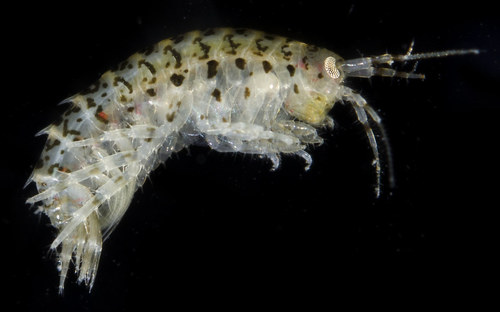
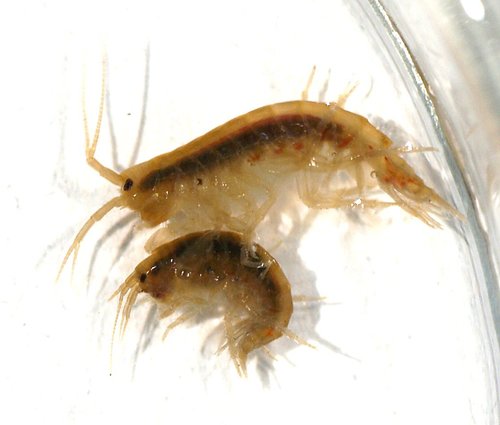
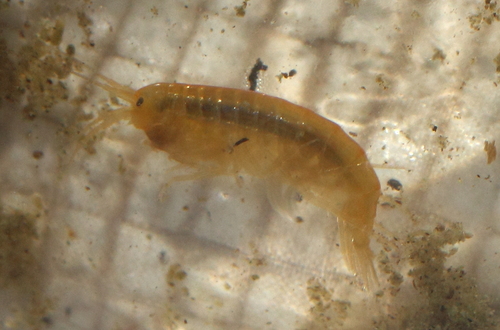
Adult male Gammarus roeselii can reach a maximum length of 22 mm, while females are smaller than males. This species can be distinguished from many other common amphipods by the spines present on its fifth through seventh pereiopods. Individual body color ranges from green to brown, gray, or yellow; some individuals have reddish markings on sections of their carapace.
Gammarus roeselii is originally from the Balkan region of Europe. It likely colonized the Pannonian Basin as a glacial refuge before expanding into central and western Europe 10,000 years ago. Today it is widespread across continental Europe. It has been present in France since at least the mid-1800s, and is classified as a well-established non-native species in central, northern, and western Europe. It still continues to expand its range, with new colonizations of river basins in Italy recorded in the 2010s. Even within the same geographic area, such as France, some sources label the species as invasive while others label it as naturalized.
Gammarus roeselii lives in freshwater habitats including ponds, lakes, and streams. It occurs in higher abundance at warmer water temperatures than some amphipod species that share its range. The largest populations are found in rivers with moderate water flow and abundant aquatic plants that provide shelter.
Several traits support Gammarus roeselii's success as an invasive species: a high reproductive rate, tolerance to variable environmental conditions, and unique anti-predation characteristics. While the exact mechanism of its invasion is still unknown, it is most likely linked to human activities such as aquaculture and fish repopulation projects. Gammarus roeselii was historically used as a food source in commercial fisheries, so it is possible that escaped individuals founded new populations in uninvaded areas. Gammarus roeselii can easily attach its body to substrates using spines on its metasomes. It is also able to survive outside of water for multiple days at a time, which makes overland transfer between water bodies possible.