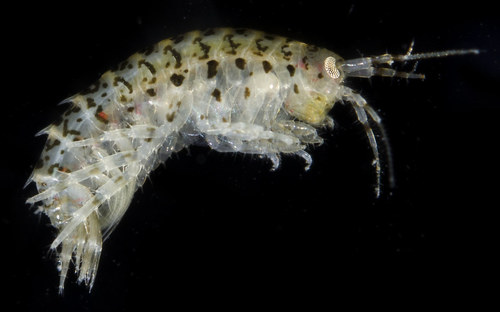
About Gammarus mucronatus Say, 1818
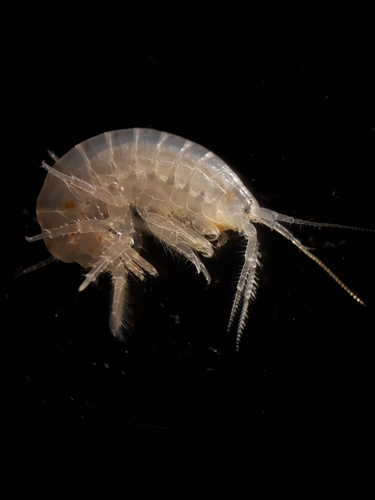
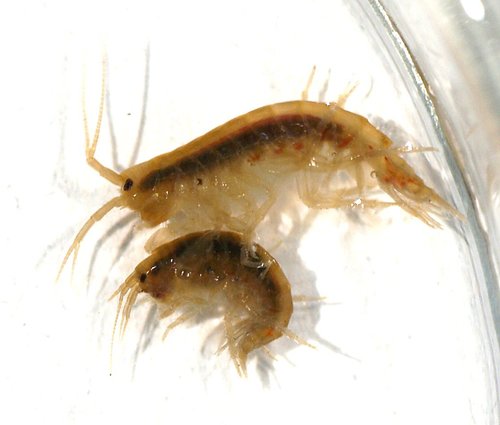
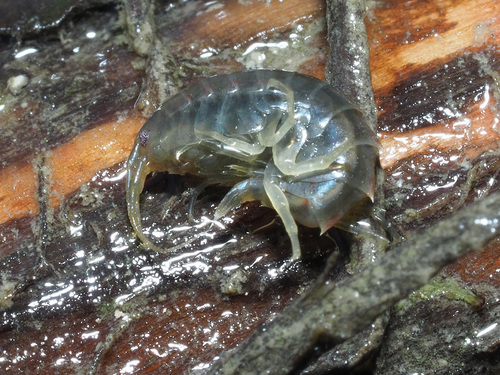
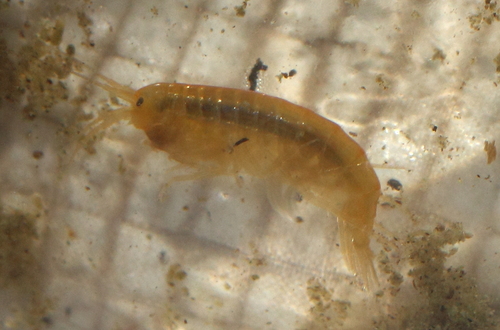
Gammarus mucronatus Say, 1818 is a relatively small amphipod, with body length ranging between 3.5 and 6.5 mm. This size range generally stays consistent across different habitats, though a reduction in size from winter to summer has been observed for both ovigerous and mature females. Like all amphipods, G. mucronatus lacks a carapace and has a laterally compressed body, a shared derived trait for the group. Gammarus mucronatus is eurytopic, meaning it can tolerate a broad range of ecological conditions. For example, it can withstand a wide range of salinity from 4 to 35‰. It is generally found in shallow coastal waters along the North American Atlantic seaboard and the Gulf of Mexico, where it occurs in a very diverse set of habitats: algae, seagrass beds, sponges, spartina marshes, soft bottoms with shells or cobbles, oyster bars, and open beaches. It is a benthic organism, meaning it lives at the bottom of aquatic environments. Gammarus mucronatus has a varied diet: it is primarily detritivorous, but also feeds on microalgae and macroalgae, and may consume some other macrofauna. It does not produce enzymes that can break down structural plant polysaccharides, but it can break down glycosidic linkages in smaller molecules, including starch and laminarin. In seagrass beds, G. mucronatus fills multiple distinct ecological roles: it contributes to decomposition, and grazes on epiphytes that grow on seagrass. Gammarus mucronatus is preyed on by large decapod crustaceans, and juvenile and adult fish, including the striped killifish Fundulus majalis. Predation pressure on G. mucronatus depends on the community composition of its habitat: the presence of macroalgae reduces predation of G. mucronatus by fish, which directly has a positive effect on G. mucronatus population size and can contribute to alternate stable states.