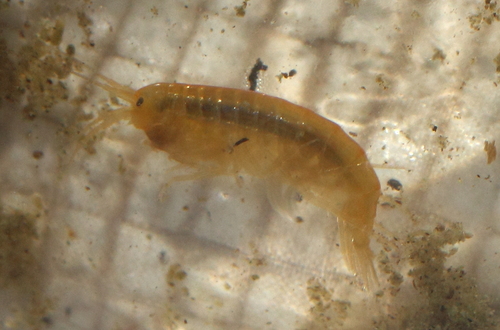
About Gammarus lacustris G.O.Sars, 1863
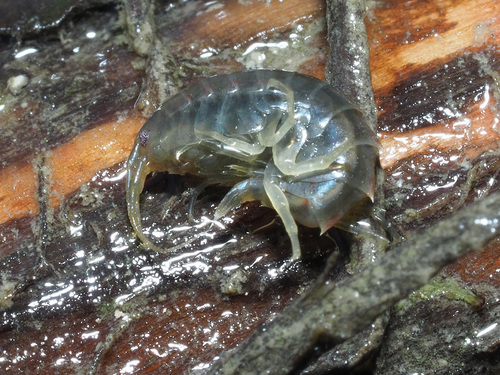
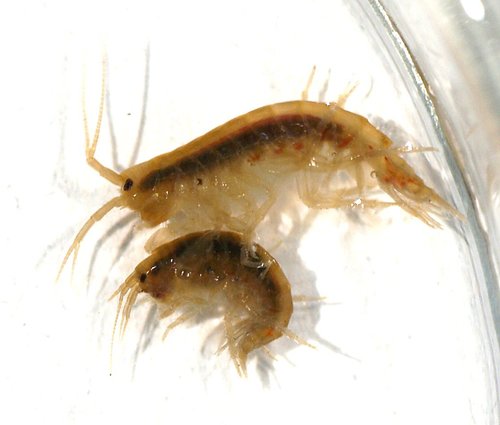
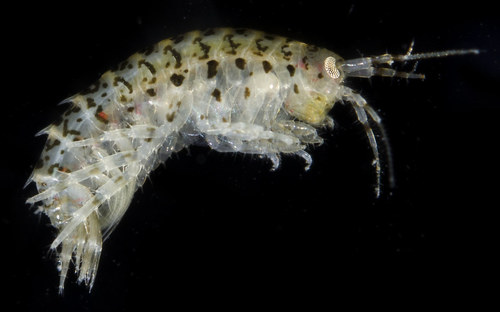
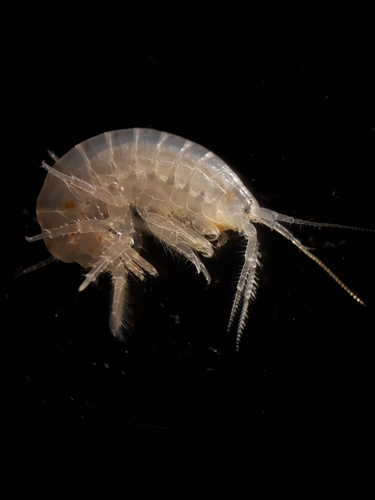
Gammarus lacustris G.O.Sars, 1863 is a semi-transparent amphipod crustacean that does not have a webbed tail. Its body color can be colorless, brown, reddish, or bluish, and this variation depends on its local environment. It has seven abdominal segments, a fused cephalothorax, and two pairs of antennae. Unlike many other crustaceans, all amphipods (including this species) do not have a carapace, and have laterally compressed bodies. Gammarus species (gammarids) are commonly called scuds or sideswimmers, and G. lacustris looks similar to a freshwater shrimp. Gammarus lacustris has been recorded in northwestern Europe, Russia, and North America, but its full precise range has not been determined yet. It lives in shallow or deep lakes and slow-moving rivers. It is more abundant in lakes that have no fish than in lakes that contain fish. Within the water column, its distribution follows the thermocline. Female Gammarus lacustris carry their eggs in a brood pouch on the ventral side of their body. Individuals living at higher elevations typically produce fewer but larger eggs than individuals living at lower elevations. This species goes through several molts over its life, and juvenile individuals resemble adults. Gammarus lacustris fills an important ecological role in the freshwater ecosystems it inhabits. It is a detritivore, and may also eat algae, most commonly diatoms. It is classified as an indicator species for overall ecosystem health and stability. Gammarus lacustris can live in a wide variety of environments, from low-altitude calcium-rich lakes to high-altitude, cold, calcium-poor lakes. Its environment influences its biology: individuals at low altitudes are known to die after their first reproduction, while individuals in colder waters live to reproduce multiple times.