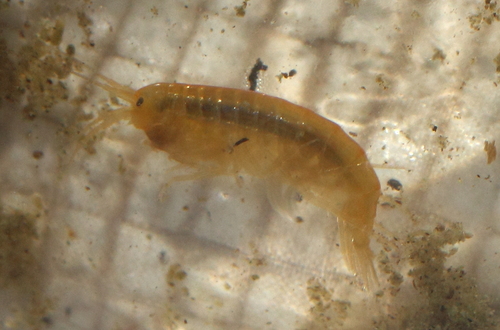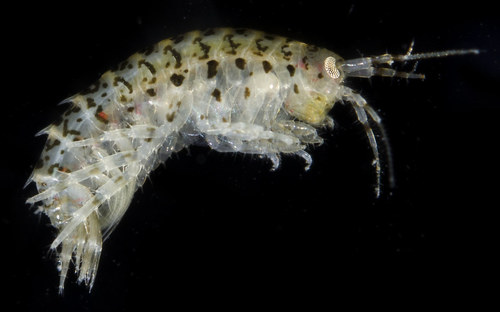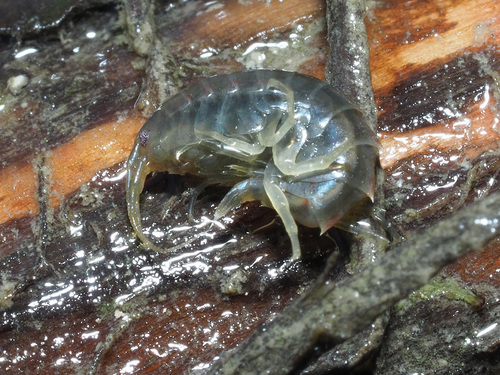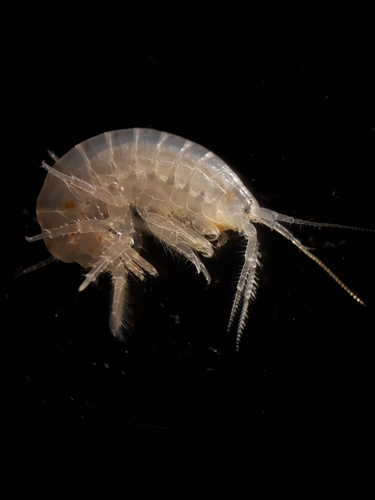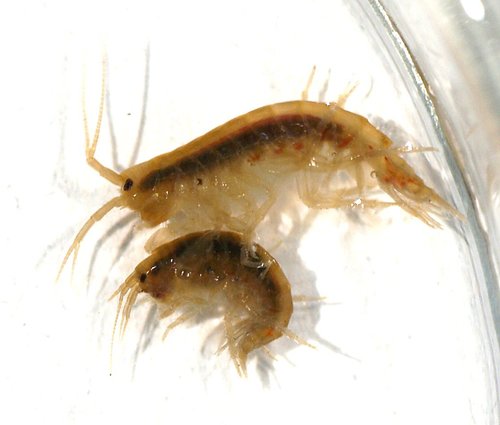
About Gammarus fossarum Koch, 1836
Gammarus fossarum Koch, 1836 is an amphipod species that goes through nine or ten moults of its exoskeleton before reaching sexual maturity. At birth, it weighs just 0.1 mg, and by adulthood individuals typically reach a wet weight of 5 to 7 mg. Most adults are between 4.5 and 10 mm in length; maximum recorded wet weights reach up to 41 mg for females and 61 mg for males. This species is widely distributed across central and southeastern Europe, with confirmed occurrences in France, Italy, Germany, Switzerland, Austria, Slovenia, Serbia, the Netherlands, Belgium, Hungary, Croatia, Albania, Bulgaria, and Bosnia and Herzegovina. It has also been detected outside its native range, with environmental DNA sampling confirming its presence in the United Kingdom in 2015. Originally Gammarus fossarum was classified as a single species based on morphological characteristics, but genetic and genomic research has uncovered hidden diversity within the taxon. Mitochondrial DNA studies first identified three distinct clades within central European populations, labelled types A, B, and C. More recent population genetic analyses covering the full distribution range of Gammarus fossarum show that the taxon is actually a species complex containing at least 80 cryptic species. These analyses identified at least six major clades: one in Central Western Europe (CWE), one in Central Eastern Europe (CEE), one in South Eastern Europe (SEE), one in France and Central Europe (CRA-CE-A), one in Eastern Europe (EE-Q), and one in Central Europe (CE-B). These clades diverged from each other at least 20 million years ago during the Miocene. Populations can show strong genetic differentiation even at regional and local scales, driven by genetic drift. Gammarus fossarum prefers flowing, well-oxygenated water, and is most often found in small to mid-sized streams, especially in hilly and mountainous regions. Local population densities can reach hundreds of individuals per square meter. It is an omnivorous species: it is well known for shredding leaf litter detritus that washes into streams from surrounding forests, but also feeds on other macroinvertebrates. In many areas, Gammarus fossarum lives alongside other amphipod species, and these species engage in intraguild predation. Gammarus fossarum itself is a common prey item for larger aquatic animals, such as fish. Before mating, male and female Gammarus fossarum form precopulatory pairs that move through the environment together. This pairing behavior lasts for several days, and both males and large females exhibit some form of mate choice. Gammarus fossarum is parasitized by a range of different taxa, including acanthocephalans. Gammarus fossarum is commonly used for bioassessment and ecotoxicology studies. Its survival, growth, reproduction, activity levels, physiology, and food consumption are all used as indicators to assess environmental conditions impacted by contaminants including acidity, nanoparticles, wastewater effluent, pesticides, and pharmaceuticals.