About Galerida magnirostris (Stephens, 1826)
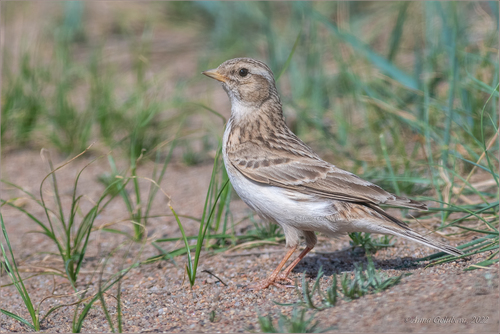
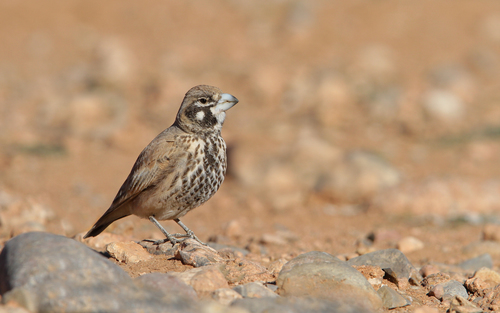
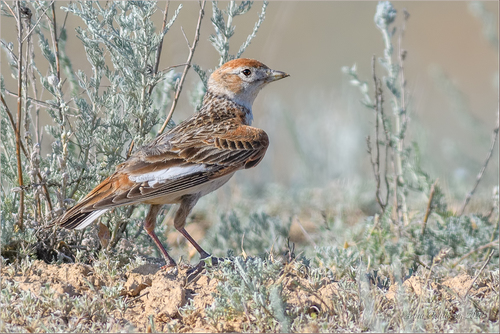
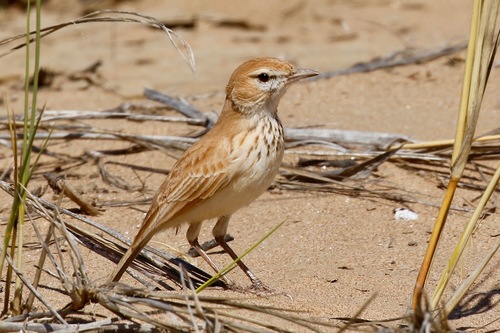
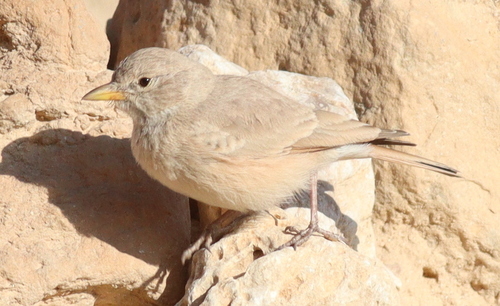
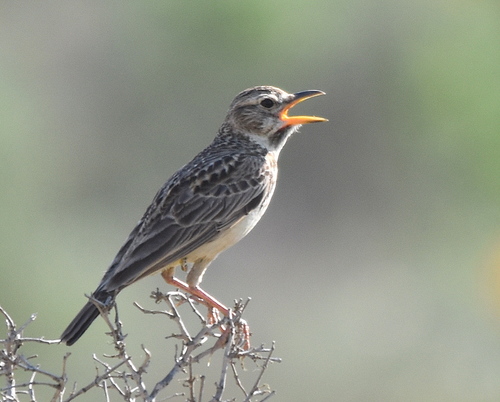
The large-billed lark, with the scientific name Galerida magnirostris (Stephens, 1826), measures 18 cm in total length. It has a relatively short tail, a thick bill with a yellow base on the lower mandible, streaked brown-grey upperparts, and a long white supercilium. Like other species in its genus, it possesses a crest that can be raised when displaying or reacting to alarm. Its underparts are cream-coloured, with heavy dark streaking concentrated on the breast. This species can be distinguished from all other African larks by its heavy, two-coloured bill. It is a very vocal species, and its call is a soft creaking "treeeeleeeeleee".
The large-billed lark is a resident breeding species found in southern South Africa, Lesotho, and southernmost Namibia. Its natural habitats include fynbos, karoo scrub, and mountain grassland. It also occurs in cultivated and fallow agricultural land.
Like other larks, the large-billed lark nests on the ground. It feeds on seeds and insects, with insects making up a particularly important part of its diet during the breeding season.