About Galerella pulverulenta (Wagner, 1839)
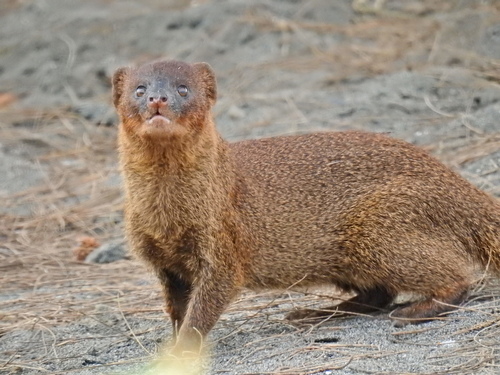
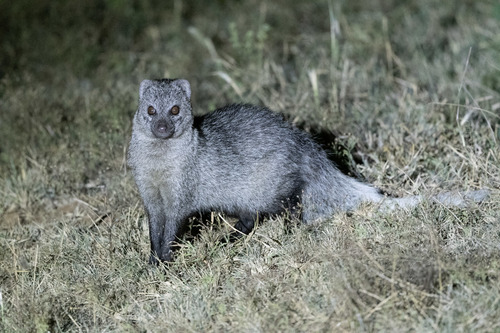
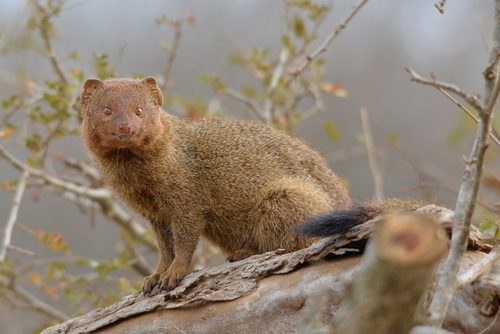
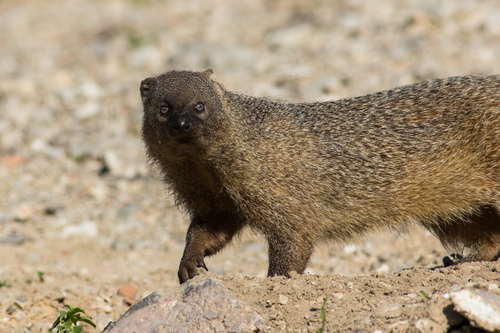
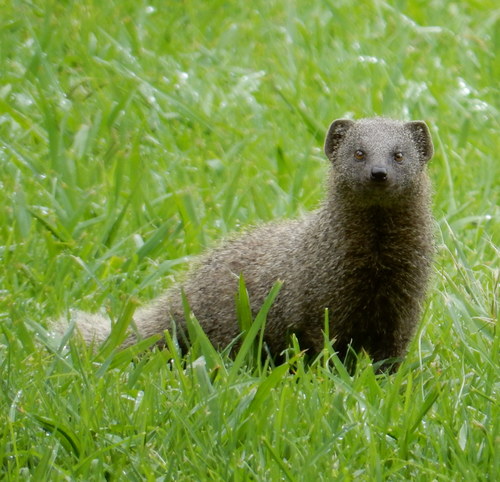
The Cape grey mongoose, also called the small grey mongoose, is scientifically known as Galerella pulverulenta (Wagner, 1839), and was previously classified under the synonym Herpestes pulverulentus. It is a small mammal native to South Africa, Lesotho, and southern Namibia. Until a few decades ago, this species was thought to be endemic to the Cape Province. Scientists now know it occurs across most of the remaining area of South Africa, and extends west and north as far as southern Angola. It remains unclear how continuous this species' current range is, and how much of its wider current occurrence is the result of an actual expansion of its range. In areas where the Cape grey mongoose is established, population density ranges from one individual per 60 hectares to one individual per two hectares. This mongoose inhabits macchia-type fynbos vegetation, semi-desert Karoo scrub, thicket, and forest. It is not found in the grassland biome. Cape grey mongooses often live in close proximity to humans, frequently taking shelter under the floors of outbuildings, and can survive successfully on the edges of suburban areas. Individuals that have become habituated to human presence can tolerate being approached closely. Litters of 1 to 3 pups are born between August and December. Newborn litters are hidden in burrows, rock crevices, or tree hollows. Pups are born fully furred, but their eyes and ears are closed at birth; these structures do not open until around two weeks after birth. Young mongooses stay in the breeding burrow until they are fully weaned, and leave once they are capable of living independently.