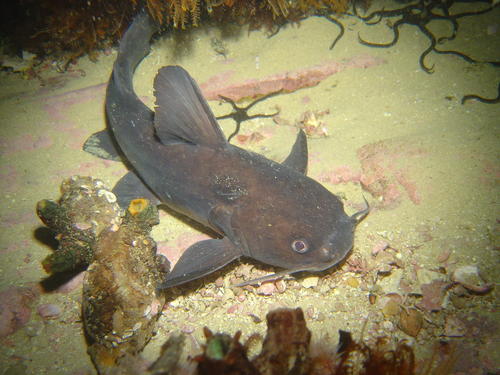
About Galeichthys feliceps Valenciennes, 1840
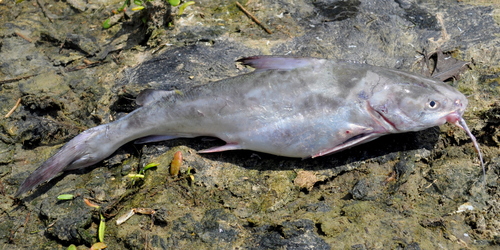
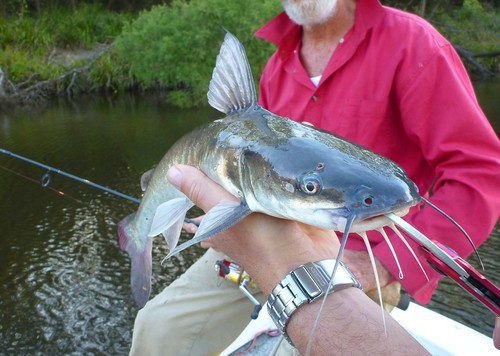
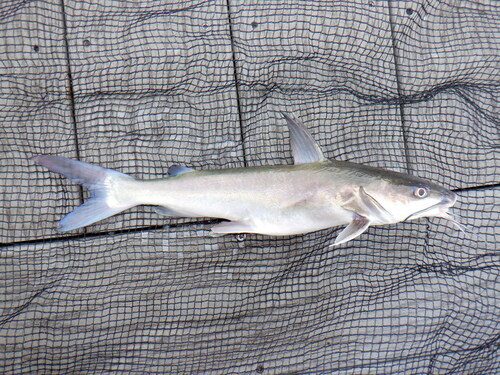
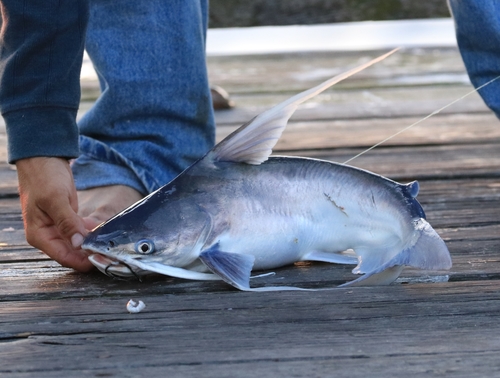
Galeichthys feliceps, known by the common names white sea catfish, sea barbel, white baggar, and white barbel, is a species of sea catfish. It lives in coastal waters and estuaries, found on muddy bottoms at depths between 1 and 120 meters, and gathers in large shoals. Its confirmed range extends from Namibia to South Africa; there are questionable sighting records from Madagascar and Mozambique in Africa, and from the United States and Mexico in North America. The species has brown, grey, or greenish-brown coloration on its upperparts, and paler coloring on its underside. Most individuals reach a total length of 35 cm, but some can grow to 55 cm. The largest recorded specimen, caught in South Africa, weighed 3.8 kg. Like all other members of its family, the white sea catfish is a mouthbrooder. The female lays approximately 50 relatively large eggs, each with a diameter of 15 to 16 mm. The male carries these eggs in his mouth for around three to four months. During this incubation period, the male does not eat and can lose nearly a quarter of his total body weight. Adult white sea catfish feed on crustaceans, polychaete worms, fish, and mollusks, including cephalopods. Juveniles most often feed by scavenging. This species is targeted by a commercial fishery, and is also kept on display in public aquariums. As with many other species in this family, the white sea catfish has venomous dorsal fin spines, and any wounds caused by these spines require prompt treatment.