About Galaxias maculatus (Jenyns, 1842)
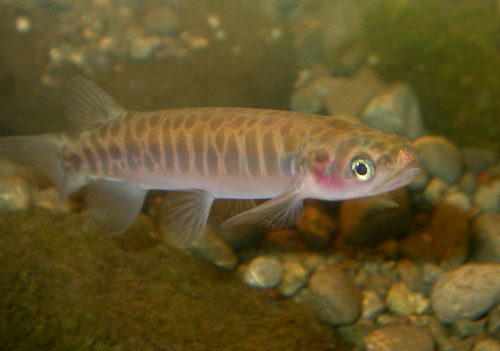
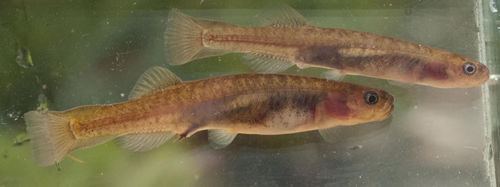
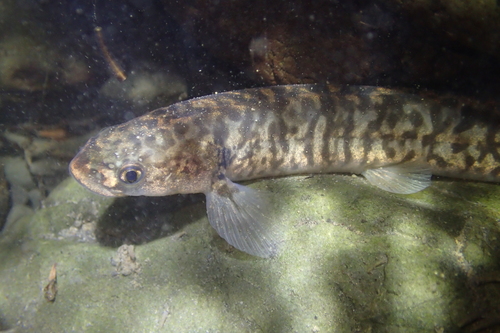
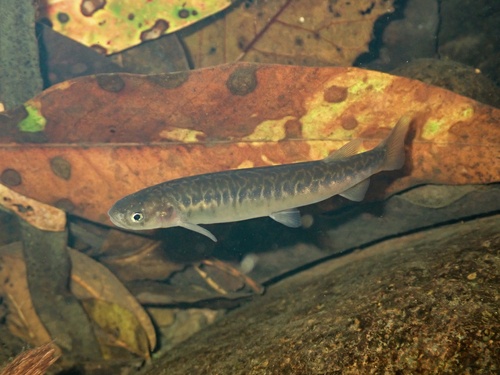
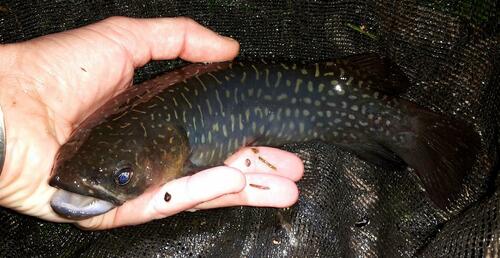
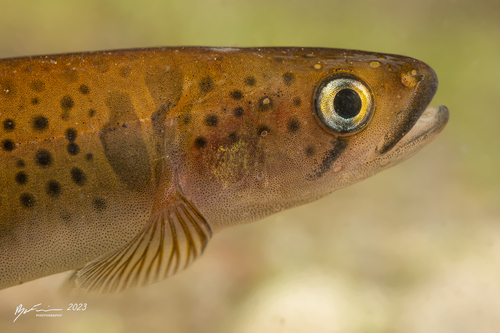
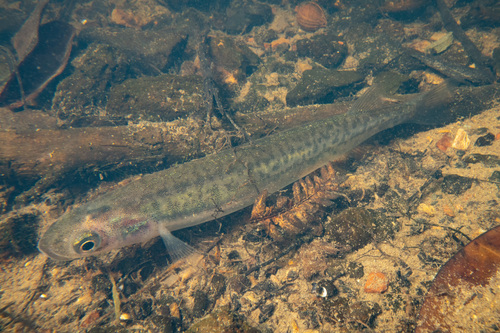
The common galaxias (Galaxias maculatus) is a slim, narrow fish with a mottled, spotty body pattern, iridescent silver eyes, undersides, and gill covers. Some individuals have an iridescent green stripe along the top of their bodies that becomes visible intermittently as they swim. Its specific epithet maculatus, meaning 'spotted', refers to the pattern of dark, mottled, leopard-like spots that run along the fish's upper body over an olive-brown background. This pattern can range from very subtle to quite bold. Common galaxias have slightly forked tails, which differs from most other galaxiids that have square tails. Fully grown adults are typically 8–11 cm (3.1–4.3 in) long, with an average length of 10 cm (4 in). The maximum recorded length for this species is 19 cm (7.5 in). Common galaxias are one of the most widely distributed freshwater fish in the world. Their range includes Chile between 35–55°S, Patagonia, Argentina, the Falkland Islands, Pacific islands including New Caledonia and New Zealand, coastal streams in south-eastern Australia, Tasmania, southwest Western Australia, and numerous water-filled cenotes and caves in south-eastern South Australia. They are most often found in small schools or shoals in slow-moving water, but may live more solitary lives in faster streams. Adults primarily occupy still or slow-moving water in the lower sections of coastal streams and rivers, or along the edges of lagoons, and can tolerate a wide range of natural conditions. If oxygen levels become low due to eutrophication, common galaxias can jump out of the water (emerse) and absorb oxygen through their skin as a last-resort adaptation. They require access to riparian vegetation for spawning, and typically live in river systems that connect to the sea because their larval stage develops in marine environments. They are usually found in lower-elevation streams because, unlike other Galaxias species, they cannot climb past waterfalls. Common galaxias can become land-locked, such as in five lakes in Northland, New Zealand, where they feed and breed within large reed beds. Adult common galaxias typically reach sexual maturity at one year of age, and spawning is triggered by changes in day length and water temperature. Unless they are land-locked in a lake, common galaxias spawn mainly in autumn during spring tides, in the tidally influenced reaches of rivers and streams, though spawning has also been recorded in winter and spring. Females lay eggs in large groups within flooded riparian vegetation. Males then release sperm into the water to fertilize the eggs externally; this mating system is called polygynandry. Eggs stay attached to the vegetation after the tide recedes. Two reproductive strategies occur in the species: the most common is a 'boom-bust' semelparous strategy, where spawning happens in a single event followed by the fish's death. Much more rarely, fish follow an iteroparous strategy, where spawning occurs across multiple years before death.