About Galaxias argenteus (Gmelin, 1789)
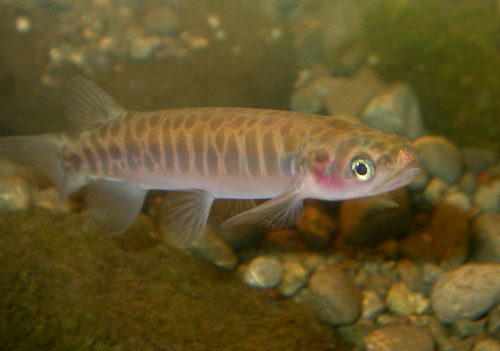
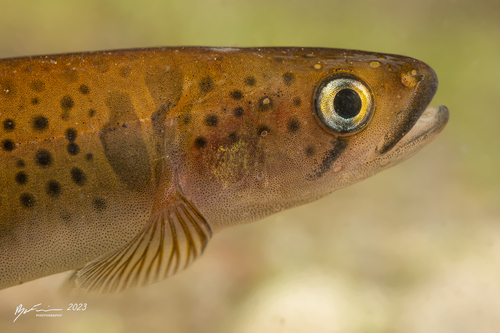
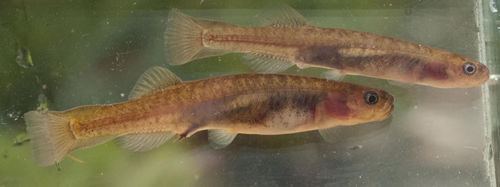
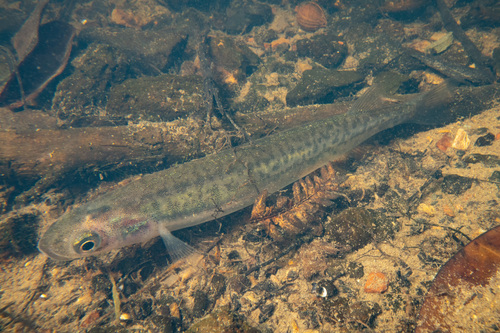
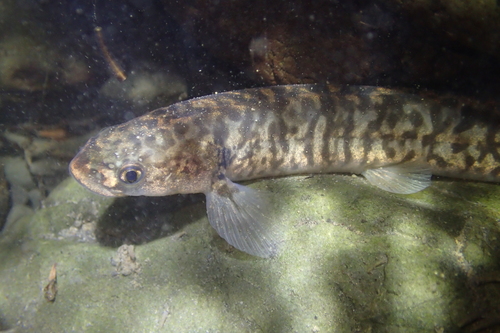
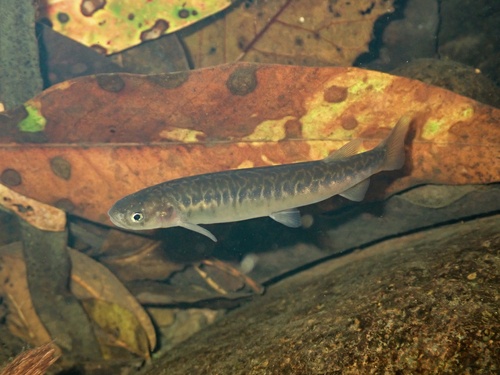
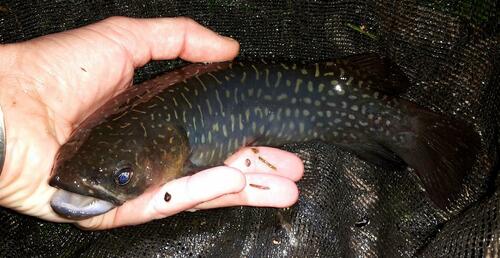
This fish species, the giant kōkopu, with the scientific name Galaxias argenteus (Gmelin, 1789), is the largest known galaxiid species. Giant kōkopu commonly grow to a total length of 30–40 cm (12–16 in). While larger individuals are uncommon, there is a recorded specimen that reached 58 cm (23 in) in length and 2.7 kg (6.0 lb) in weight. Like all galaxiids, giant kōkopu have no scales; instead, they have a thick, leathery skin covered in mucus. Their bodies are very broad, appearing round or square in cross-section, with strong, fleshy fins and a very large mouth. Giant kōkopu are typically an olive brown color, ranging from near-black to pale olive. Adult giant kōkopu have bodies patterned with pale yellow spots, crescents, and lines. These markings become smaller and more numerous as the fish ages. Juvenile giant kōkopu start with sparse vertical bars and spots along the lateral line. As the fish grows, these juvenile markings lengthen and fade out, while the adult pattern develops. Young giant kōkopu may be mistaken for small banded kōkopu (Galaxias fasciatus), but giant kōkopu do not have a silver mark behind the gills, and their markings never fork or fade out at the top and bottom. Adult giant kōkopu live in fresh water, mostly near the coast. After spending 4–6 months at sea, young giant kōkopu enter fresh water during spring. As of 2016, spawning in the wild has only been observed once. Spawning takes place during autumn or winter, and eggs, first discovered in 2013, are laid among vegetation along stream banks. The species has relatively high fecundity, with each female producing several thousand eggs. As is typical for amphidromous New Zealand galaxiids, eggs develop in semi-dry conditions on land for a few weeks, then get flooded by rising water. The highest egg hatch rates occur in fresh water at a temperature of approximately 10 °C (50 °F). While giant kōkopu are primarily amphidromous, some land-locked populations live permanently in stream systems, demonstrating the species can complete its entire life cycle in fresh water. Giant kōkopu reach maturity at 2–3 years old. The oldest known known individual, which measured 40 cm (16 in) long and weighed 1.05 kg (2.3 lb), was estimated to be 21–27 years old based on analysis of its otolith. Adults prefer slow-flowing water in lowland streams or pools. They typically lurk in cover such as overhanging vegetation, logs, undercut banks, or debris while waiting for prey to pass. Giant kōkopu prefer water temperatures between 11 and 15 °C (52–59 °F), though they can survive outside this range. Their rarity north of Auckland is probably linked to unsuitable temperatures. Their diet includes aquatic and terrestrial insects, freshwater crayfish of the genus Paranephrops, spiders, and occasionally other fish. Giant kōkopu are generally nocturnal and slow-moving.