About Gadus morhua Linnaeus, 1758
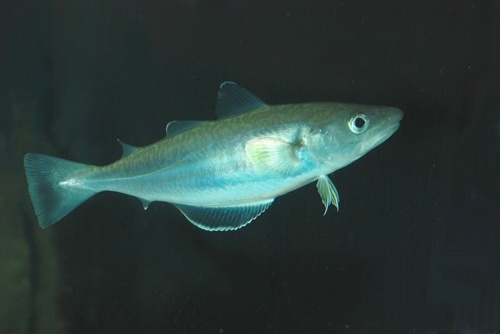
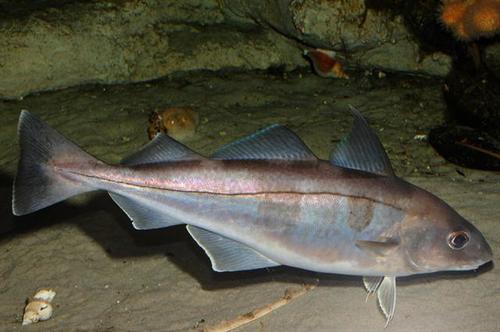
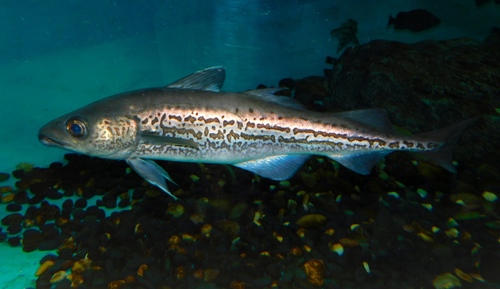
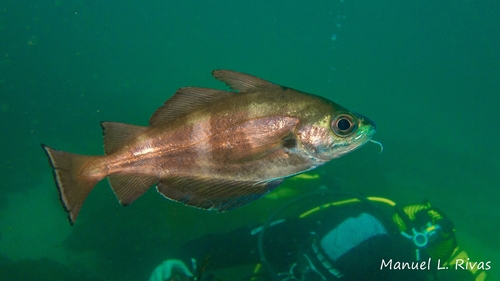
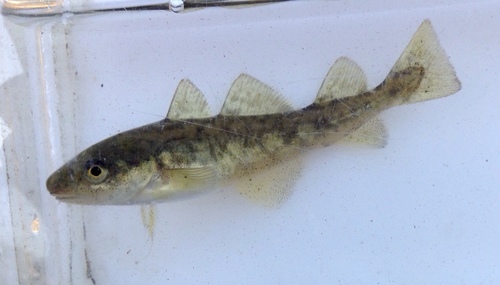
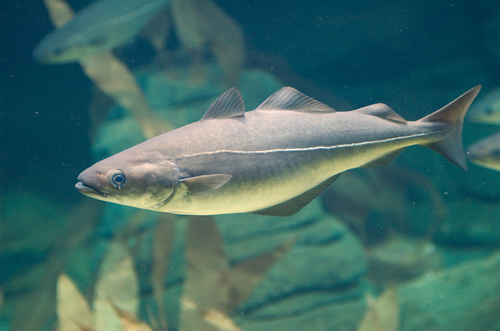
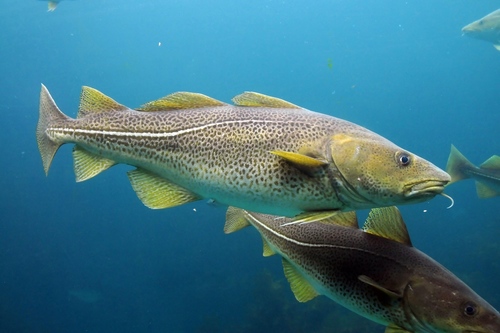
Gadus morhua, commonly called Atlantic cod, is a fish species in the family Gadidae that is widely consumed by humans. Commercially, it is also known as cod or codling. In the western Atlantic Ocean, its distribution extends north of Cape Hatteras, North Carolina, and covers both coasts of Greenland and the Labrador Sea. In the eastern Atlantic Ocean, it can be found from the Bay of Biscay north to the Arctic Ocean, including the Baltic Sea, the North Sea, the Sea of the Hebrides, waters around Iceland, and the Barents Sea. Atlantic cod can live up to 25 years, and typically reach lengths of 100–140 cm (40–55 in); however, individual cod longer than 180 cm (70 in) and heavier than 50 kg (110 lb) have been caught. This species reaches sexual maturity between two and eight years of age, with this timeline varying between different populations and changing over time. Atlantic cod have brown or green colouring with spots on their dorsal side, which fades to silver on the ventral side. A clearly visible stripe runs along the species’ vibration-detecting lateral line. Their habitat spans from coastal shorelines down to 300 m (1,000 ft) along the continental shelf. Atlantic cod is one of the most heavily fished fish species in the world. North European fishers have fished Atlantic cod for a thousand years, following the species across the North Atlantic Ocean to North America. It supported the fishing economies of the United States and Canada until 1992, when the Government of Canada implemented a full ban on cod fishing. Multiple cod stocks collapsed in the 1990s, with declines exceeding 95% of maximum historical biomass, and these collapsed stocks have failed to fully recover even after fishing stopped. The loss of this apex predator has caused a trophic cascade in many areas. Many other remaining cod stocks are still at risk. The IUCN Red List of Threatened Species labels Atlantic cod as vulnerable, based on a 1996 assessment that the IUCN notes requires updating. A 2013 assessment covering only European populations found that Atlantic cod has rebounded in Europe, and was reclassified as least concern there. Processed dry Atlantic cod may be sold as unsalted stockfish, or cured as salt cod or clipfish. For reproduction, the timeline for sexual maturity in Atlantic cod ranges from two to eight years, varying across populations and changing within populations over time. Gonad development takes several months, and most populations spawn from January to May. For many populations, spawning grounds are located in separate areas from feeding grounds, so cod must migrate to reach their spawning grounds. Males and females form large schools once they arrive at spawning areas. Behavioral observations of cod suggest the species’ mating system is similar to a lekking system, where males aggregate and form dominance hierarchies, and females visit these aggregations to select spawning partners based on male status and sexual characteristics. Evidence shows that male sound production and other sexually selected traits allow female cod to actively select their spawning partners. Males also engage in aggressive interactions with one another to gain access to females. Atlantic cod are batch spawners: females spawn around 5 to 20 batches of eggs over time, with 2 to 4 days between the release of each batch. Each female can spawn between 200,000 and 15 million eggs total, and larger females produce more eggs than smaller females. Females release gametes in a ventral mount position, after which males fertilize the released eggs. Fertilized eggs and newly hatched larvae float freely in the water and drift with the current; some populations depend on these currents to carry larvae to nursery areas.