About Gadira acerella Walker, 1866
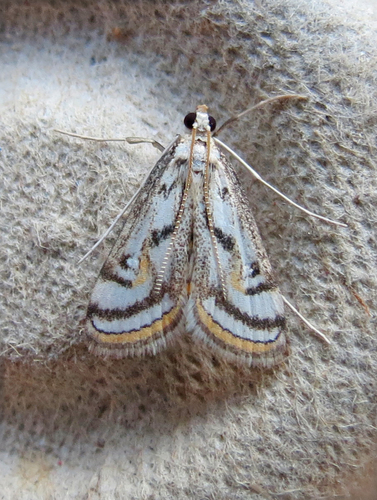
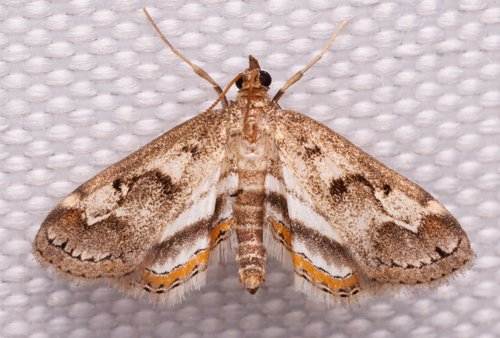
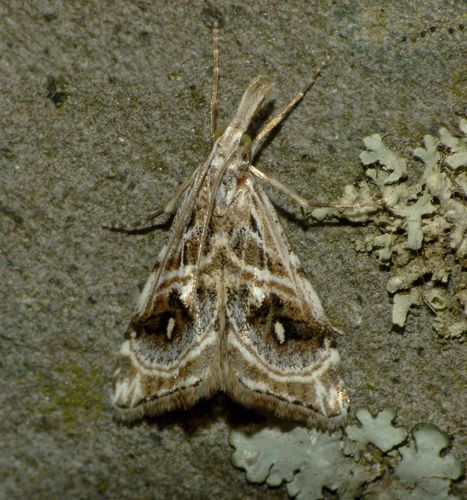
Gadira acerella was first described by Walker in 1866 from the female of the species, with the original description as follows. The female is aeneous-brown and whitish on the underside. The head is whitish, and the thorax has a whitish stripe. The abdomen and hind wings are aeneous-cinereous. The fore wings have whitish veins and two whitish oblique lines, which diverge from each other near the interior border; there is a transversely elongated black spot that contains a small longitudinal white streak. The fore wings also have two exterior outward-curved white lines, where the inner line is broader than the outer; they have a small number of black streaks and speckles, and a white fringe. The hind wings are aeneous-cinereous, with a white aeneous-bordered subinarginal line. Body length is 3 lines, and wing length is 9 lines. This species has distinctively different patterning and colouring from related species. This species is endemic to New Zealand and can be found across the whole country. It is considered to be fairly common. It lives in native forest, and occurs at altitudes ranging from sea level up to subalpine areas. The larvae of this species are assumed to feed on lichen or mosses, and larvae have been observed on rocks covered in lichen.