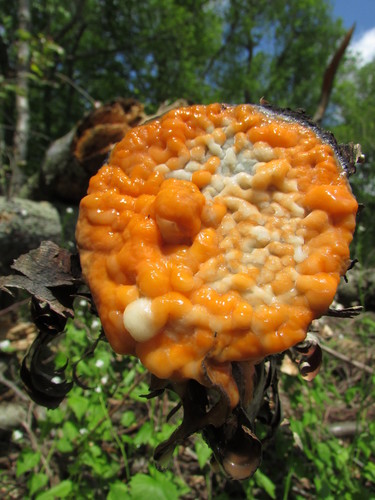
About Fusicolla merismoides (Corda) Gräfenhan, Seifert & Schroers
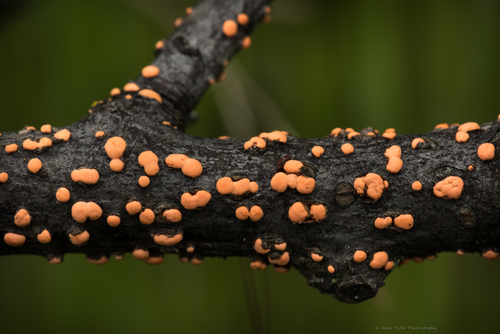
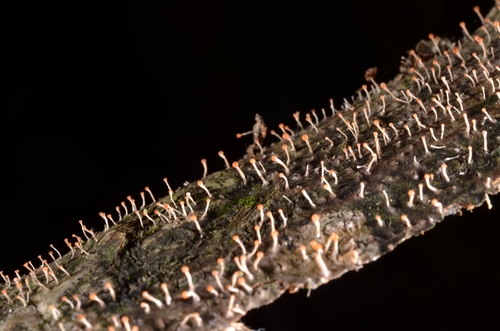
Fusicolla merismoides can be understood in two distinct ways. First, it is a species of sac fungus (ascomycete) in the phylum Ascomycota, belonging to the highly diverse family Nectriaceae. The nearly microscopic body of this fungus is made up of thin, branching, filamentous structures called hyphae. Second, the name is often used in field guides to refer to a form of "slime flux" that occasionally forms colorful, slimy, amorphous masses that ooze and drip from certain plants. Well-developed masses of this slime flux are likely to contain Fusicolla merismoides, but this is not always confirmed. Fusicolla merismoides is considered a cosmopolitan species that occurs worldwide. This ascomycete fungus is commonly found in soils, polluted water, rotting plant material, and many other substrates. The type specimen for the 1838 basionym Fusarium merismoides was collected from very wet shards of a plant pot during winter in Prague. It has also been found in air-conditioner humidifier water in Belgium, on Pinus caribaea seeds in the UK, and on oak trees in the former USSR. In its slime flux form, it occurs mainly on woody plants, including European birch and hornbeam trees. One image of this species shows orange slime flux on the stem of a muscadine grapevine in Mississippi, USA.