About Fusconaia flava (Rafinesque, 1820)
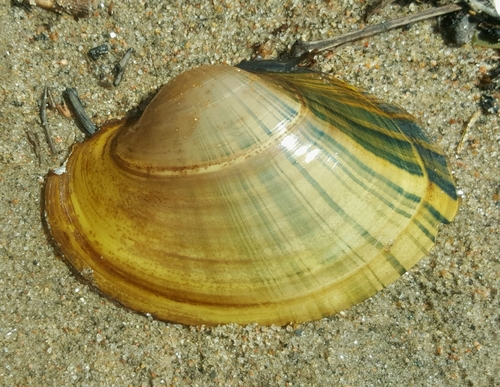
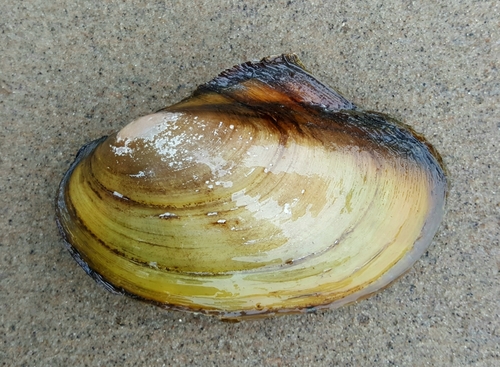
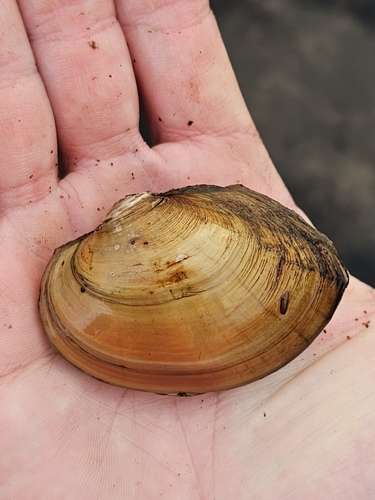
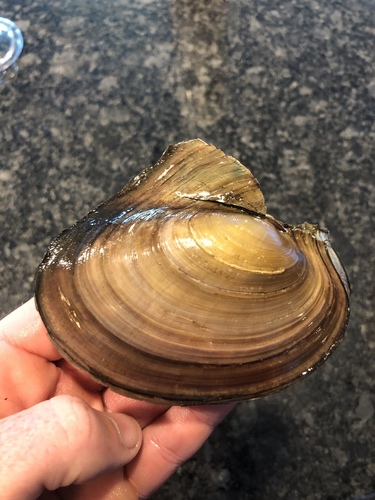
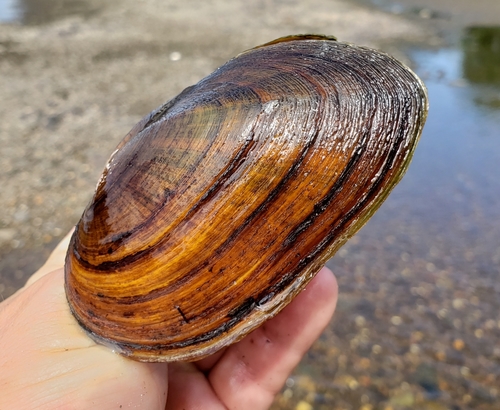
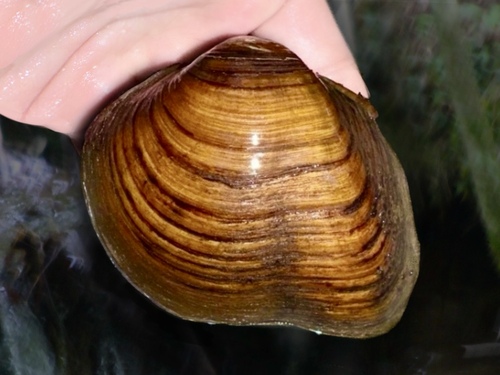
Fusconaia flava, first described by Rafinesque in 1820, has a bivalve hinged shell. The shell of this species is thick, and may be either compressed or inflated. Its overall shell shape ranges from triangular to an elongated triangle. The inner nacre layer of the shell is most commonly white, but it can sometimes be pink or salmon in color. This mussel occupies lotic habitats, from small streams up to large rivers, and can tolerate a range of substrate types including mud, sand, and gravel. While Fusconaia flava itself is classified as a species of least conservation concern, 19% of all mussel species native to Kentucky have gone extinct or been extirpated from the state due to habitat loss. In its reproductive life cycle, male Fusconaia flava release sperm into the water, which females collect through their incurrent siphon. Eggs are fertilized internally inside the female. The species has a parasitic larval stage called glochidia. Adult mussels use a lure to attract host fish, and release glochidia when a fish draws near. The glochidia attach to the host fish’s gills or fins, where they feed on the fish’s blood until they develop into juvenile mussels. Confirmed known host fish species for Fusconaia flava glochidia are the silver shiner (Notropis photogenis) and the creek chub (Semotilus atromaculatus). The parent mussel provides no further care to larvae after releasing the glochidia. Fusconaia flava are filter feeders that expel waste through the excurrent siphon. They are sedentary, and either anchor to or fully bury within the streambed substrate.