About Furcifer polleni (Peters, 1874)
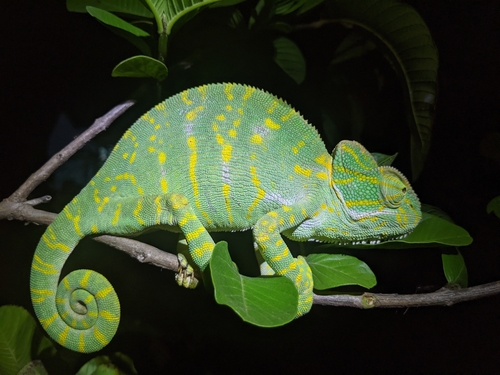
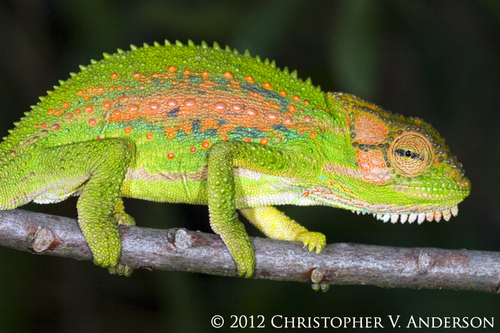
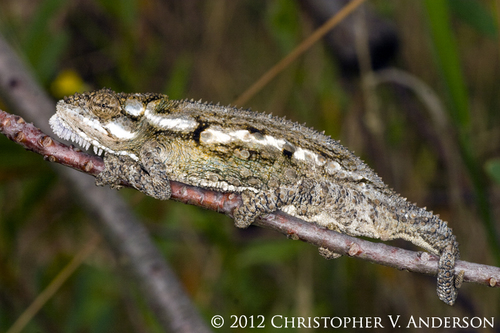
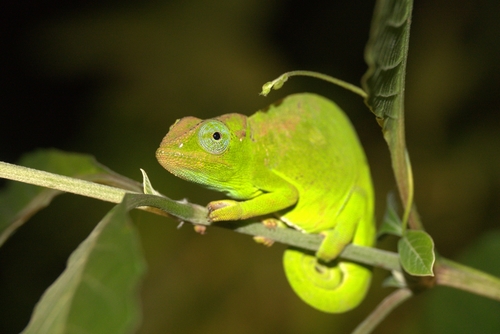
Furcifer polleni (Peters, 1874), commonly called the Mayotte chameleon, has body colouration that ranges between varying shades of light and dark green. This species is endemic to Mayotte, an island in the Comoros Islands located in the Indian Ocean. It occurs across most of Mayotte, which has a total area of 376.5 square kilometres (145.4 square miles). It has been intentionally introduced by humans to Anjouan, another Comorian island, where it has become established in the town of Hombo. The International Union for Conservation of Nature (IUCN) currently lists Furcifer polleni as a species of Least Concern. This chameleon has been recorded at elevations between 27 metres (89 feet) and 459 metres (1,506 feet) above sea level, and occupies a wide variety of habitats. It receives legal protection on Mayotte, and is listed in Appendix II of the CITES treaty. An integrated field study conducted on Mayotte collected 35 specimens of Furcifer polleni across a range of habitats up to the maximum recorded elevation of 459 metres (1,506 ft). The specimens were found in roughly equal numbers across four habitat types: pristine forests, degraded woodlands, plantations, and scrubby dry vegetation. No individuals were observed in mangrove forests, but multiple specimens were found in urban areas. Between 2000 and 2009, a total of 1,562 Mayotte chameleons were exported from Mayotte. This level of export does not appear to have had a significant impact on the species' total population size. This differs from the situation of Furcifer cephalolepis, the endemic chameleon species of Grand Comoro. Over 14,000 individuals of F. cephalolepis were exported during the same ten-year period, and this high trade volume is believed to have negatively affected that species' wild populations. The Mayotte field study concluded that the population of Furcifer polleni is currently stable. Despite the species' very small total range, researchers concluded it is likely to persist long-term due to its ability to thrive in non-natural habitats.