About Fundulus lineolatus (Agassiz, 1854)
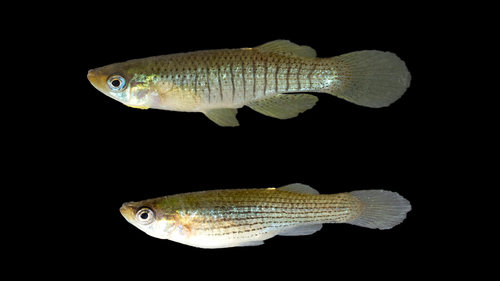
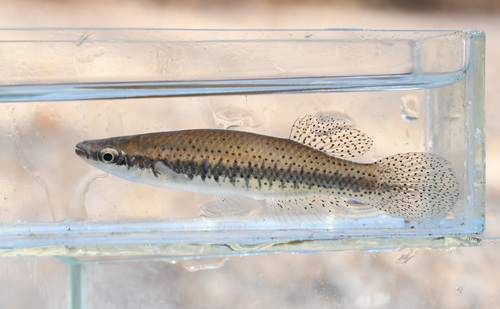
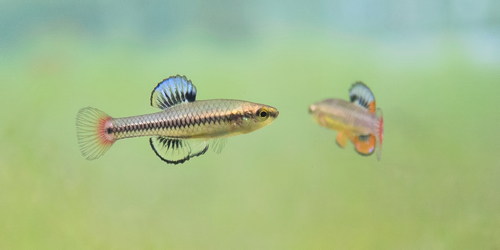
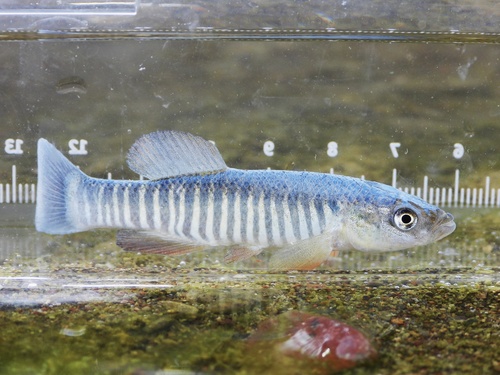
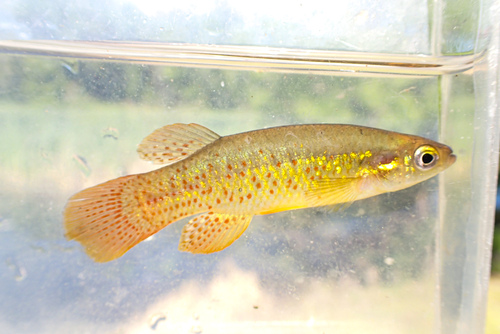
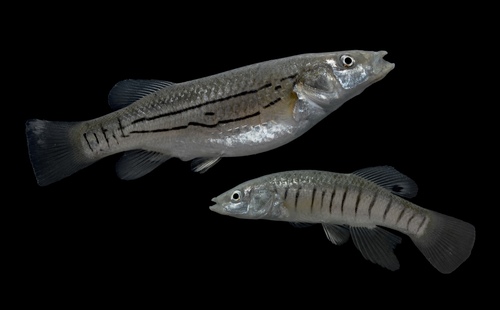
The scientific name Fundulus lineolatus comes from Latin: Fundulus means 'bottom', and lineolatus means 'having lines'. This fish is silver with black bars and spots, including one black bar under the eye that looks like a tear. Only a minority of females have these bars. The prominent teardrop marking under the eye can be used to distinguish this species from all other topminnows. Some adult individuals have orange and red coloring around their mouths. The maximum recorded size of this topminnow is 1 1/2 inches. It was once thought that Fundulus lineolatus was a subspecies of Fundulus notti, the bayou topminnow. This species resembles the least killifish, which also has a dark bar and spots, but the least killifish has its anus located in the throat region. It also resembles the eastern mudminnow and mosquitofish. Sperm and eggs are released into the water during spring and summer. The eggs of the lined topminnow measure 1.6 mm. While swimming near the water surface, this species feeds on vegetation, crustaceans, and larvae. Predators of this fish include the northern water snake, and it shares this predator with another species from the same genus, the blackstripe topminnow. This fish lives in streams, rivers with low or no current, ponds, and swamps, including the Okefenokee Swamp. The species is very common and easy to catch, so fishermen often use it as fishing bait. In 1999, a study published in the journal Copeia reported that there may be a correlation between beaver dams and the proximity of this species' habitat to these dams.