About Fulguropsis pyruloides (Say, 1822)
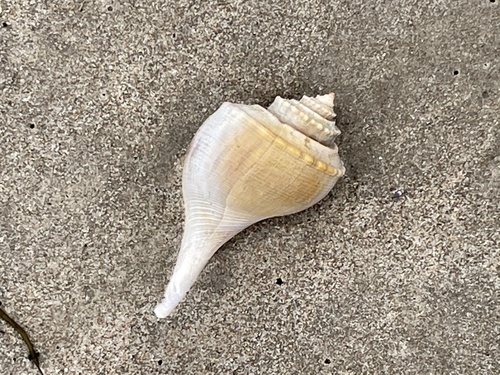
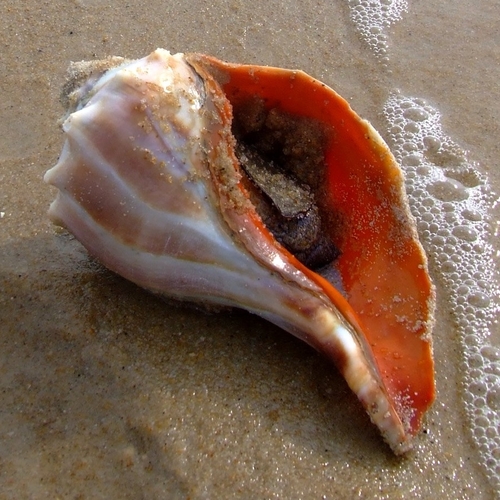
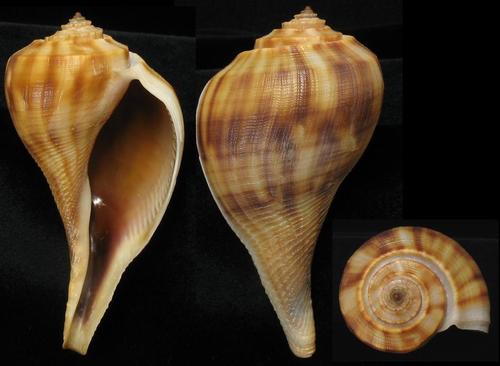
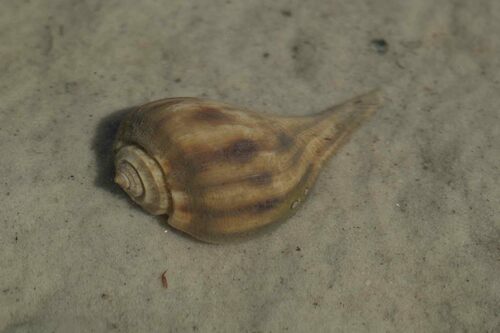
Fulguropsis pyruloides (Say, 1822) is a species of marine gastropod, most commonly known as the pear whelk. It is also called the Florida pear whelk or Atlantic pear whelk in scientific and shelling communities, to distinguish it from the better-known Fulguropsis spirata, which also shares the common name pear whelk. This species was first described by American conchologist Thomas Say in 1822. Before the full range of this species was mapped, and before it was confirmed that F. spirata is only found west of the state of Mississippi, F. pyruloides was occasionally referred to as "Say's Pear Whelk", but this common name is no longer in use. There are two recognized subspecies of Fulguropsis pyruloides: Fulguropsis pyruloides pyruloides (Say, 1822), and Fulguropsis pyruloides rachelcarsonae Petuch, R. F. Myers & Berschauer, 2015. This species is native to the Atlantic coast from North Carolina south to Key West, and to the Gulf of Mexico from Alabama eastwards. Intergrade zones between Fulguropsis pyruloides and Fulguropsis spirata occur along the coast of Mississippi, and may also occur along the Florida Panhandle and Alabama coastline. The geographic range now assigned to F. pyruloides was formerly attributed to F. spirata; we now know F. spirata generally only lives on coastlines west of the Mississippi Delta. Almost all specimens found east of Alabama are likely F. pyruloides. This clarification has shown that many museum and historical specimens previously classified as F. spirata were actually F. pyruloides all along, and most of these classification errors have not been corrected to date.