About Freycinetia banksii A.Cunn.
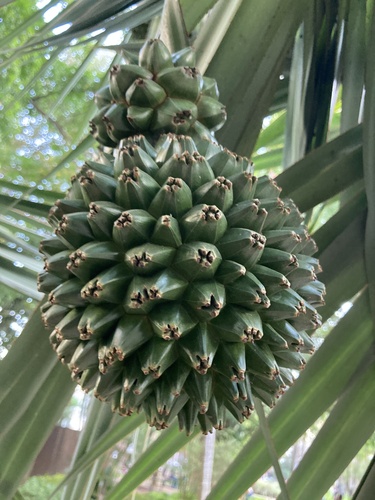
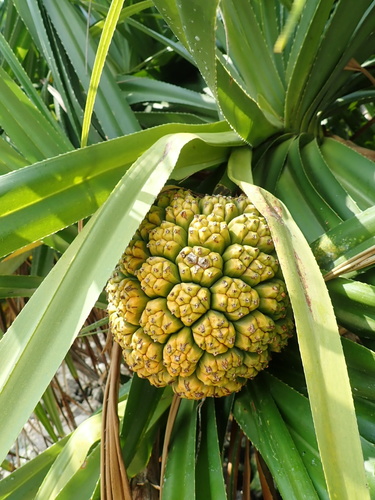
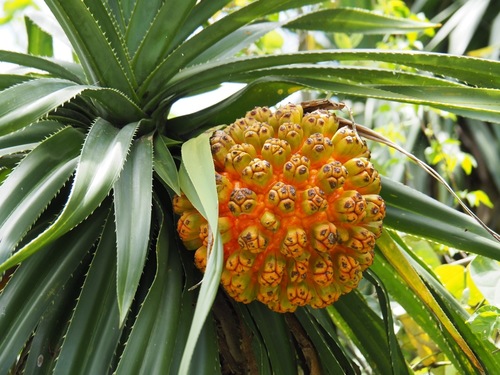
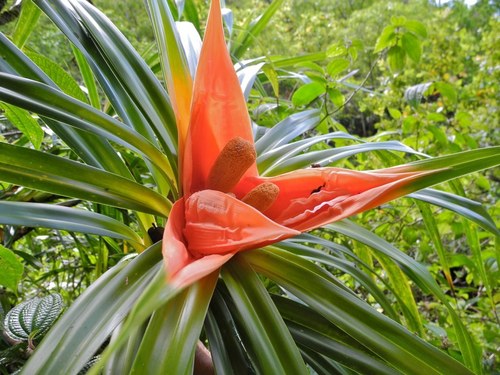
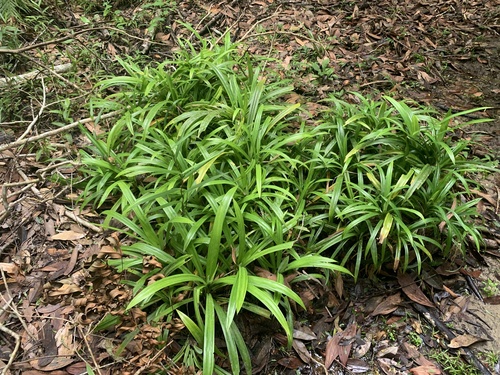
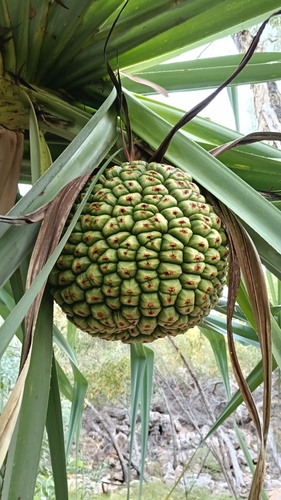
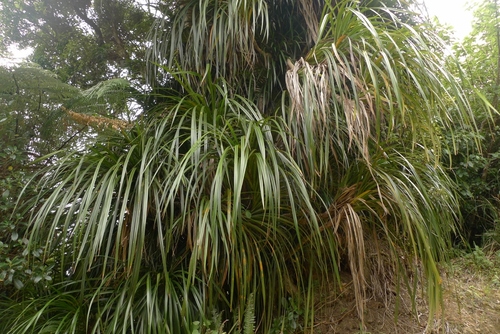
Freycinetia banksii A.Cunn. is a densely branched woody climber that produces numerous cane-like stems reaching up to 40 mm (1.6 in) in diameter, and freely forms aerial roots. It climbs tree trunks, or grows into dense tangles on the forest floor. Stems can eventually reach up to 30 m (98 ft) in length, and stems and leaves are a dominant feature in many areas of New Zealand forest. Its leaves are long and slender, measuring 60–90 cm (24–35 in) long and 2–2.5 cm (0.79–0.98 in) broad. This species has white edible flower bracts, and long pineapple-like fruit with rough skin and sweet pink pulp. This plant is endemic to New Zealand. It grows in forests throughout the North Island, primarily in coastal and montane forests. In the South Island, it is more common in higher rainfall areas, reaching its southern limit near the Clarence River in the east and in Fiordland in the west. Freycinetia banksii typically climbs the trunks of larger trees in forested areas. When no trees grow nearby, it can form masses of tangled roots. Possums and rats eat the fruit and flower bracts of this species. Common name kiekie, this plant holds cultural importance for Māori. Traditionally, it was a major source of textiles, especially for Ngāi Tūhoe and other inland iwi (tribes) that lived outside the range where harakeke (New Zealand flax) grows. It is also a traditional delicacy, prized for its crops that occur every two years: the first crop is the sweet flower bracts called tāwhara, followed by the fruit called ureure. Māori myths describe kiekie and harakeke as separated brothers: Harakeke left to go with the goddess Wainuiātea to the coasts, while kiekie remained with Tāne, the god of the forests. Ureure were traditionally gathered using a forked stick. Flower bracts were traditionally tied up with the plant's own leaves to protect them from being eaten by kiore (Polynesian rat). The leaves were widely used for plaiting and weaving, though the broader leaves of New Zealand flax were preferred for their larger size. Kiekie was preferred for making finely woven tukutuku items, such as kete pūtea and kete pure. Woven items include mats and temporary baskets for holding food. Aerial roots were gathered to use as binding material for tools, and to make fish traps and sails. Parts of the plant's common and traditional names appear in many New Zealand place names, including the Tāwharanui Peninsula and Maungakiekie.