About Fregata ariel (G.R.Gray, 1845)
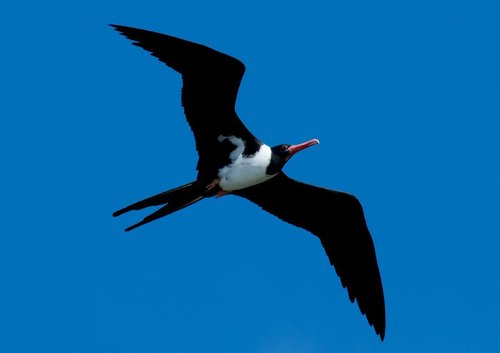
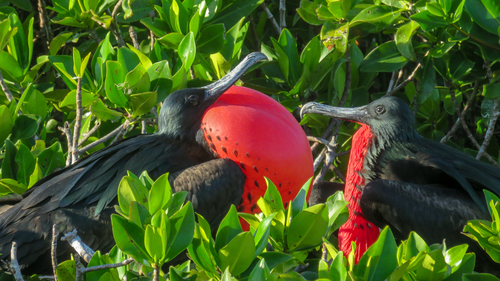
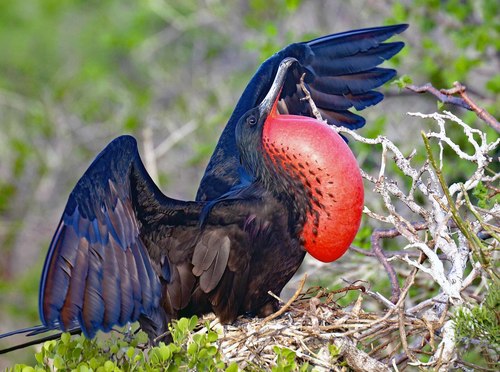
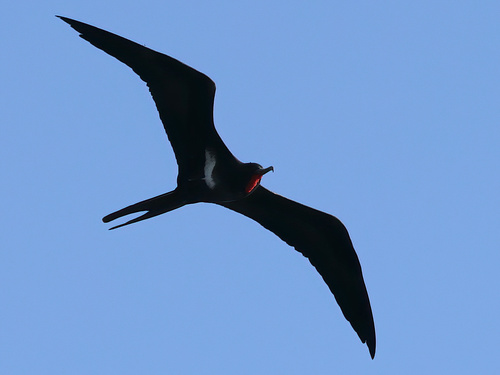
The lesser frigatebird (Fregata ariel) is the smallest species of frigatebird. It measures 66–81 cm (26–32 in) in length, has a wingspan of 155–193 cm (61–76 in), and has long forked tails. Males weigh 625–875 g (1.378–1.929 lb), while females are heavier, weighing 760–955 grams (1.676–2.105 lb). Like all frigatebirds, males have a large red sac on the front of the throat that is inflated during courtship. Courtship displays also include a variety of calls, bill rattling, and spreading the wings. Males are mostly entirely black except for a white patch on the flank that extends onto the underwing as a spur, and they also have a pale bar on the upper wing. Females have a black head and neck, with a white collar and breast, as well as a spur that extends onto the underwing. Females also have a narrow red ring around the eye. Juveniles and immature birds are harder to distinguish, but the presence of white spurs in the armpits is a helpful identifying feature. Frigatebirds are physically built for flight. They rarely swim, cannot walk, but can climb around the trees and bushes where they nest. They have a very light skeleton and long narrow wings, and are masters of the air. Their name likely comes from their habit of harassing other seabirds such as boobies and tropicbirds when those birds return to their nests after feeding, forcing them to disgorge their catch. Frigatebirds then swoop down and catch the catch before it reaches the water below. This behavior is more common among female frigatebirds, but it only makes up a fairly small proportion of their overall diet. The majority of their diet consists of squid and flying fish that they scoop up from the surface of the sea. The lesser frigatebird is recorded as the most common and widespread frigatebird in Australian seas. It is common in tropical seas, breeding on remote islands, and has been breeding on Christmas Island in the Indian Ocean in recent years. These birds are most likely to be seen from the mainland before a tropical cyclone begins, and they disappear again once the cyclone passes.