About Fraxinus ornus L.
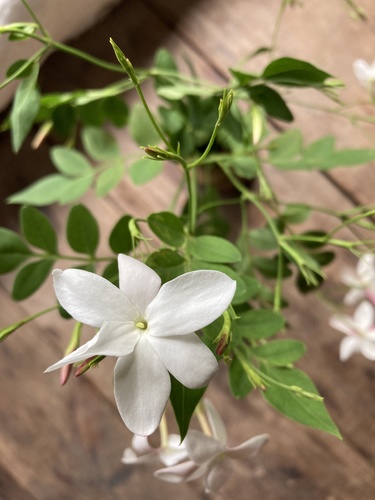
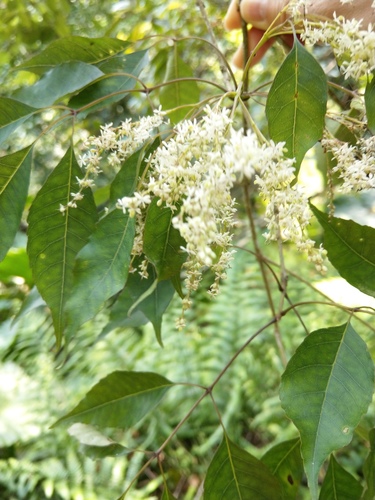
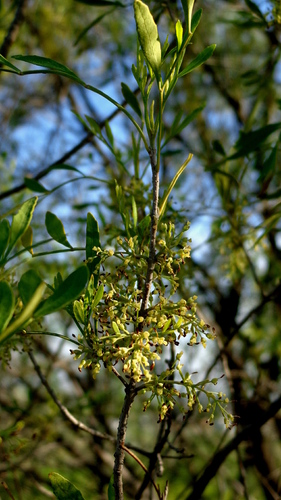
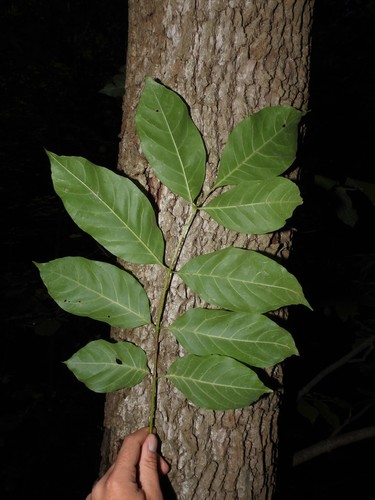
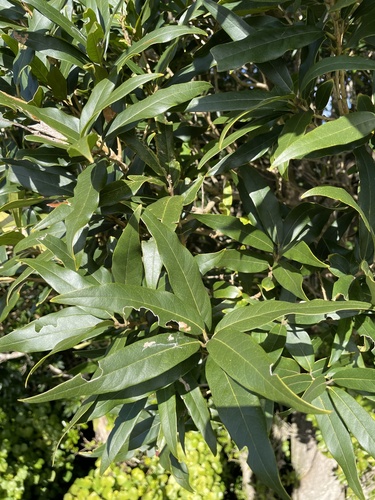
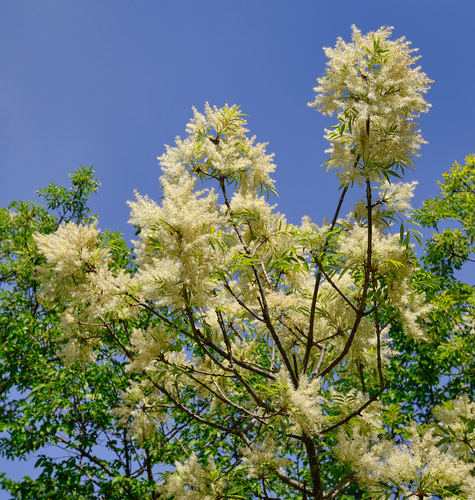
Fraxinus ornus L. is a medium-sized deciduous tree that reaches 15 to 25 meters (49 to 82 feet) in height, with a trunk that can grow up to 1 meter in diameter. Its bark is dark grey and stays smooth even on older trees. Buds are pale pinkish-brown to grey-brown, and are densely covered in short grey hairs. Leaves grow in opposite pairs, are pinnate, and measure 20 to 30 centimeters (7.9 to 12 inches) long, with 5 to 9 leaflets per leaf. Leaflets are broadly ovoid, 5 to 10 centimeters (2 to 4 inches) long and 2 to 4 centimeters (0.8 to 2 inches) wide, with finely serrated, wavy margins and short, distinct petiolules that are 5 to 15 millimeters (0.20 to 0.59 inches) long. Autumn leaf color varies from yellow to purplish. Flowers grow in dense panicles 10 to 20 centimeters (3.9 to 7.9 inches) long, emerging after new leaves appear in late spring. Each flower has four slender creamy white petals 5 to 6 millimeters (0.20 to 0.24 inches) long, and flowers are pollinated by insects. The fruit is a slender samara 1.5 to 2.5 centimeters (0.59 to 0.98 inches) long, with a seed 2 millimeters (0.08 inches) wide and a wing 4 to 5 millimeters (0.2 inches) wide; the fruit is green when young and ripens to brown. Fraxinus ornus is frequently planted as an ornamental tree in Europe north of its native range, valued for its decorative flowers, and it is often called flowering ash. Some cultivated specimens are grafted onto rootstocks of Fraxinus excelsior, and the graft line is often very conspicuous, showing a change to the fissured bark of the rootstock species. A sugary extract can be obtained from the sap in the tree’s bark. This extract was compared to biblical manna around 1400 AD in late medieval times, which gave the tree its common name in English, Spanish (fresno del maná), and Italian (frassino da manna). The sugar alcohol mannitol takes its name from this sugary extract.