About Fraxinus angustifolia Vahl
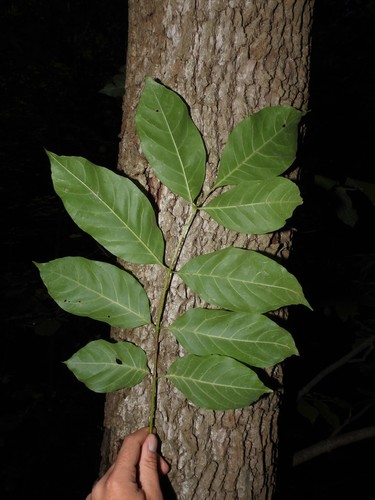
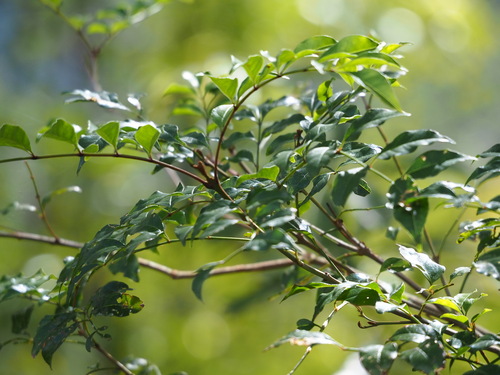
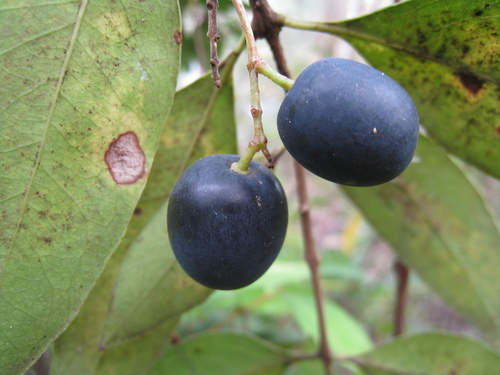
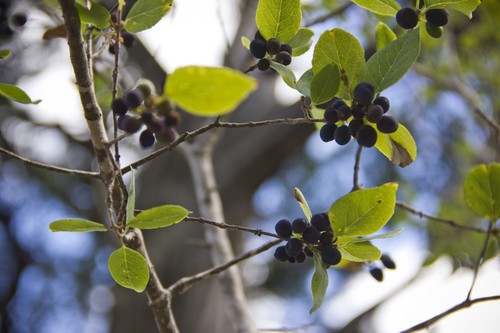
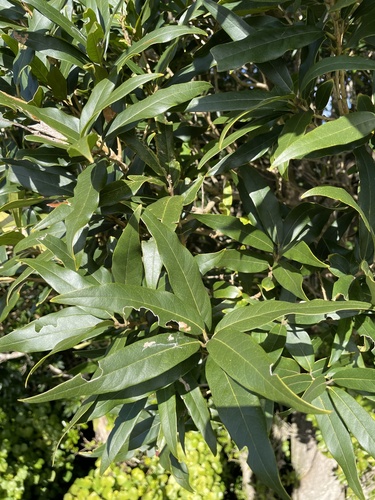
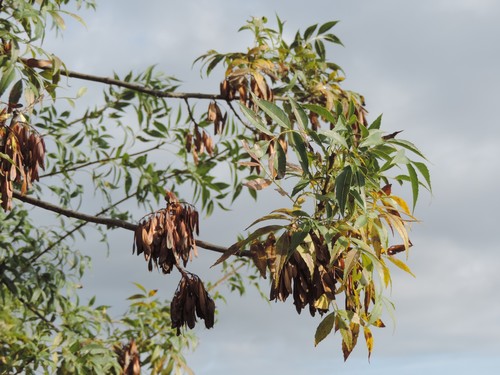
This species is a medium-sized deciduous tree that reaches 20–30 m in height, with a trunk that can grow up to 1.5 m in diameter. Young trees have smooth, pale grey bark, while bark on old trees becomes square-cracked and knobbly. The species can be easily distinguished from the closely related Fraxinus excelsior even in winter by its pale brown buds—Fraxinus excelsior has black buds. Its leaves grow in opposite pairs or whorls of three; they are pinnate, 15–25 cm long, and bear 3–13 leaflets. The leaflets are distinctively slender, measuring 3–8 cm long and 1–1.5 cm broad. Its flowers form in inflorescences that can be entirely male, entirely hermaphrodite, or a mix of male and hermaphrodite flowers. Both male and hermaphrodite flowers occur on every individual, meaning all trees are functionally hermaphrodite. Flowering takes place in early spring. When fully developed, the fruit is a samara 3–4 cm long, containing a 1.5–2 cm long seed attached to a pale brown wing also 1.5–2 cm long. In Sicily, this tree is cultivated as a source of a plant sap product called manna, also associated with Fraxinus ornus.