About Fothergilla gardenii L.
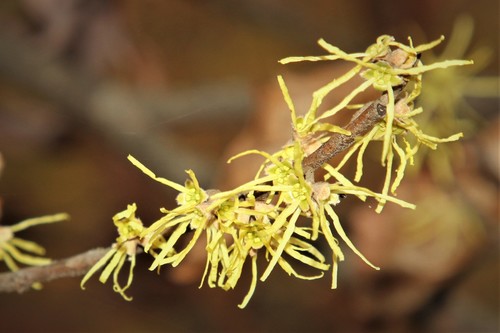
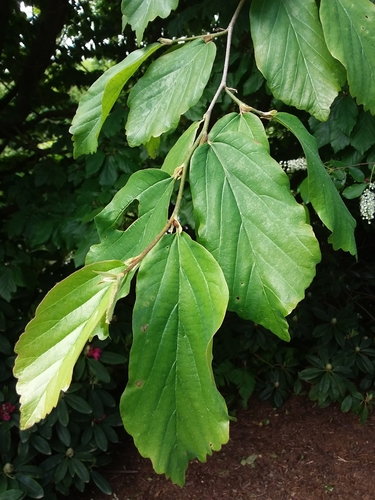
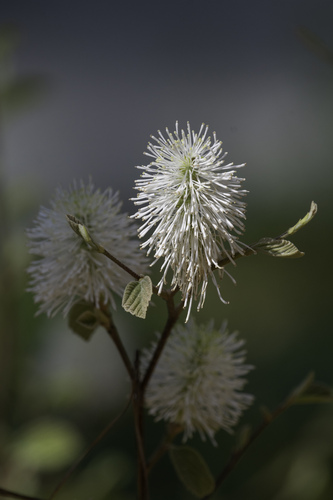
Fothergilla gardenii L. is a slow-growing deciduous shrub, with a maximum height and spread of 0.9 m (3 ft) to 1 m (3 ft). It produces dark green alternate leaves that emerge in spring. The leaves range in shape from oval to obovate, growing up to 6 cm (2.5 in) long, and have irregularly toothed margins. This shrub develops striking autumn foliage in colors including bright red, crimson, orange, and yellow. In spring, before leaves emerge, it bears terminal cylindrical inflorescence spikes up to 4 cm (1.5 in) long. The flowers on these spikes are small, white, petal-less, and highly fragrant, with conspicuous filaments 2.5 cm (1 in) long. This species is native to the southeastern United States, ranging from North Carolina to Alabama. Fothergilla gardenii L. is fully hardy, tolerating temperatures as low as -29 °C (-20 °F), and grows in USDA hardiness zones 5 through 9. For cultivation, it prefers full sun or partial shade and humus-rich, well-drained, consistently moist soil. Growing this shrub in full sun produces the best autumn color. It grows well in woodland gardens or shrub borders. It can be propagated through multiple methods. For propagation by seed, sow seeds outdoors in a cold frame or seedbed during autumn or winter. Seed typically germinates the second spring after sowing, and fresh seed produces the best results. For propagation by cuttings, take softwood cuttings in summer and root them in a mist unit. It can also be propagated through layering: air layering can be done in summer, and simple layering is also a successful propagation method. This species has no notable pest or disease problems.