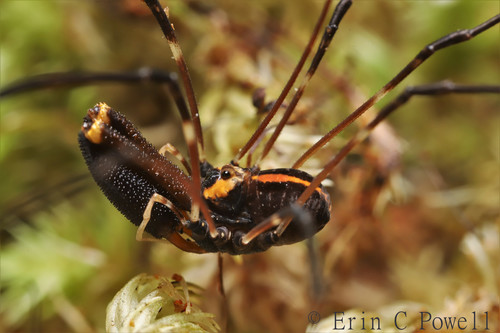
About Forsteropsalis pureora Taylor, 2013
Forsteropsalis pureora is a species that shows strong sexual dimorphism, meaning males and females have different physical forms. Males have enlarged chelicerae, which they use to fight other males during competition. The pinching claw on the chelicera grabs and pins down opponents. Males of this species can be one of three distinct morphs, which differ from each other in chelicerae size, chelicerae shape, and overall body size. Males and females also differ in color, a trait called sexual dichromatism. Males range in color from brown to black, and have an orange stripe that runs down the dorsal side of the body. They also have an orange, horseshoe-shaped marking surrounding the eyes. In the original published species description, these markings were incorrectly recorded as white, because the description was based on aged, bleached specimens stored in ethanol. The orange markings on modern specimens can range from a dull yellow-orange to a dark red-orange. Females have more cryptic coloration, with a mottled brown and black pattern and light yellow-orange markings. Juveniles have the same coloration as fully mature females.

