About Formicivora grisea (Boddaert, 1783)
The southern white-fringed antwren, scientifically known as Formicivora grisea (Boddaert, 1783), measures 12 to 13 cm (4.7 to 5.1 in) in length and weighs 9 to 12 grams (0.32 to 0.42 oz).
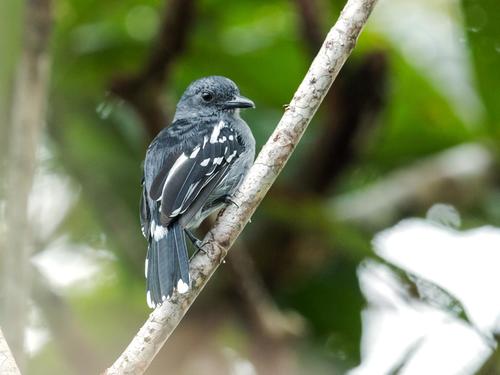
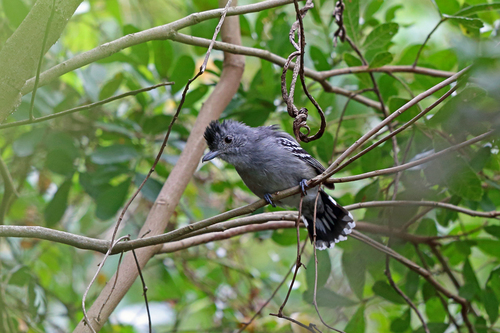
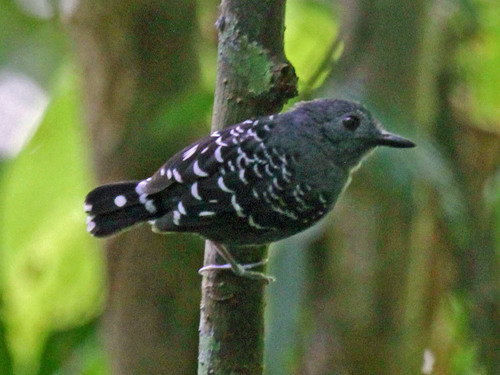
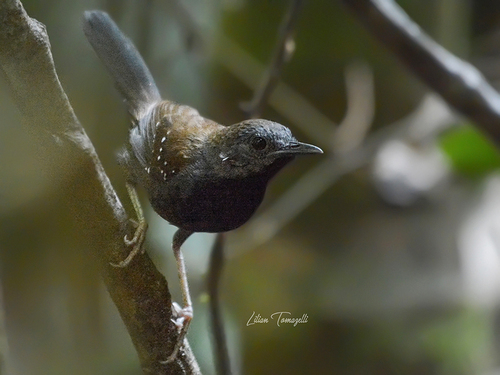
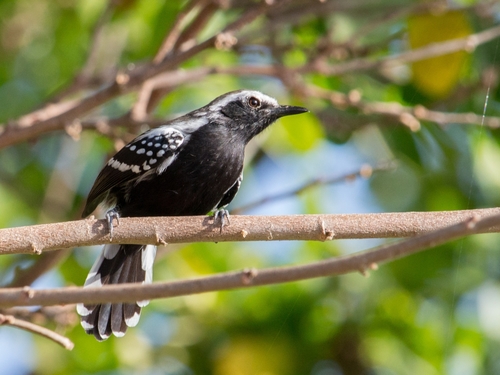
Adult males of the nominate subspecies have a white supercilium that extends down the neck, along the sides of the breast, and widens on the flanks. Their crown and upperparts are dark grayish brown, with white edges on the scapulars and a hidden white patch between the scapulars. Their wings are brownish black, with white tips on the coverts. Their tail is black, with white feather tips that grow larger from the central to the outer feathers. Their face, throat, and underparts are black, and their underwing coverts are white.
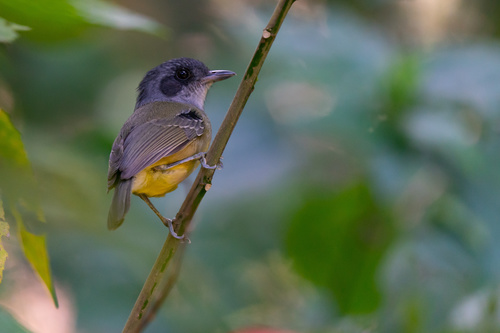
Adult females have a buff supercilium, browner wings, and little to no patch between the scapulars. Their face has blackish and buff-white mottling. Their throat and belly are light cinnamon, and their breast is cinnamon with a tawny tinge. Subadult males first resemble adult females, and gain a black throat and breast before developing the rest of their adult plumage. Males of the subspecies F. g. rufiventris match the appearance of nominate males, while females of this subspecies have entirely rufous underparts.
This species has a disjunct distribution. The nominate subspecies occurs in northern Brazil and the Guianas, with a separate range across much of Amazonian and eastern Brazil. Subspecies F. g. rufiventris is found from the Meta and Caquetá departments of Colombia east into most of Venezuela's Amazonas state.
The southern white-fringed antwren lives in a range of wooded landscapes, and favors the understorey to mid-storey at forest edges. Subspecies F. g. rufiventris occurs mostly in campina on white-sand soil or young secondary forest. The nominate subspecies occurs in mangroves in the Guianas, second growth and riparian vegetation in Amazonian Brazil, tropical deciduous forest in interior northeastern Brazil, and restinga scrublands in coastal eastern Brazil. It mostly occurs below 1,000 m (3,300 ft) in elevation, but can reach up to 1,600 m (5,200 ft) in Venezuela.