About Formica lugubris Zetterstedt, 1838
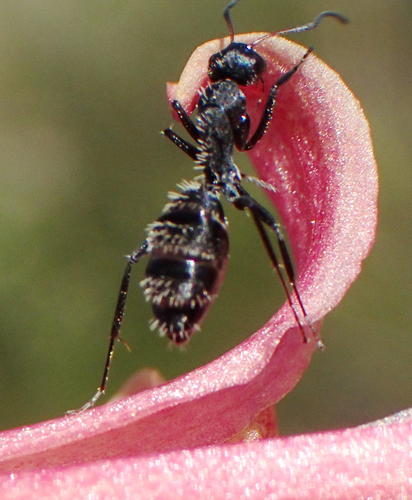
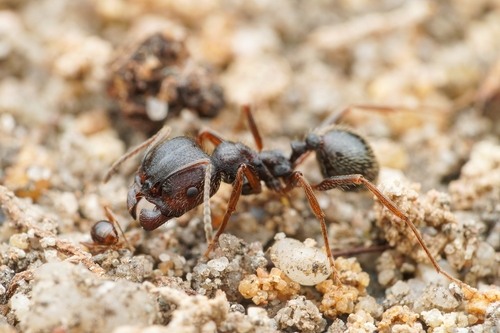
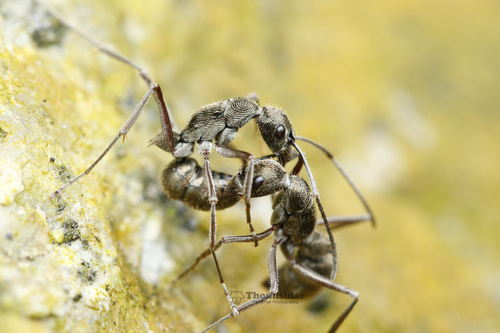
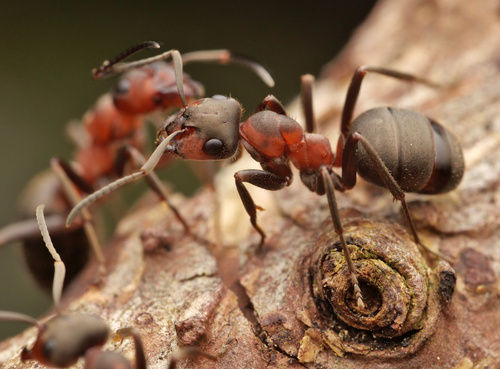
Formica lugubris, commonly called the hairy wood ant, is widespread in wooded upland areas across northern Eurasia. Colonies of this ant build large thatched mound nests that house thousands of workers, plus one or more queens. Worker hairy wood ants look similar to workers of other wood ant species in the genus Formica, but they can be distinguished by a fringe of hairs that extends down to their eyes, plus prominent hairs between the individual facets of their compound eyes. Workers grow up to 9 mm long, while queens are larger at up to 12 mm long. This ant species is a woodland edge specialist. Its nests are most often found along woodland edges, forest rides, firebreaks, and in open woodland clearings. If a woodland canopy grows too dense, it will shade out the ant nests. Colonies can occur in both mixed conifer and deciduous woodland, and the species plays an important role in forest ecosystems. A single colony can contain up to around three million ants, all living in an above-ground nest. Nests range in height from as small as 10 cm to over 100 cm, and can reach up to 192 cm in width. Nest size does not correspond to nest age, and small nests can survive and thrive for many years. Nests are typically positioned in sunny spots near woodland rides and glades. In areas with many nearby colonies, linked trails can form between nests to create a supercolony. All nests are built above ground in a dome shape, constructed from plant material, soil debris, and mostly organic matter. Despite being built above ground, nests have tunnels that extend 25 to 30 cm deep into the ground below. The ants may relocate their nest material over time to change the location of their colony. Hairy wood ant nests also provide habitat for 43 other distinct organism species. Red wood ant preservation efforts for this species are currently underway as part of the UK biodiversity action plan.