About Fomitopsis mounceae Haight & Nakasone
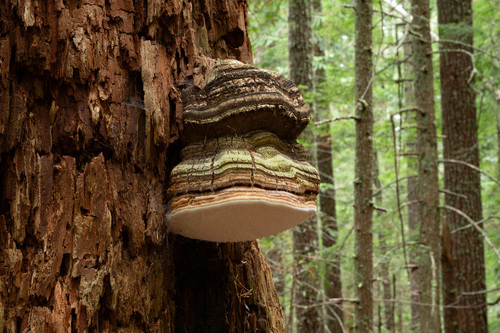
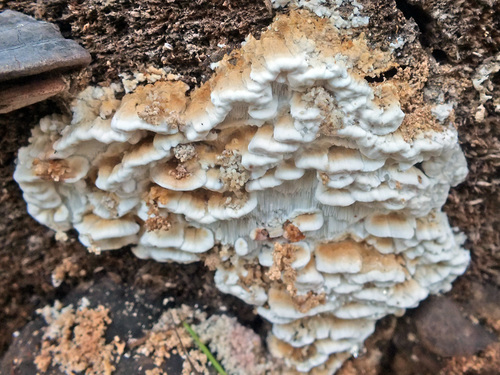
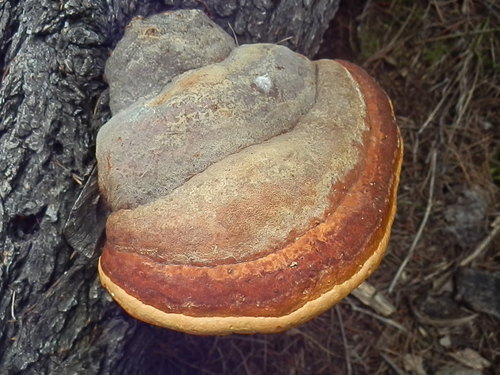
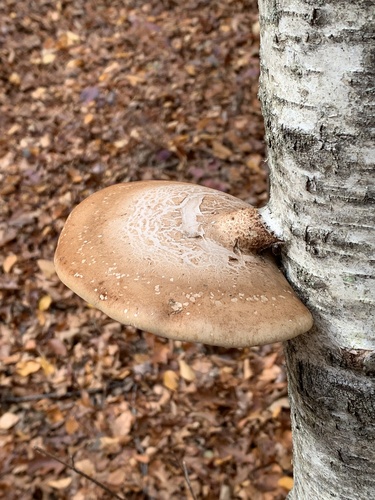
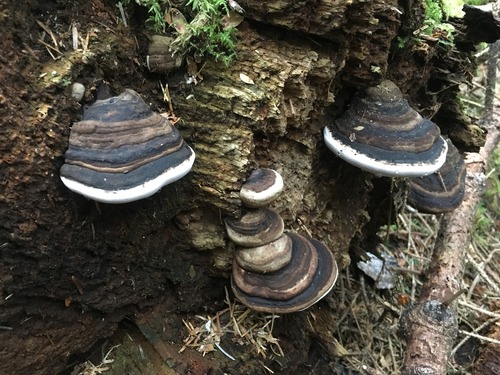
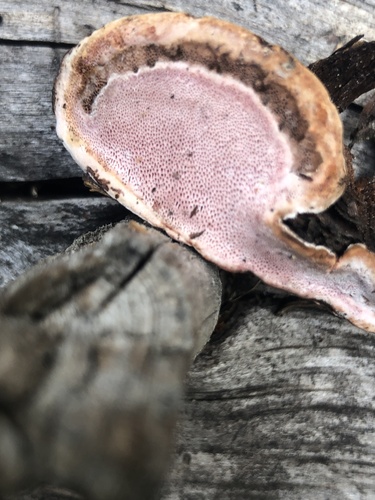
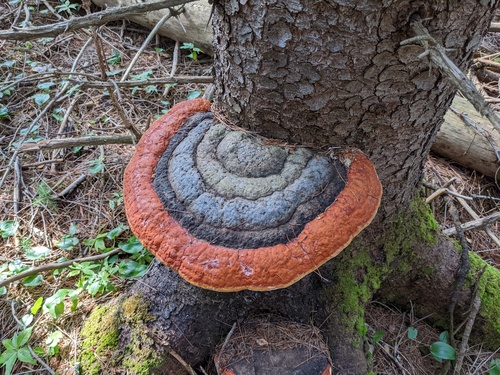
Fomitopsis mounceae typically has a fan-like shape, with distinct bands that are usually brown or red. It can have a resinous, sticky coating. As the conks age, they often develop a bumpy or warty texture. The cap measures 8–25 centimetres (3–10 in) wide and 5–12 cm (2–4+1⁄2 in) thick at the base. The underside of the conk is typically white or yellow, with 3–6 round pores per millimetre. When broken open, the inside is yellowish, or sometimes woody and brown, with no distinct internal bands. It stains brown when treated with KOH, and produces a whitish to cream spore print. This fungus produces perennial woody conks and causes cubical brown rot, which is typical of the Fomitopsis genus. It favours aspen or conifer trees. It is a detritivore that does not typically grow on live trees, and it usually grows at lower elevations than Fomitopsis schrenkii. Its distribution spans Canada and the northern United States, reaching as far south as northern California.