About Fistulinella mollis Watling
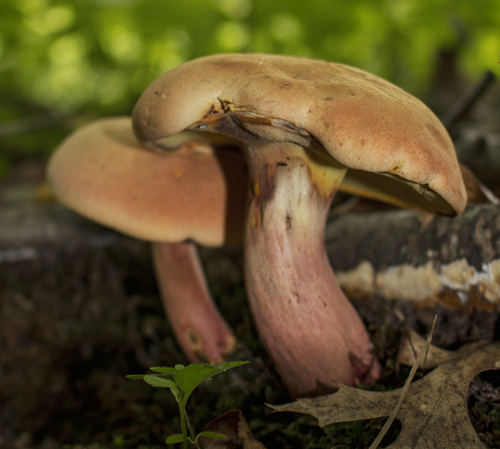
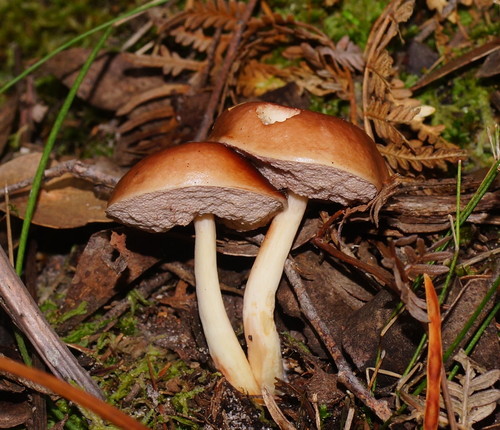
Fistulinella mollis, commonly known as the marshmallow bolete, is a bolete fungus in the family Boletaceae that is found in Australia. John Burton Cleland originally described this species under the name Boletus mollis in 1934; the species epithet mollis is the Latin word for the adjective "soft". Roy Watling later reclassified this species into the genus Fistulinella. Other common names include the caramel-capped bolete, both common names referencing its extremely soft consistency. Its cap is either red-brown or caramel-brown, measures 3 to 8.5 cm in diameter, is extremely soft, and is prone to insect infestation or microbial decay. Young caps are hemispherical with a smooth, sticky surface, and they become paler and flatter as the fungus ages. The mushroom's tubes are cream-colored when young, turning pink with age, and attach to the stem in an adnexed to adnate arrangement. Individual pores are 0.5 mm wide. The narrow cylindrical stem measures 5–8 cm tall by 0.5-1.2 cm wide, and is white, turning yellow when bruised. The soft white flesh has very little taste or odour. The spore print of Fistulinella mollis is brown, and individual spores measure 12.5-16.5 x 4-5 μm. Two related Australian species can be easily distinguished from Fistulinella mollis: Fistulinella rodwayi has a purple-tinged cap, while Fistulinella prunicolor has smaller pores. This species has been recorded from Mount Wellington in Tasmania, and grows in eucalypt forest, where it is often found growing on rotting wood or bark.