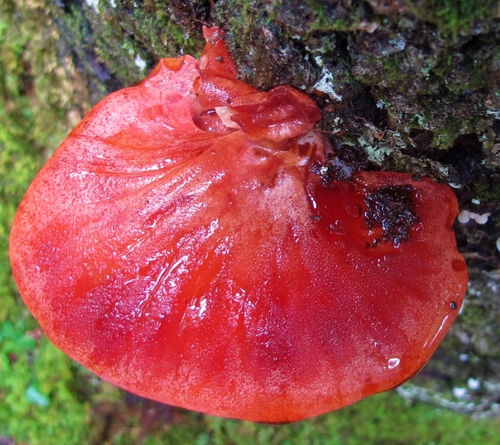
About Fistulina hepatica (Schaeff.) With.
The cap of Fistulina hepatica (Schaeff.) With. measures 7–30 centimetres (3–12 inches) wide and 2–6 cm (3⁄4–2+1⁄4 inches) thick. Its shape resembles a large tongue, and it has a rough surface. Young specimens are pinkish-red, and this color darkens to reddish-brown as the fungus ages. If a stem is present, it grows up to 5 cm (2 inches) long and 4 cm wide. The hymenium is creamy-white. When cut, the flesh releases a dull red juice that can cause stains, and the cut flesh itself has a visual resemblance to meat. This fungus has a sour taste. Its spores are pink, and it produces a pinkish spore print. This species is commonly seen in Britain and the rest of Europe between July and October, and it can also be found in North America, Australia, North Africa, and Southern Africa. It is fairly common, and often grows on oaks and sweet chestnut from August to the end of autumn, on either living or dead wood. It tends to leave a reddish-brown stain in the living wood of oaks, creating a desirable type of timber. In Australia, it grows out of wounds on Eucalyptus trees. It causes brown rot in the trees it infects. Fistulina hepatica is edible; some people describe its texture as reminiscent of raw meat. Older specimens should be soaked overnight, as their juice can cause gastric upset. This species does not tend to preserve well.

