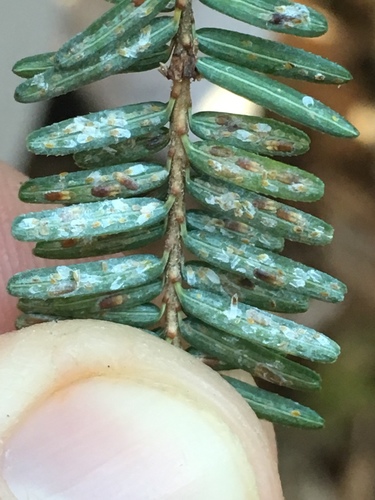
About Fiorinia externa Ferris, 1942
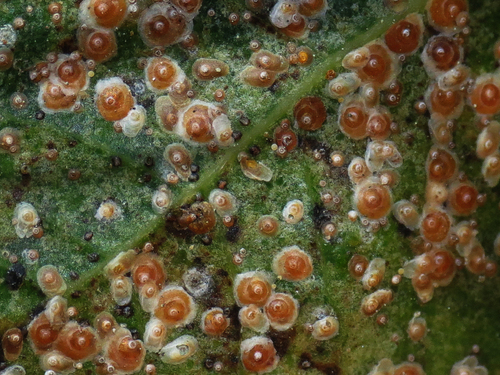
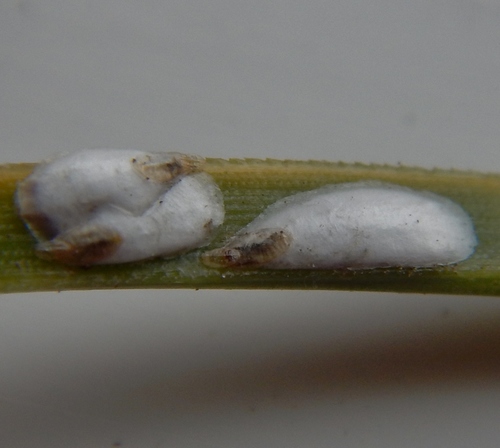
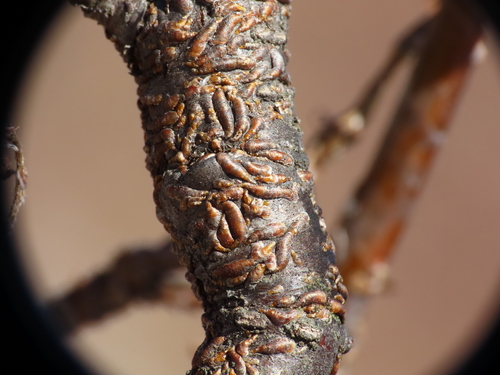
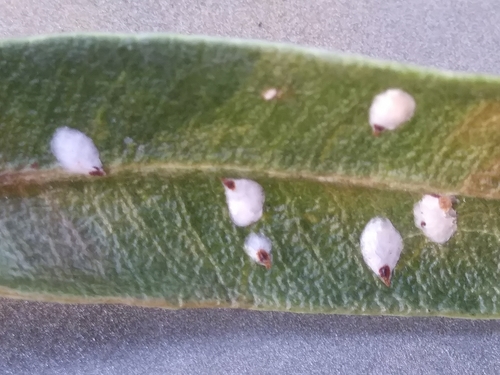
Fiorinia externa (Ferris, 1942) is an insect scale species. The adult female of Fiorinia externa is approximately 1 mm long. The scale cover of a second-instar female is elongated, measures around 1.5 mm in length, and can be yellowish-brown, orange-brown, or reddish-brown in color. The scale cover of immature males is white. Both eggs and crawlers of this species are yellowish. After crawlers settle, they excrete abundant white wax filaments that give infested hemlock leaves a whitish appearance. This species is native to Japan and southern China. It was first reported growing on Tsuga (hemlock) in New York state in 1908. Compared to other invasive insects, it has spread slowly across the northeastern United States. It has spread as far south as Georgia, and as far west as Michigan, Kentucky, and Tennessee. While F. externa has not been confirmed to have established permanent populations in other regions, it is considered a quarantine concern. It has been recorded in other parts of North America, including California and Florida, found on host cuttings. In England, it was once reported on a single fir tree imported from the U.S., but the population died out on that tree after detection.