About Finschia novaeseelandiae (Gmelin, 1789)
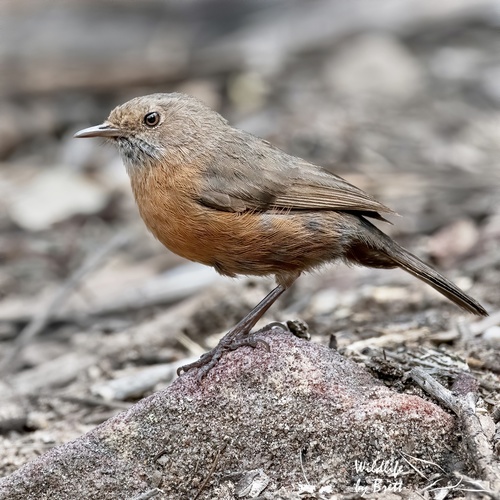
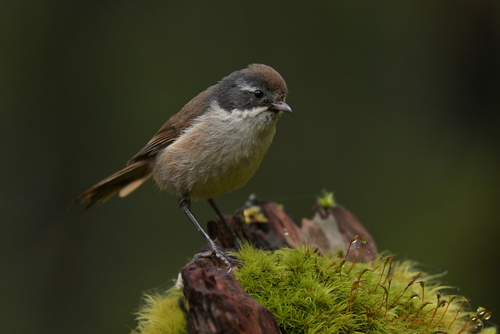
Finschia novaeseelandiae (Gmelin, 1789), the New Zealand brown creeper, has distinct plumage coloration: its upper body is a warm mix of brown and chestnut, while its lower body is noticeably paler brown. The head is made up of chestnut brown and dark brown patches with spots and streaks, and the face and the area behind the face can be ash or dark grey. A pale whitish eye stripe is a key distinguishing feature of this species. The legs and beak are pinkish or grey-brown. The tail is long and frayed with a distinctive dark bar at the tip, and the eyes are dark reddish brown. Adult males and females and juveniles are very similar in overall appearance. Juveniles can be told apart from adults before May by their yellow bill flanges and dark brown legs; they also have a greyer, less reddish-brown head, and lack the white stripe behind the eye. Brown creepers moult in late summer. On average, males weigh 13.5 g and females weigh 11.0 g, and adult brown creepers measure approximately 13 cm in total length. This species is the least studied of the three in its genus, despite being relatively common. Brown creepers are often heard but not seen because they spend most of their time in tree canopies and rarely feed on the ground. Their soft conversational calls are also indistinct, raspy, and hard to distinguish from the calls of other small bird species, making the brown creeper difficult to identify in the field. They are vocal year-round except when they moult in late summer. Territorial singing peaks in spring, and only males produce long territorial songs that vary between individual birds. Male songs mix slurs, musical whistles and harsh notes, while female songs are a rapid sequence of short notes ending with a high-pitched, prolonged final note. Overall, the brown creeper’s song is made up of short, attractive warbles that are distinct from the songs of other species, but their conversational chatter can easily be mistaken for the calls of other small birds that live in bush habitats. This species is found only south of Cook Strait in New Zealand, where it is widely but patchily distributed across South Island forests. Isolated populations persist in locations including Banks Peninsula, Mount Peel, Hunters Hill, and throughout Otago. It is common on several offshore islands of Fiordland (Secretary Island, Resolution Island, Chalky Island) and the Marlborough Sounds (D'Urville Island, Arapawa Island, Maud Island). It is widespread and common on Stewart Island and its surrounding islands (Ulva Island and North-East Muttonbird), and is particularly abundant on Codfish Island. Brown creepers live in a diverse range of habitats, including native beech and podocarp forest, exotic plantations, willow stands, gorse and broom scrub, regenerating forest, mānuka or kānuka scrub forests, eastern river flats, and high-altitude mountain silver beech and red silver beech mountain forests. They occupy areas from sea level all the way up to the treeline. Their preferred South Island habitats are west and north of the Southern Alps, and Fiordland. They are also common in the dry scrub forests of Marlborough and Canterbury. They are mostly non-migratory; only populations that breed at high altitude move down to lowlands to form winter flocks. For nesting, they prefer dense vegetation within the forest canopy. Since European arrival in New Zealand, brown creeper populations have declined due to the destruction of lowland forest and the introduction of mammalian predators. Brown creepers eat mostly invertebrates, but also regularly include fruit in their diet. Their main prey items are beetles, moths, spiders, flies, and caterpillars. They also feed on ripe fruit from native plants such as Coprosma, and fruit consumption is most common in autumn. Most foraging for invertebrates involves gleaning prey from small branches and leaves in the canopy, though they will sometimes hang upside down from branches to forage. They will also take invertebrates from under loose bark or from large branches. They only very rarely forage on the ground, and prefer to forage more than 2 meters above ground. They may forage in breeding pairs, but most often forage in flocks of 3 to 12 birds. Outside of the breeding season, these flocks are usually loose groups made up of family members, juveniles, and occasionally other unrelated breeding pairs. During the breeding season, breeding pairs forage together within their territory. Researchers think that sexual dimorphism, particularly difference in beak size, reduces foraging competition between males and females: because males generally have larger beaks, they can access a wider range of food resources. Recent research has investigated the possible role of ultraviolet light vision in the brown creeper’s ability to recognize eggs of the brood parasite long-tailed cuckoo. Brown creepers are known to reject long-tailed cuckoo eggs, while their close relatives yellowheads and whiteheads usually do not. Research found that both brown creepers and yellowheads lack the short-wavelength sensitive (SWS1) opsin gene, which changes the range of light wavelengths the birds can detect, including how they see light within and outside the ultraviolet range. In the genus Mohoua, which Finschia novaeseelandiae belongs to, this genetic difference could affect the ability to use color cues to distinguish foreign long-tailed cuckoo eggs from the brown creeper’s own eggs. Researchers have concluded that additional behavioral research is needed to fully understand the phenotypic effects of this genetic change, which would explain why brown creepers reject long-tailed cuckoo eggs while close relatives do not.