About Ficus sansibarica Warb.
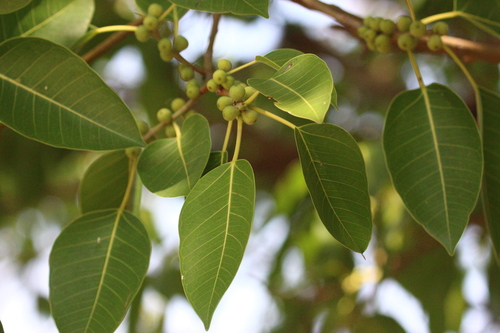
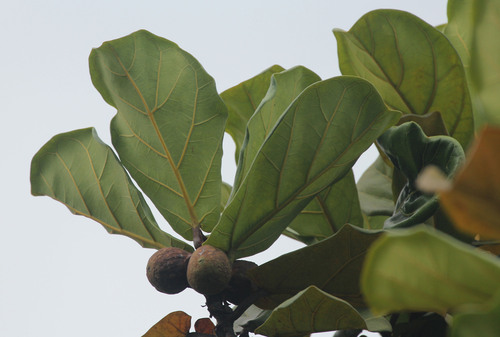
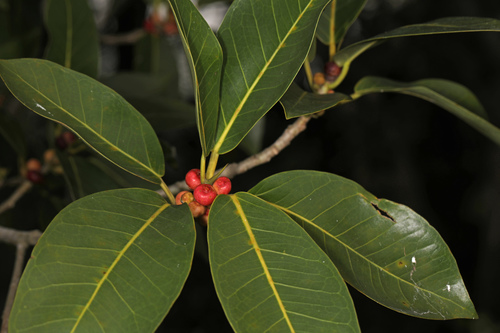
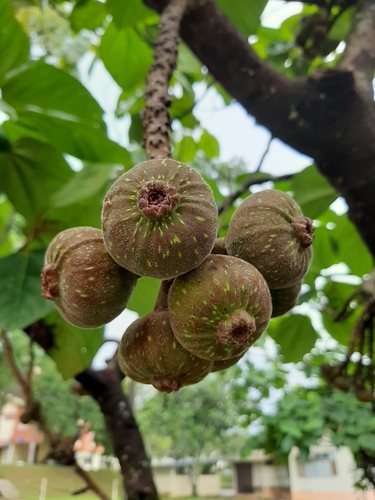
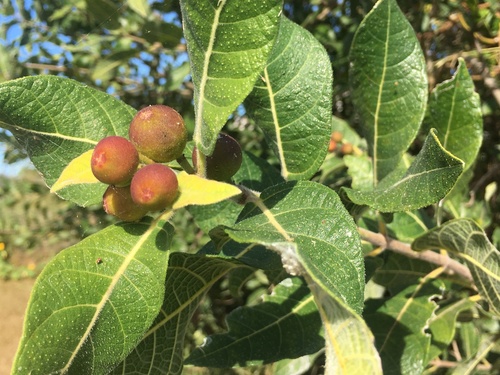
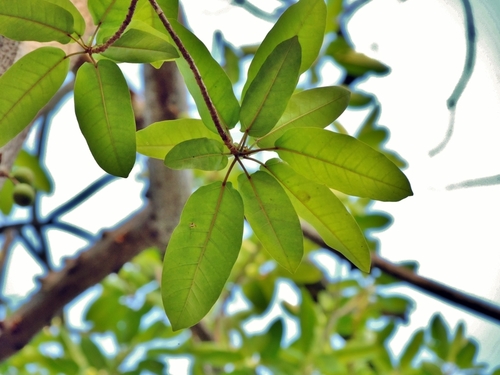
Ficus sansibarica Warb. has fairly smooth, light grey bark that is lumpy and folded. Its smooth leaves are oblong-obovate with parallel sides, reaching up to 13 cm in length, and grow on slender petioles. The species produces large figs that measure up to 5 cm across, have a bitter taste, and appear in groups of 2 or 3 during summer. It is cauliflorous, meaning figs grow directly from characteristic wart-like, leafless branchlets on the trunk and main branches (old wood). Ficus chirindensis, a similar species found in forests of southeastern Zimbabwe and adjacent Mozambique, differs by having more oval leaves, often developing buttress roots, and bearing small 1.5 cm figs in stalked pairs on second year branches. Ficus sansibarica occurs in African tropics and subtropics, from coastal elevations up to 900 m above sea level. Its nominate subspecies is distributed mainly in eastern areas, and extends westwards up the Zambezi Valley. It grows in coastal, riverine, and evergreen forests or woodland, as well as miombo woodlands. It is cultivated locally in parks, villages, and bush camps. It prefers deep sandy soil, and often begins life as a strangler. Its pollinating wasp is Courtella armata. For uses, the raw figs of Ficus sansibarica are eaten as food, and are locally believed to promote fertility. Fibers obtained by tearing apart stems are used for basket weaving. The species is also deemed sacred locally.