About Ficus fraseri Miq.
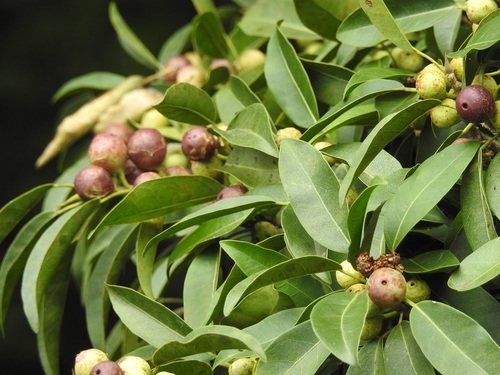
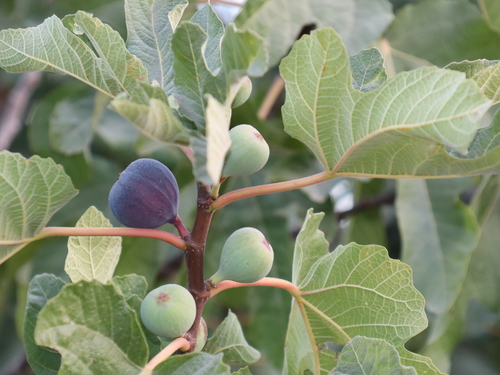
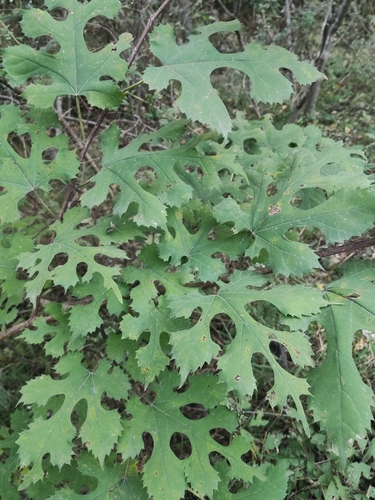
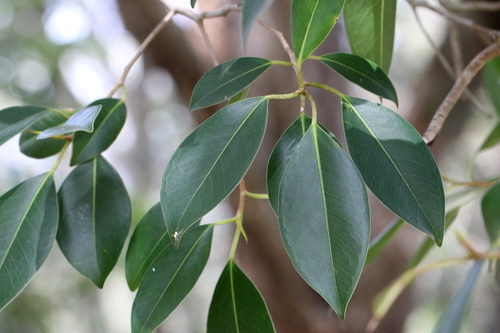
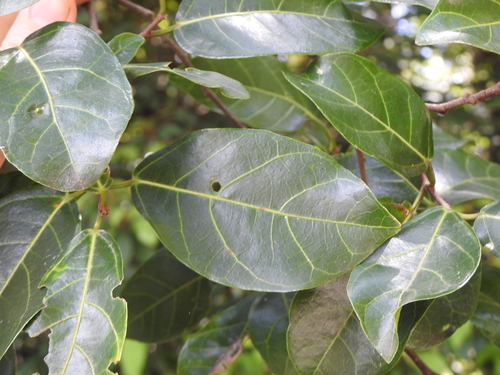
Ficus fraseri Miq., commonly called the white sandpaper fig or shiny sandpaper fig, is one of multiple fig species generally known as sandpaper figs. It is native to the northern and eastern coasts of Australia, as well as New Caledonia and Vanuatu. Additional common names for this species are figwood and watery fig. It grows as either a shrub or a tree, reaching heights between roughly 6 and 15 metres. Its leaves measure 6 to 14 cm long and 2.5 to 6.5 cm wide, and grow on 1 to 2 cm long petioles. The plant produces rounded figs that are 1 to 1.5 cm long. These figs start out yellow in colour, and mature to orange-red between May and February within the species' native range. The figs are edible, but have a bland, insipid flavour. In Australia, the species is found from Tuggerah Lake in New South Wales, northward to the Atherton Tableland in Queensland, and only rarely occurs in the Northern Territory. The grey-headed flying fox feeds on the figs of this species. While it is rarely seen in cultivation, Ficus fraseri is a fast-growing ornamental species that can be easily propagated from seed. Chew notes that F. fraseri is found in the Northern Territory, a claim that has been repeated by Govaerts et al. However, Harden (1990) records only New South Wales and Queensland as Australian states where the species grows. Specimen records held by the Australasian Virtual Herbarium and the Global Biodiversity Information Facility are also restricted to these two Australian states; the Global Biodiversity Information Facility additionally includes records from New Caledonia, as shown on its distribution maps.