About Ficopomatus enigmaticus (Fauvel, 1923)
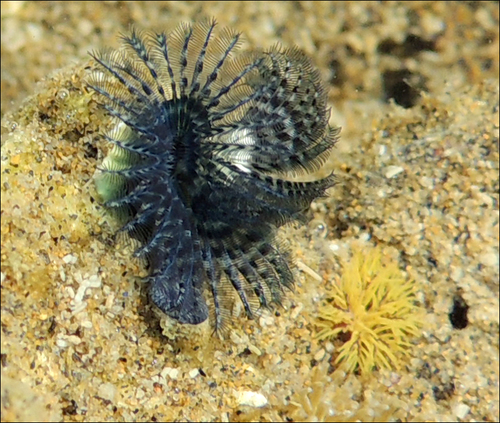
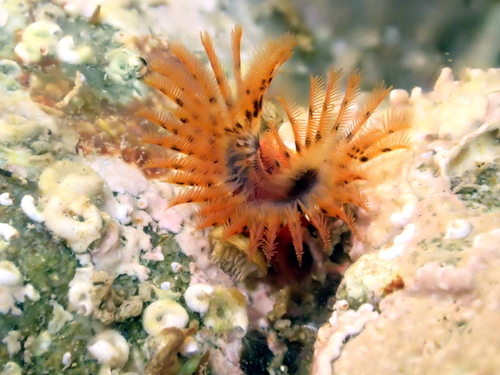
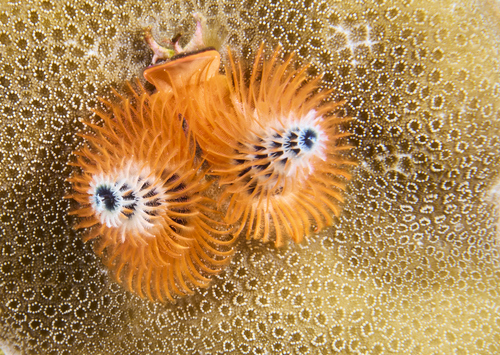
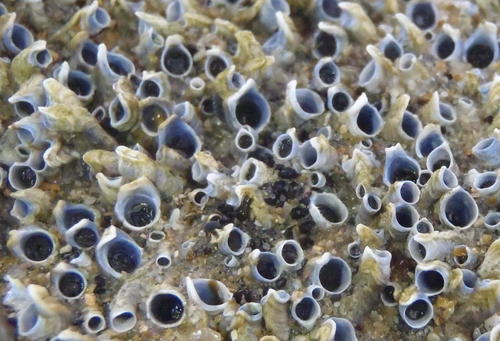
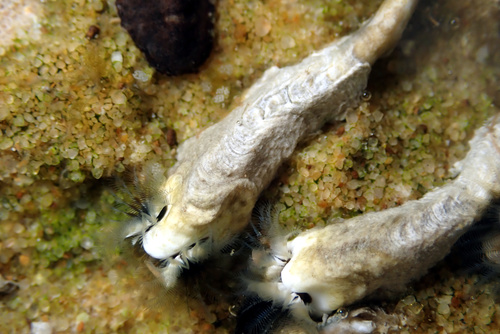
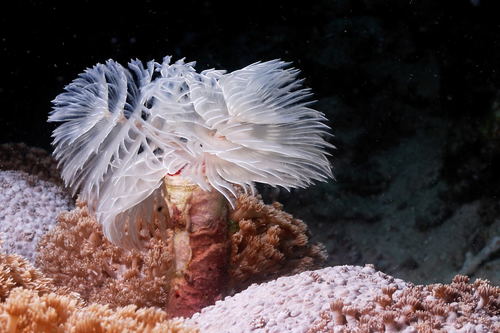
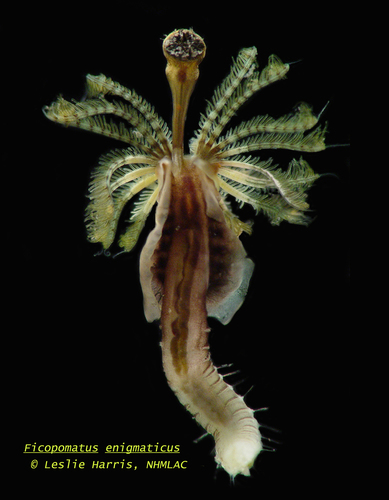
Ficopomatus enigmaticus, commonly known as the Australian tubeworm, is usually 2 to 2.5 cm (0.79 to 0.98 in) long, and may occasionally reach up to 4 cm (1.6 in) long. Up to 20 branching gill plumes, colored gray, green, or brown, are located on its front end. These worms secrete a hard calcareous tube around their body that can grow up to 10 cm (3.9 in) long by 2 cm (0.79 in) wide. The tubes are white when new and turn brown as they age. They are flared at the opening, and have flaring rings along their entire length. The worm can seal the mouth opening of its tube with a spiny operculum. Australian tubeworms always live in colonies. Many individual tubes grow together to form small clusters or large reefs, and these aggregations are extremely dense. Dense reefs can hold up to 180,000 worms per square meter, with tube openings spaced just approximately a millimeter apart. Tubes are held together by layers of tiny crystals, and may weave around one another. As new worms settle on the outer surface of existing structures, the reef gradually develops into a solid mass. Worm reefs can grow to be over 7 m (23 ft) long. At the peak of a severe invasion of Lake of Tunis in Tunisia, the total reef mass across the lagoon was estimated to hold roughly 540,000 tons of carbonate. In shallow water, reefs often grow into a circular shape, as new worms settle along the outer edges of the existing structure. Neighboring reefs may fuse together to form larger platforms. In habitats with moving water current, reefs develop an elongated shape.