About Ficedula parva (Bechstein, 1792)
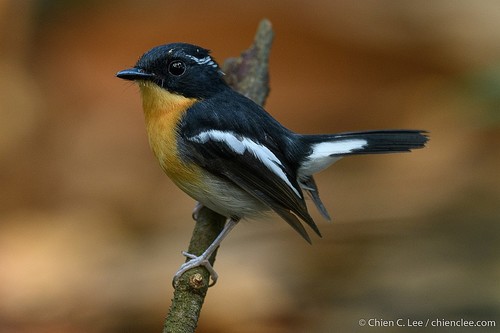
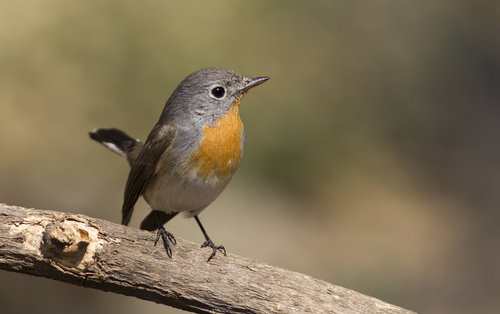
Ficedula parva, the red-breasted flycatcher, measures 11–12 cm in total length. It is a relatively small flycatcher, only slightly larger than the Eurasian wren. Breeding adult males have mostly muted brown upperparts, white underparts, a grey head, and an orange throat. Its bill is black with a pale pinkish base, and has the broad but pointed shape typical of aerial insectivores. A wheatear-like tail is distinctive across all plumages: the tail is entirely black except for a white base on the outer tail feathers. All plumages also feature a noticeable white eyering. Compared to other flycatchers, its small overall size is distinctive in some parts of its range. It can be told apart from the closely related, very similar taiga flycatcher by its warmer overall coloration, a more extensive orange throat patch, and a brighter bill with a more extensive pale pinkish base. This species breeds in mature old-growth temperate broadleaf and mixed forests, with a breeding range that stretches from Germany east to the Caucasus and Ural Mountains. The northernmost extent of its breeding range reaches the Arctic Circle, while the southernmost breeding populations are located in the central Balkans and eastern Carpathians. The easternmost part of its breeding range overlaps with the range of the taiga flycatcher, which extends further east to the Pacific Ocean. The red-breasted flycatcher is scarcer in the westernmost portion of its breeding range, and only occurs in scattered patches of suitable habitat in countries including Germany, Sweden, and Austria. Its preferred forest type is usually beech, followed by oak; northern populations also live in spruce forest. Red-breasted flycatchers prefer to nest in tall trees with abundant undergrowth and an open layer of perching twigs between the undergrowth and the canopy. They also favour forest glades, clearings, and areas near water, and may additionally be found in orchards and vineyards.