About Festuca glauca Vill.
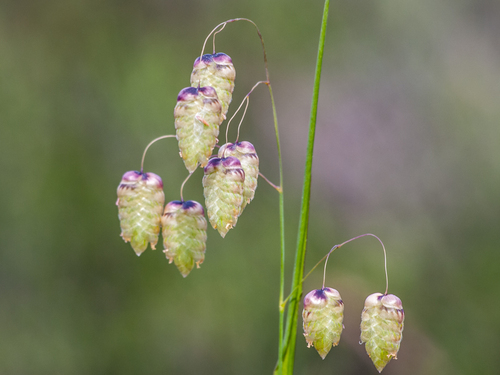
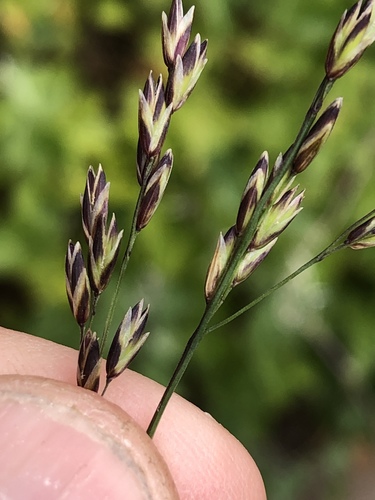
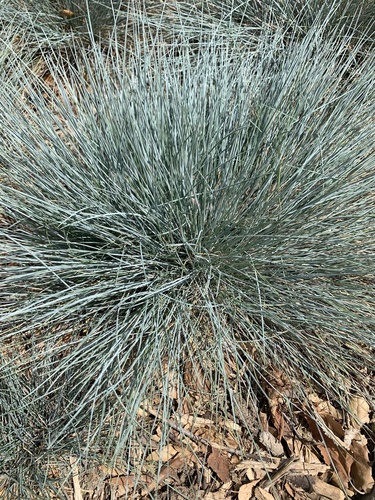
Festuca glauca Vill. is a perennial clump-forming ornamental grass, known for its glaucous, finely-textured blue-gray foliage. Its foliage forms a dome-shaped, porcupine-like tuft made up of erect to arching, needle-like 9-ribbed blades. These blades radiate upward and outward, reaching a length of 140–180 mm. In late spring to early summer, light green flowers with a purple tinge develop in terminal panicles that sit atop stems rising above the foliage, but these inflorescences are not very showy. After flowering, puffy wheat-like seed-heads form. Blue fescue is native to France, Italy, Spain, and Switzerland. In cultivation, F. glauca's foliage reaches a height of 14–18 cm (6–7 in); when inflorescences are included, the total height of the clump typically reaches 20–25 cm (8–10 in). This grass grows best in well-draining soil, and does not thrive in wet soils. It can tolerate dry soils and low-nutrient soils. It should be planted in full sun to develop the best foliage color, and it can also grow in lightly shaded positions. It tolerates drought, neglect, and low nutrient levels, though it prefers regular watering. If a plant develops a large amount of dead leaves, prune it back to 40 mm from ground level during winter. Clumps can be lifted and divided as needed, and this work should also be done in winter. Dividing established clumps in winter is the easiest propagation method, though plants can also be grown from seed. Clumps of this grass tend to die out in their center, so they require frequent division, and must be divided, replanted or replaced every 2–3 years. Foliage may decline considerably during very hot, humid summers. When used as groundcover, weeds often grow among the clumps and need to be removed by hand.