About Festuca beckeri (Hack.) Trautv.
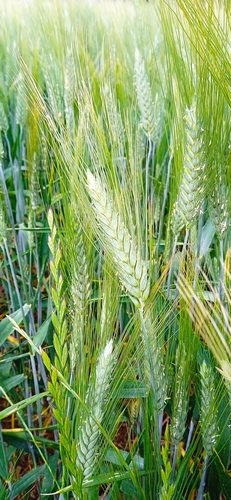
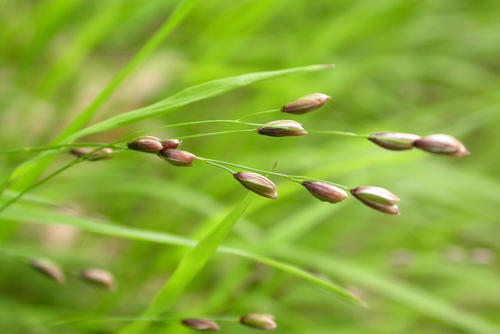
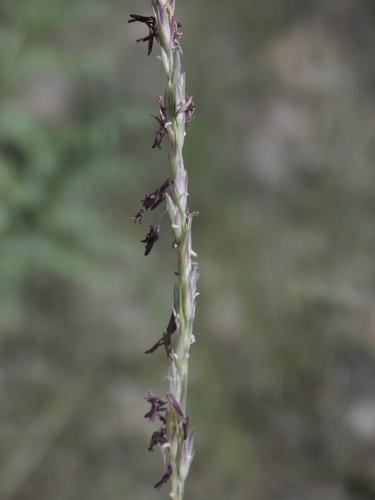
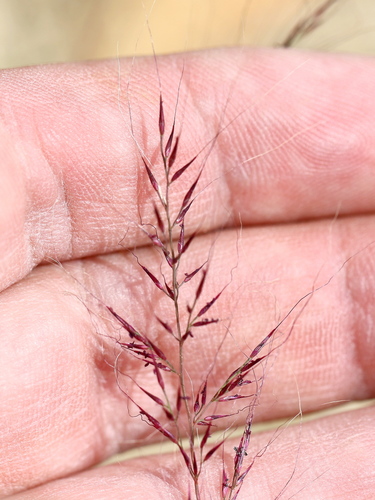
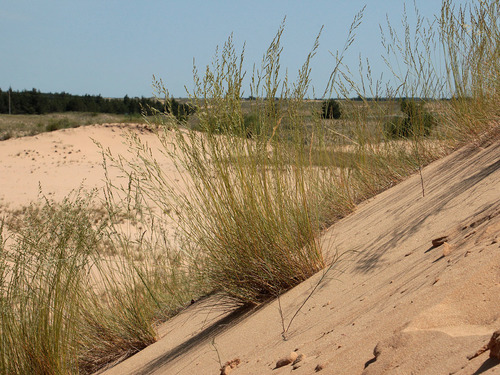
Festuca beckeri (Hack.) Trautv. is a perennial, caespitose plant with clumped growth. Its erect culms reach 20–60 centimetres (7.9–23.6 in) in length, and it has light brown butt sheaths. The ligule forms an eciliate membrane that extends around the culm, while the leaf sheaths are open and hairy. Leaf blades are filiform, conduplicate, light green, 0.3–0.7 centimetres (0.12–0.28 in) broad, and have a smooth surface; the plant's peduncle is also smooth. The inflorescence is an open, linear panicle 6–14 centimetres (2.4–5.5 in) long, with hairy main panicle branches. Its spikelets are elliptic and solitary, and pedicelled fertile spikelets each hold 4 to 6 fertile florets. The glumes are chartaceous, lanceolate, and keelless, with acute apexes; only the upper glume is measured, ranging from 2.9–4 millimetres (0.11–0.16 in) in size. The fertile lemma is 2.5–4.7 millimetres (0.098–0.185 in) long, chartaceous, lanceolate, keelless, and the same light green color as the leaf blades. The main lemma has an acuminate apex and bears a single awn 0.3–0.8 millimetres (0.012–0.031 in) long. The flowers have three stamens. The fruits are caryopses with an additional pericarp and a linear hilum.