About Fendlera rupicola A.Gray
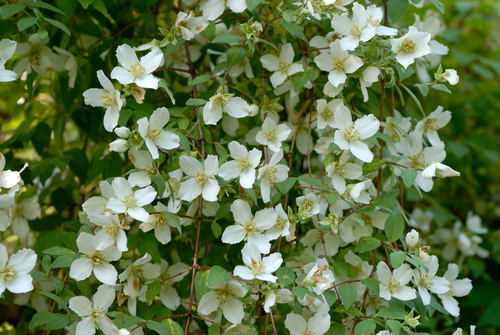
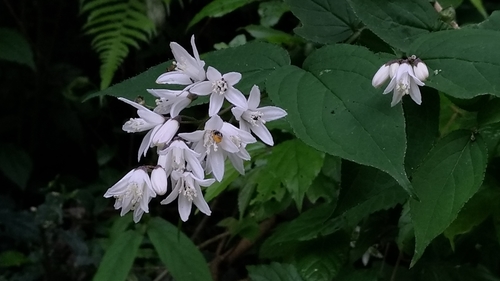
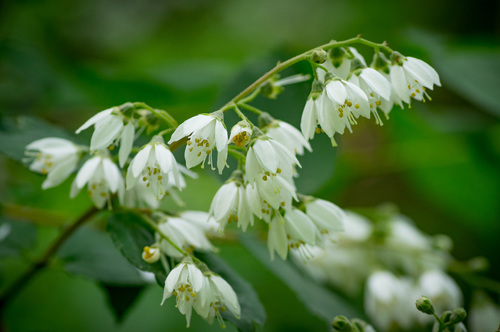
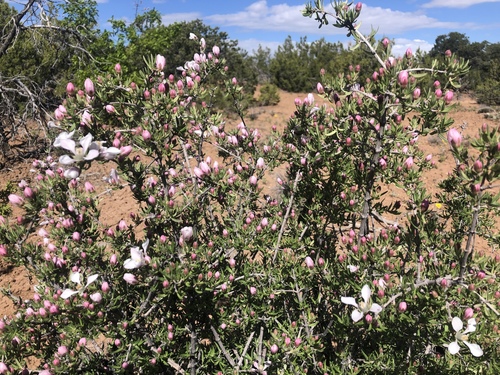
Fendlerbush (Fendlera rupicola A.Gray) is a deciduous shrub that grows 1 to 3 metres tall. It has tough, wiry grey branches covered in furrowed bark. Its leaves are opposite, oblong, entire, thick and twisted, with three veins. Creamy-white flowers bloom at the tips of short branches, either singly or in clusters of up to three. Each flower has four purplish sepals, four petals that narrow into a claw at the base, and a central cluster containing four styles and eight stamens. Its fruits are capsules that stay on the plant for a long time. This species occurs in mountainous areas of Texas, New Mexico, Colorado, Utah, Arizona, and northern Mexico. It is common in the Trans-Pecos region, and can also be found in the Davis Mountains, Chisos Mountains, and Guadalupe Mountains. Fendlerbush typically grows in semi-arid conditions within blue grama (Bouteloua gracilis) communities dominated by pinyon pine and juniper. It grows on dry rocky slopes, in deserts, and on mesas. It often grows in association with oneseed juniper (Juniperus monosperma), alligator juniper (Juniperus deppeana), true pinyon (Pinus edulis), gray oak (Quercus grisea), skunkbush sumac (Rhus trilobata), mountain mahogany (Cercocarpus breviflorus), and antelope bitterbrush (Purshia tridentata). The Navajo use an infusion of the plant's inner bark to treat accidental swallowing of ants. They also use this plant to kill head lice, and use it as a cathartic. It is incorporated into Navajo plumeway, nightway, male shootingway, and windway ceremonies. Both Havasupai and Navajo peoples use the plant's wood to make arrow shafts. The Hopi use this plant in religious ceremonies. Navajo people use its wood to carve notched and smooth sticks that are rubbed together during their mountain chant ceremony. They also use the wood to make weaving forks, planting sticks, and knitting needles. For Navajo mush-eating ceremonies, the plant is boiled alongside juniper berries, pinon buds, and corn meal.