About Faxonius virilis (Hagen, 1870)
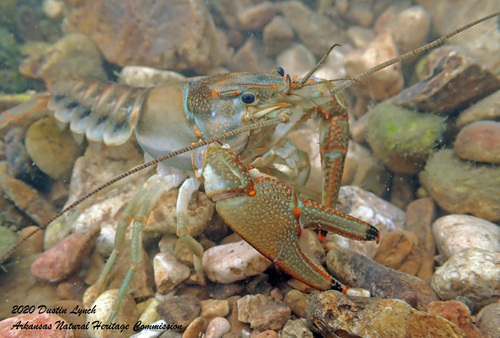
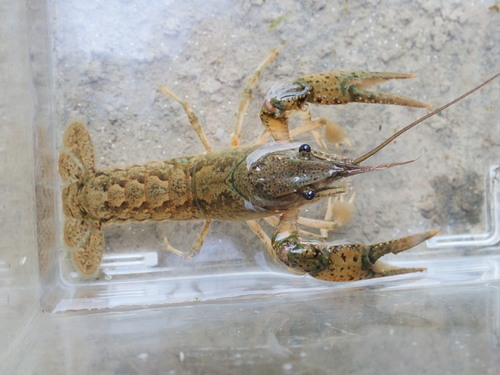
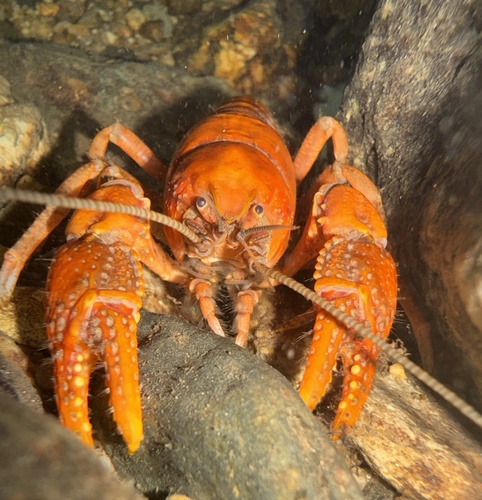
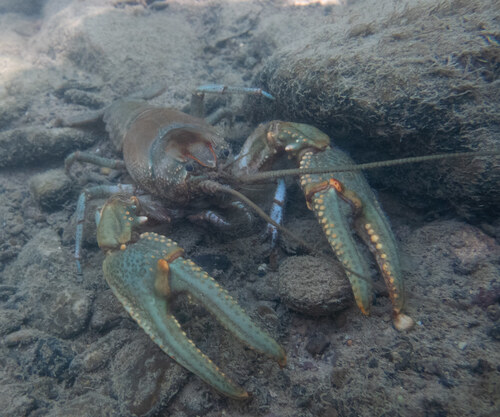
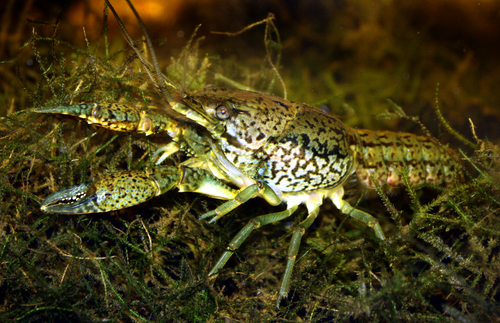
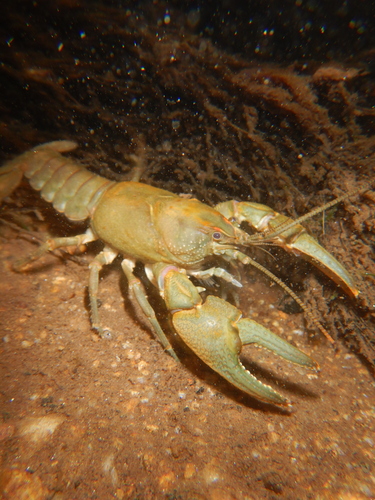
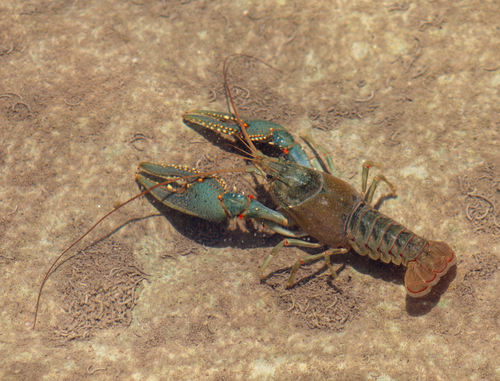
Faxonius virilis (Hagen, 1870) is a species of crayfish that has several common names: the virile crayfish, northern crayfish, eastern crayfish, and less commonly the lake crayfish or common crawfish. In August 2017, this species was reclassified, and its genus was changed from Orconectes to Faxonius. It is native to the central United States, extending east to tributaries of Lake Erie, Lake Ontario, Lake Champlain, and the St. Lawrence River in New York, as well as to most of Canada. Its current distribution covers southern Canada from Alberta to Quebec and the northern United States. It has become an invasive species in parts of North America outside its native range, and it was first discovered in the United Kingdom in 2008. This species is listed as Least Concern on the IUCN Red List. Ecologically, F. virilis lives under stones and logs in lakes, streams, and wetlands, where it hides from predators such as fish. It can be identified by its brown or rust-red carapace and large chelipeds, which are usually blue in color. It feeds on a wide variety of plants and invertebrates, along with tadpoles and even small fish. Humans use F. virilis as fishing bait, as a food source for people, and as aquarium food for carnivorous fish.