About Faxonius neglectus (Faxon, 1885)
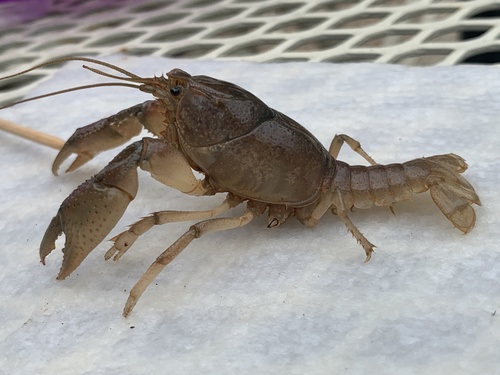
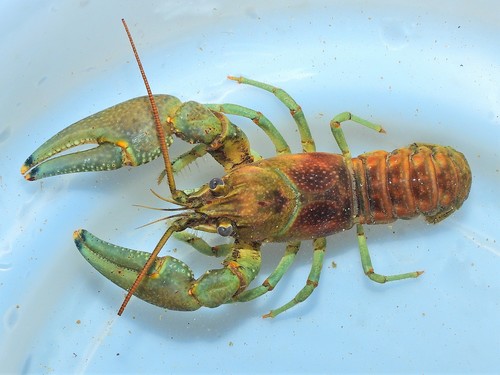
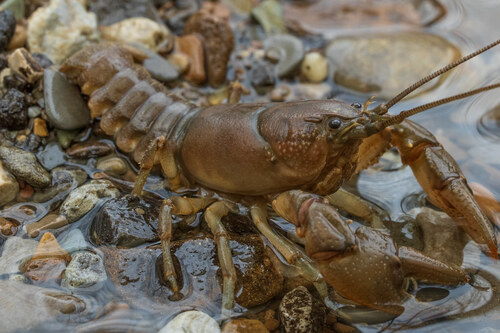
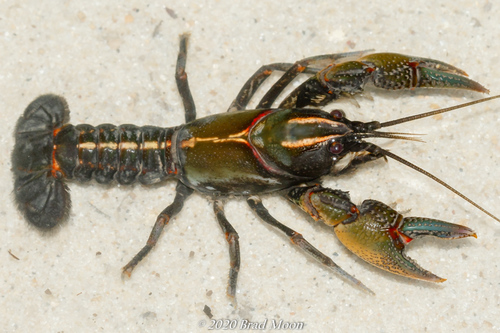
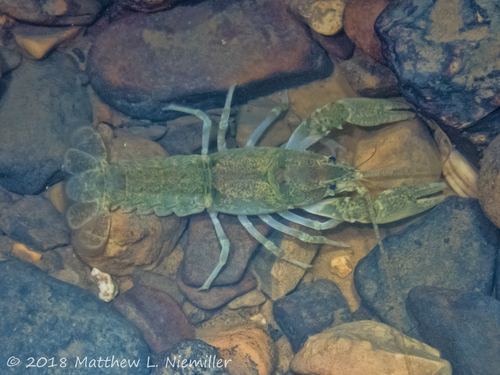
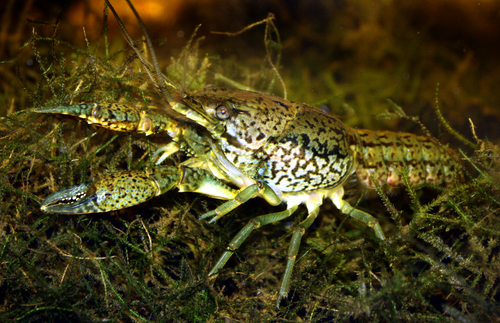
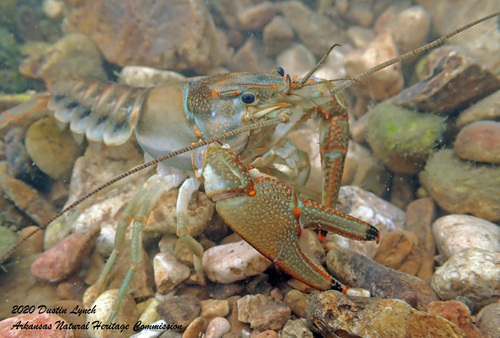
Faxonius neglectus, first described by Faxon in 1885, contains two recognized subspecies: F. neglectus chaenodactylus, commonly called the gapped ringed crayfish or gap-ringed crayfish, and F. neglectus neglectus. This crayfish species has distinct characteristic markings across its decapod anatomy. It has a wide ring on the rostrum, paired with a wide dark brown ring on the dactyl and propodus of its chelipeds, which end in bright red or orange. The third maxilliped has a scalloped tip. Carapace color ranges from light brown to yellow, and a dark brown band forms just behind the cephalic groove. No observable sexual dimorphism has been documented for this species. On average, the adult carapace length of both males and females measures 32 mm, or 1.3 inches. For F. n. chaenodactylus, individuals undergo an average of 8 molts during their first year of life, followed by an average of 4, 3, 4, 4, and 4 molts in each subsequent year. Mating in this species is polygamous, with mating access determined by size-based dominance. Like many other decapods, F. neglectus feeds on algae and detritus in its habitat. F. neglectus has two geographically separated allopatric native populations. It has been recorded as an invasive species in multiple locations: the Croton River drainage of the Hudson River system in southeastern New York, the Housatonic River drainage in Connecticut, and the Spring River drainage of the Ozarks in Arkansas. In areas colonized by F. neglectus, the native crayfish species Faxonius eupunctus and Cambarus hubbsi are no longer present, despite being recorded in these locations before invasion.