Viperidae
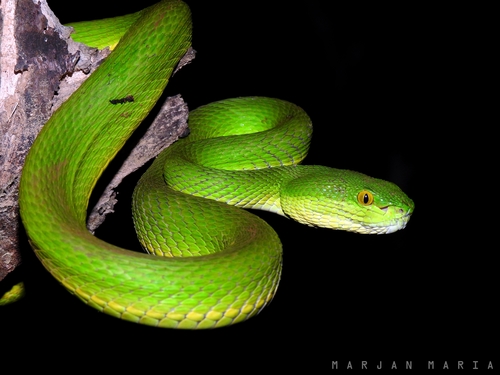
Trimeresurus erythrurus (Cantor, 1839)
Trimeresurus erythrurus (Cantor, 1839)
Trimeresurus erythrurus is a green, sexually dimorphic pit viper found in parts of South and Southeast Asia.
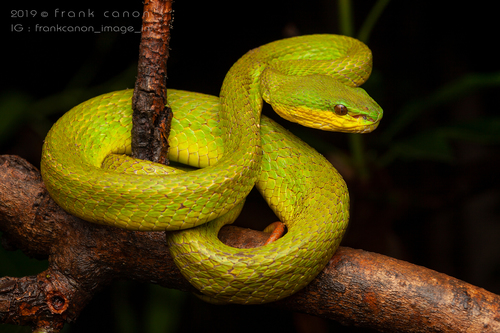
Trimeresurus insularis Kramer, 1977
Trimeresurus insularis Kramer, 1977
Trimeresurus insularis is an arboreal pit viper found in dry monsoon forests of eastern Indonesian islands and Timor-Leste.
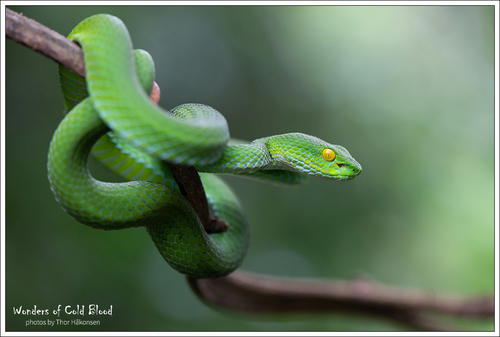
Trimeresurus macrops Kramer, 1977
Trimeresurus macrops Kramer, 1977
Trimeresurus macrops is a large-eyed green pit viper found in parts of Southeast Asia.
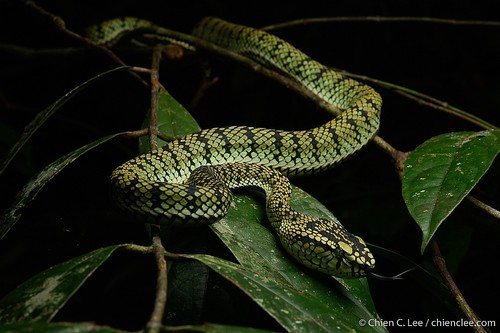
Trimeresurus sumatranus (Raffles, 1822)
Trimeresurus sumatranus (Raffles, 1822)
Trimeresurus sumatranus is a large arboreal pitviper found in lowland forests of Southeast Asia.
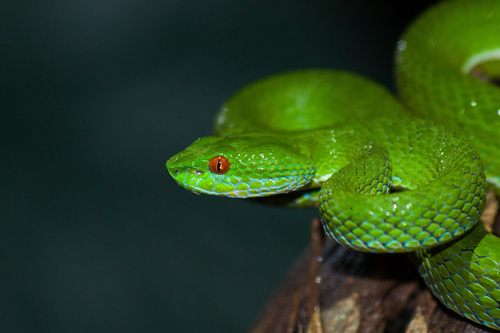
Craspedocephalus rubeus (Malhotra, Thorpe, Mrinalini & Stuart, 2011)
Craspedocephalus rubeus (Malhotra, Thorpe, Mrinalini & Stuart, 2011)
The ruby-eyed green pitviper (Craspedocephalus rubeus) is a venomous pit viper endemic to Southeast Asia.
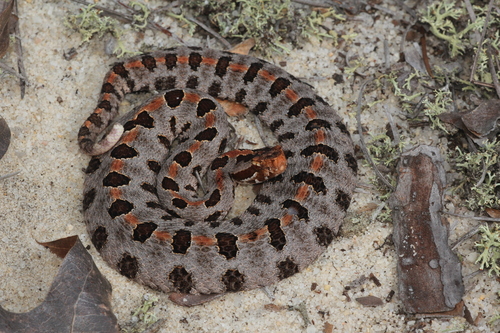
Sistrurus miliarius Linnaeus, 1766
Sistrurus miliarius Linnaeus, 1766
Sistrurus miliarius (the pygmy rattlesnake) is a small bulky viper found in the southeastern United States in varied vegetated habitats.
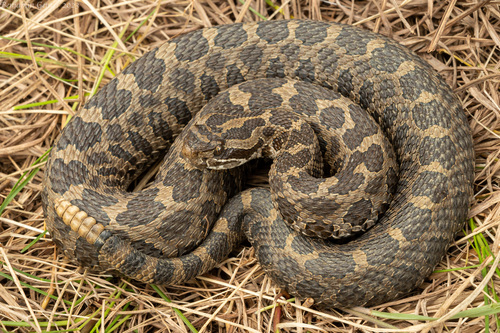
Sistrurus catenatus (Rafinesque, 1818)
Sistrurus catenatus (Rafinesque, 1818)
Sistrurus catenatus (eastern massasauga) is a small North American rattlesnake now found in isolated populations across its former range.
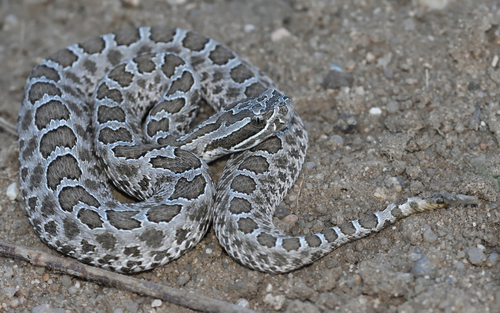
Sistrurus tergeminus (Say, 1823)
Sistrurus tergeminus (Say, 1823)
Sistrurus tergeminus is a species with documented size variation and a defined distribution across the southwestern US and northern Mexico.
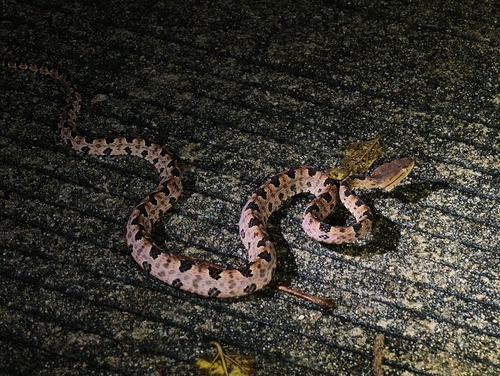
Protobothrops mucrosquamatus (Cantor, 1839)
Protobothrops mucrosquamatus (Cantor, 1839)
Protobothrops mucrosquamatus is a venomous pit viper species native to South and East Asia, introduced to Okinawa, Japan.
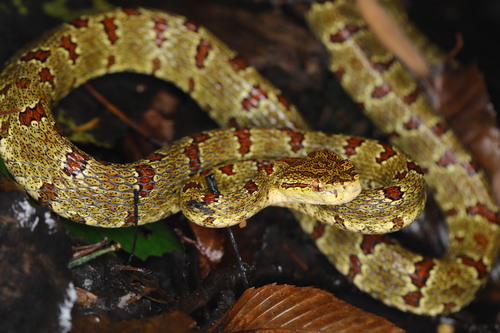
Protobothrops jerdonii (Günther, 1875)
Protobothrops jerdonii (Günther, 1875)
Protobothrops jerdonii is an Asian pit viper with recorded mixed descriptions of viviparous or ovoviviparous reproduction.
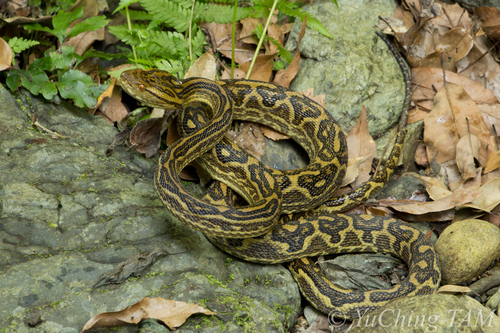
Protobothrops flavoviridis (Hallowell, 1861)
Protobothrops flavoviridis (Hallowell, 1861)
Protobothrops flavoviridis, the Okinawa habu, is the largest pit viper in its genus, native to Japan's Ryukyu Islands and used to make medicinal habushu liquor.
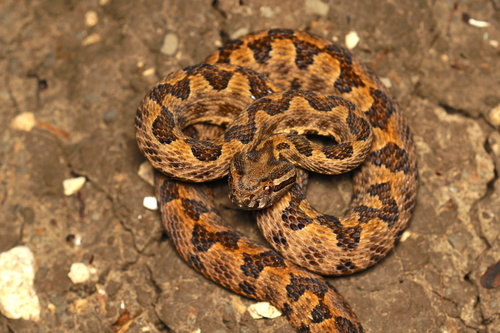
Protobothrops elegans (Gray, 1849)
Protobothrops elegans (Gray, 1849)
Protobothrops elegans is a pitviper found in southern Japanese Ryukyu Islands, with recorded bites and one fatality from 1965 to 2011.
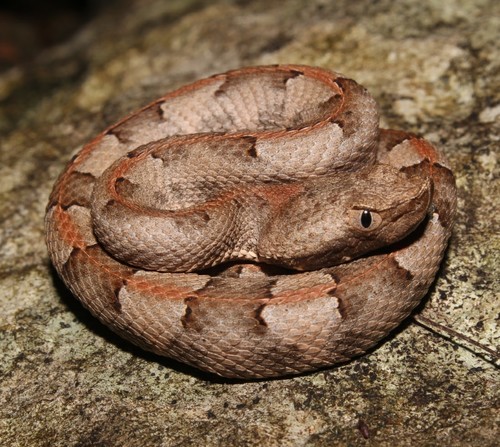
Porthidium yucatanicum (Smith, 1941)
Porthidium yucatanicum (Smith, 1941)
Porthidium yucatanicum is a moderately stout terrestrial viper found in the northern Yucatán Peninsula, Mexico.
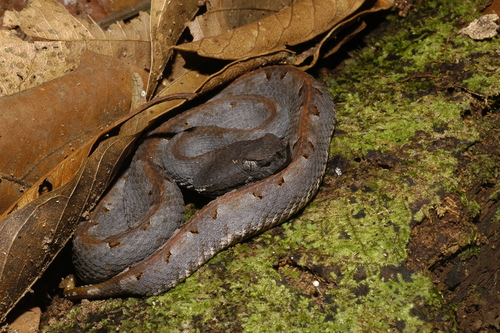
Porthidium nasutum (Bocourt, 1868)
Porthidium nasutum (Bocourt, 1868)
Porthidium nasutum is a moderately stout terrestrial pitviper found in lowland forests from southern Mexico to northwestern South America.
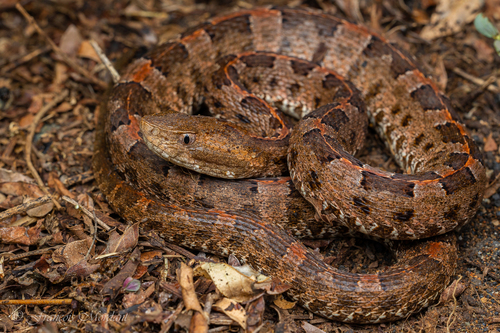
Porthidium ophryomegas (Bocourt, 1868)
Porthidium ophryomegas (Bocourt, 1868)
Porthidium ophryomegas is a Central American pit viper with defined size, color patterns, and ovoviviparous reproduction.
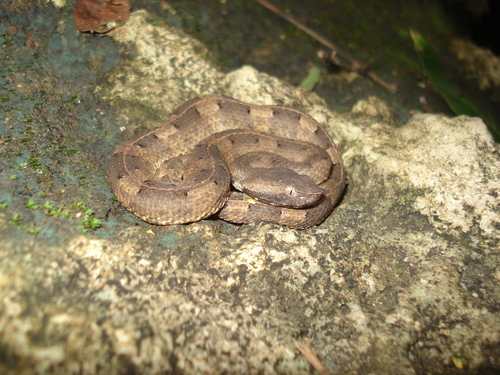
Porthidium lansbergii (Schlegel, 1841)
Porthidium lansbergii (Schlegel, 1841)
Porthidium lansbergii is a moderately slender terrestrial viviparous snake found in Central and northern South America.
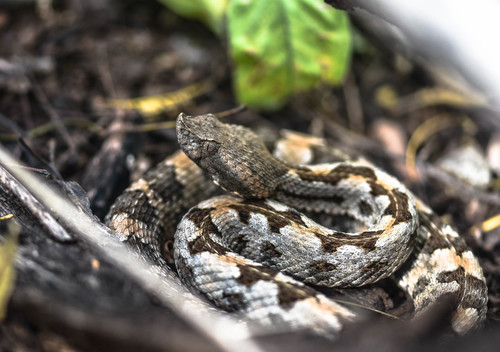
Porthidium dunni (Hartweg & Oliver, 1938)
Porthidium dunni (Hartweg & Oliver, 1938)
Porthidium dunni is a moderately stout terrestrial ovoviviparous viper found in southern Mexican Pacific lowlands.
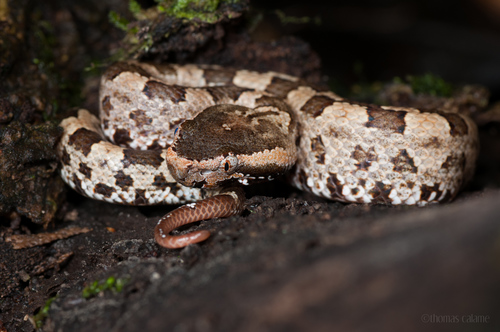
Ovophis monticola (Günther, 1864)
Ovophis monticola (Günther, 1864)
Ovophis monticola is a stout Asian pit viper with distinct scale patterns and regional scale count variations.
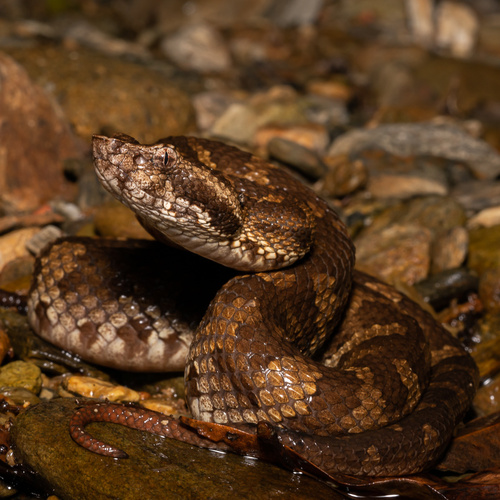
Ovophis okinavensis (Boulenger, 1892)
Ovophis okinavensis (Boulenger, 1892)
Ovophis okinavensis is a Japanese pitviper found in the Ryukyu Islands that can use both oviparous and ovoviviparous reproduction.
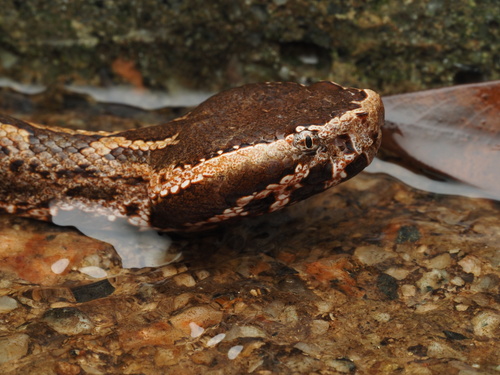
Ovophis tonkinensis (Bourret, 1934)
Ovophis tonkinensis (Bourret, 1934)
Ovophis tonkinensis is an Asian pit viper species with defined morphological traits and a broad geographic range across South and East Asia.
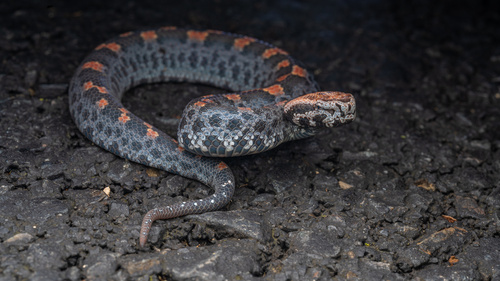
Ovophis makazayazaya (Takahashi, 1922)
Ovophis makazayazaya (Takahashi, 1922)
Ovophis makazayazaya is a snake species with described size, sexual dimorphism, and key diagnostic scale traits.
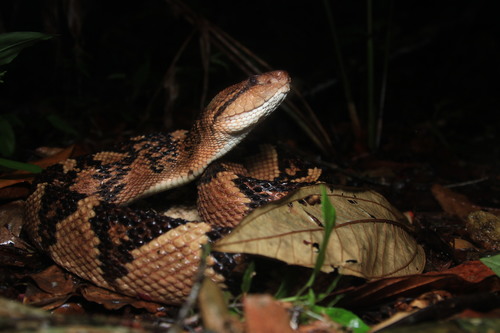
Lachesis muta (Linnaeus, 1766)
Lachesis muta (Linnaeus, 1766)
Lachesis muta is a large South American pit viper, the longest venomous snake in the Western Hemisphere.
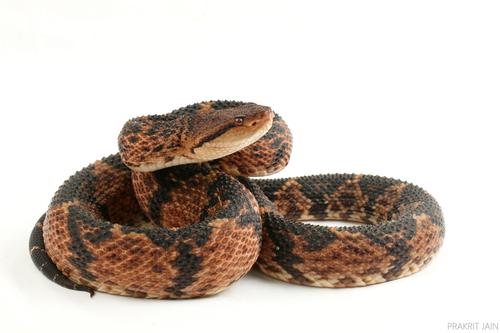
Lachesis acrochorda (Garcia, 1896)
Lachesis acrochorda (Garcia, 1896)
Lachesis acrochorda is an oviparous snake species found in northwestern South America and Central America, living in Neotropical forests up to 1600 m elevation.
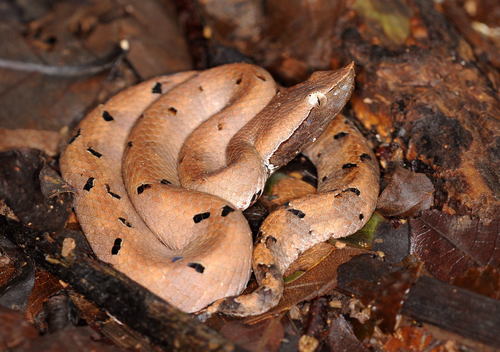
Hypnale hypnale (Merrem, 1820)
Hypnale hypnale (Merrem, 1820)
Hypnale hypnale is a stout viper species found in southwestern India and Sri Lanka that bears live young between March and July.
Start Exploring Nature Today
Download iNature for free. 10 identifications on us. No account needed. No credit card required.
Download Free on App Store
