Scolopendridae
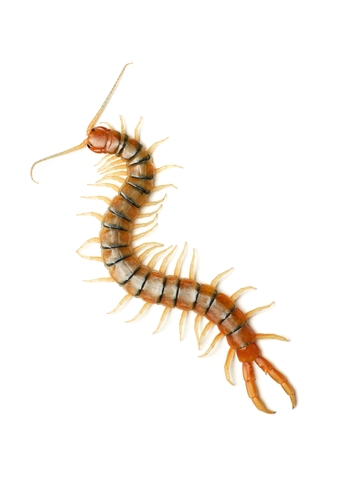
Scolopendra polymorpha Wood, 1861
Scolopendra polymorpha Wood, 1861
Scolopendra polymorpha, the tiger centipede, is a variable-colored centipede native to dry North American habitats.
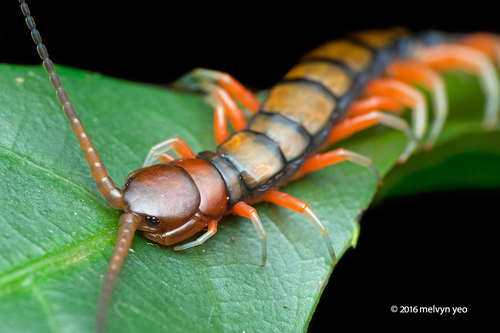
Scolopendra subspinipes Leach, 1815
Scolopendra subspinipes Leach, 1815
Scolopendra subspinipes is a large venomous centipede kept as a pet and historically used as food by Aboriginal Australians.
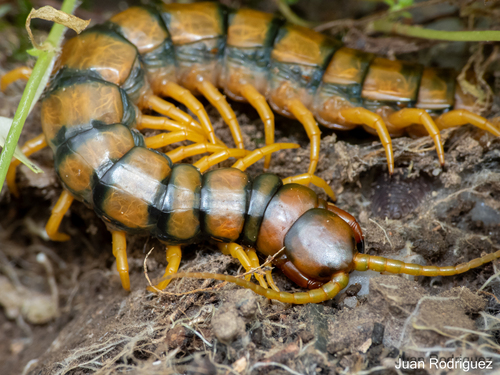
Scolopendra cingulata Latreille, 1829
Scolopendra cingulata Latreille, 1829
Scolopendra cingulata is a small, less venomous banded centipede found across southern Europe, North Africa, and surrounding regions.
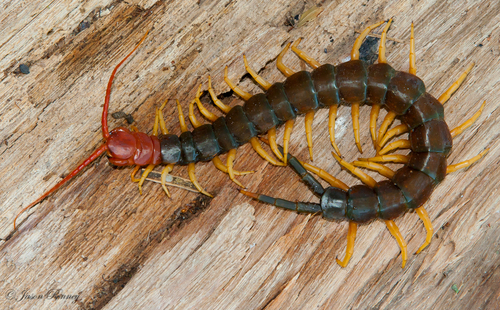
Scolopendra heros Girard, 1853
Scolopendra heros Girard, 1853
Scolopendra heros is North America's largest centipede, found across northern Mexico and the southwestern U.S. It can live over a decade.
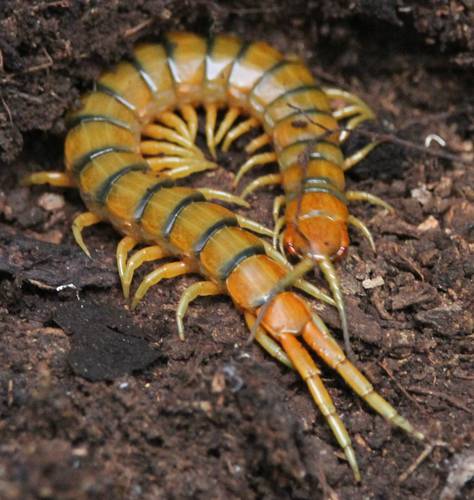
Scolopendra alternans Leach, 1813
Scolopendra alternans Leach, 1813
Scolopendra alternans Leach, 1813 is a large centipede species that got media attention from a fatal rare snake predation incident.
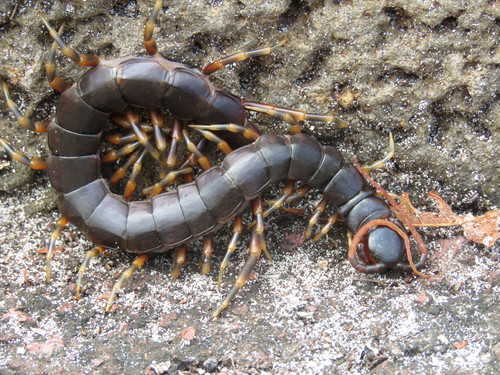
Scolopendra galapagoensis Bollman, 1889
Scolopendra galapagoensis Bollman, 1889
Scolopendra galapagoensis, the Galápagos centipede, is a large Scolopendridae centipede found in the Galápagos Islands and parts of Central and South America.
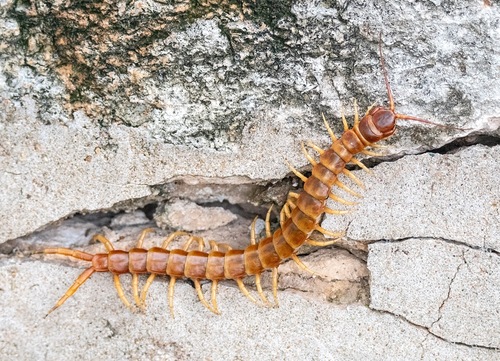
Scolopendra gigantea Linnaeus, 1758
Scolopendra gigantea Linnaeus, 1758
Scolopendra gigantea is the world's largest centipede, native to northern South America and the extreme southern Caribbean.
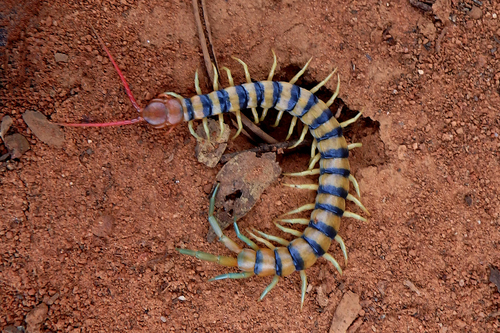
Scolopendra morsitans Linnaeus, 1758
Scolopendra morsitans Linnaeus, 1758
Scolopendra morsitans, the Tanzanian blue ringleg, is a widespread, sometimes pet-traded centipede with notable regional physical variation.
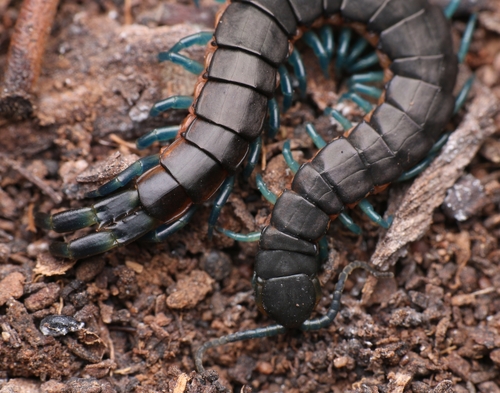
Scolopendra laeta Haase, 1887
Scolopendra laeta Haase, 1887
Scolopendra laeta is an endemic Australian centipede species first described in 1887, found widely across mainland Australia.
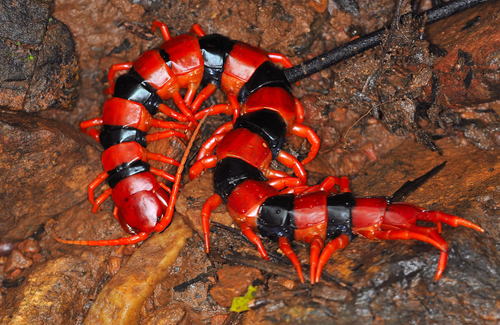
Scolopendra hardwickei Newport, 1844
Scolopendra hardwickei Newport, 1844
Scolopendra hardwickei is a brightly colored large centipede found primarily in southern India.
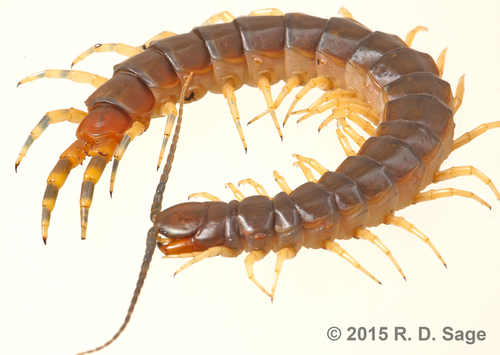
Scolopendra angulata Newport, 1844
Scolopendra angulata Newport, 1844
Scolopendra angulata is a centipede species from the Caribbean and northern South America with three recognized subspecies, one of which is disputed.
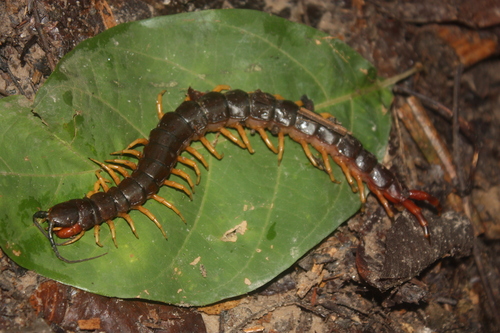
Scolopendra viridicornis Newport, 1844
Scolopendra viridicornis Newport, 1844
Scolopendra viridicornis, the Brazilian giant centipede, is a centipede used in folk medicine that contains the antimicrobial peptide lacrain.
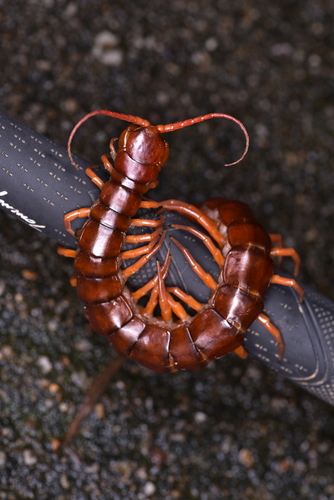
Scolopendra dehaani Brandt, 1840
Scolopendra dehaani Brandt, 1840
Scolopendra dehaani is a large centipede species with variable reddish-brown-orange color morphs and a typical 5-6 year lifespan.

Scolopendra japonica L.Koch, 1878
Scolopendra japonica L.Koch, 1878
Scolopendra japonica L.Koch, 1878 is a nocturnal centipede that hunts insects and arachnids, found in a variety of habitats including residential areas.
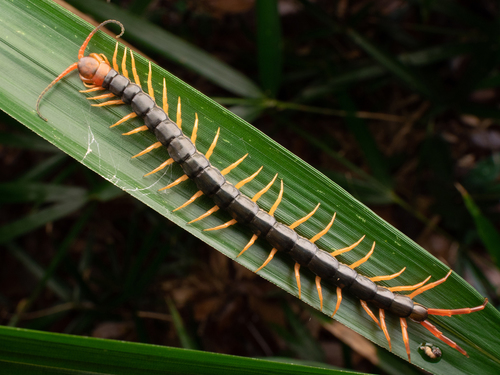
Scolopendra mutilans L.Koch, 1878
Scolopendra mutilans L.Koch, 1878
Scolopendra mutilans is a centipede widely used in traditional Chinese and Korean medicine, with potential as a food ingredient.
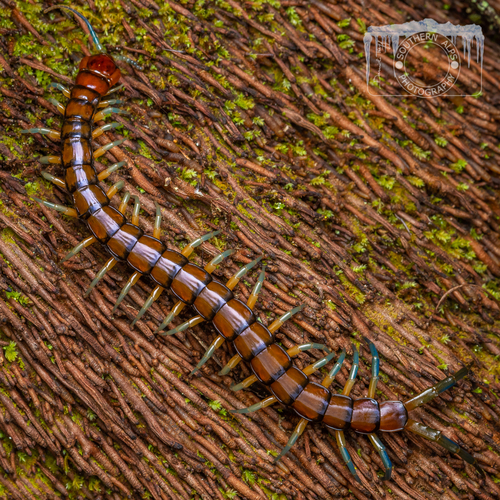
Cormocephalus rubriceps Newport, 1843
Cormocephalus rubriceps Newport, 1843
Cormocephalus rubriceps is a large predatory centipede native to Australia and New Zealand with distinct coloration and hunting behaviors.
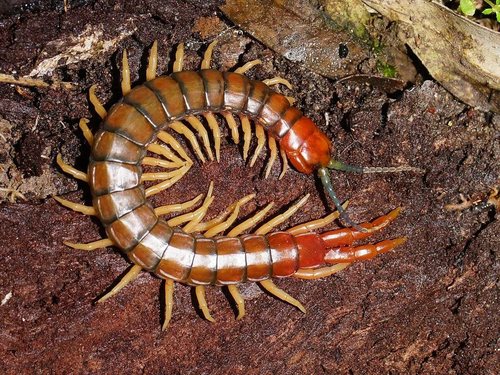
Cormocephalus aurantiipes Newport, 1844
Cormocephalus aurantiipes Newport, 1844
Cormocephalus aurantiipes, the orange-footed centipede, is a common medium-sized Australian centipede with variable colour forms.
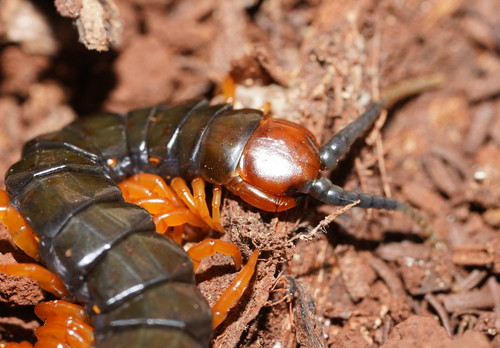
Cormocephalus westwoodi Newport, 1844
Cormocephalus westwoodi Newport, 1844
Cormocephalus westwoodi is a large Tasmanian bark centipede commonly kept as a pet in Oceania, often confused with C. aurantiipes.

Cormocephalus esulcatus Pocock, 1901
Cormocephalus esulcatus Pocock, 1901
Cormocephalus esulcatus is a centipede species from the Scolopendridae family, found in Australia and South Africa, first described in 1901.
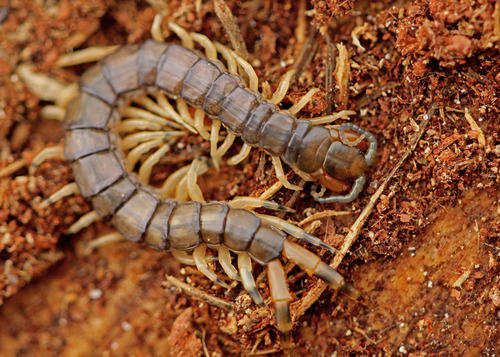
Hemiscolopendra marginata Say, 1821
Hemiscolopendra marginata Say, 1821
Hemiscolopendra marginata, the eastern bark centipede, is a common North American centipede, the first shown to have sexually dimorphic venom composition.
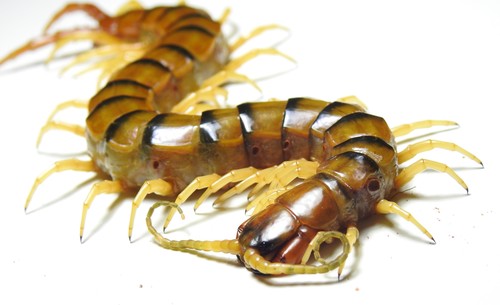
Ethmostigmus rubripes Brandt, 1840
Ethmostigmus rubripes Brandt, 1840
Ethmostigmus rubripes is a large variable centipede widely distributed across Asia and Oceania in multiple habitats.
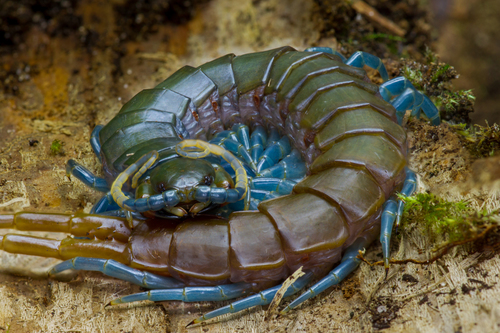
Ethmostigmus trigonopodus Leach, 1817
Ethmostigmus trigonopodus Leach, 1817
Ethmostigmus trigonopodus is a Scolopendridae centipede with two subspecies, uncommon early maturity in northern Nigerian individuals.
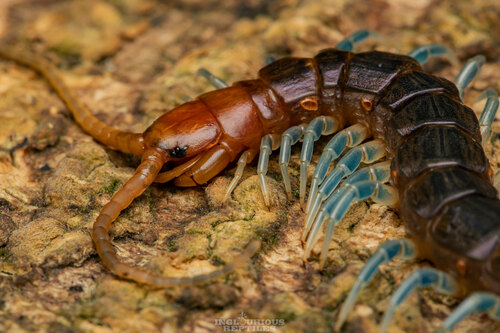
Otostigmus scaber Porat, 1876
Otostigmus scaber Porat, 1876
Otostigmus scaber is a centipede species found from Réunion to Hawaii.
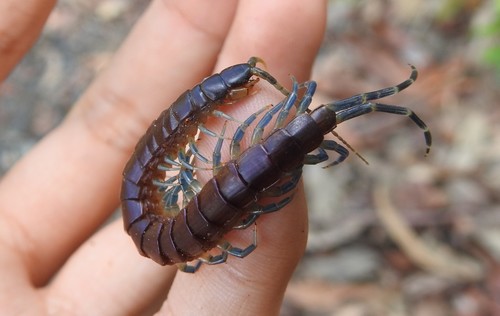
Rhysida nuda Newport, 1845
Rhysida nuda Newport, 1845
Rhysida nuda is an Australian endemic centipede species in the Scolopendridae family, found in four eastern/southern Australian regions.
Related Families
Start Exploring Nature Today
Download iNature for free. 10 identifications on us. No account needed. No credit card required.
Download Free on App Store
