Scincidae
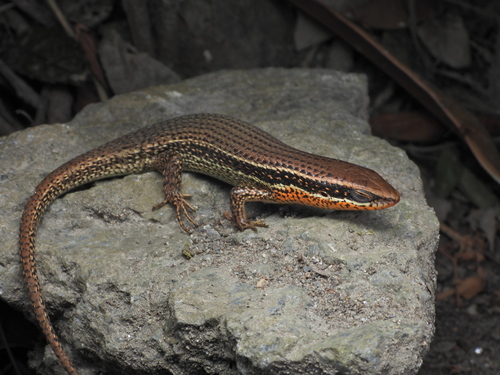
Eutropis macularia (Blyth, 1853)
Eutropis macularia (Blyth, 1853)
Eutropis macularia, the bronze grass skink, is a small keel-scaled skink found across South and Southeast Asia.
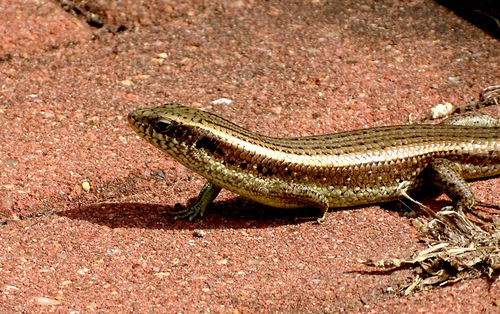
Eutropis longicaudata (Hallowell, 1857)
Eutropis longicaudata (Hallowell, 1857)
Eutropis longicaudata is a skink species from East and Southeast Asia with documented unusual reproductive behaviors.
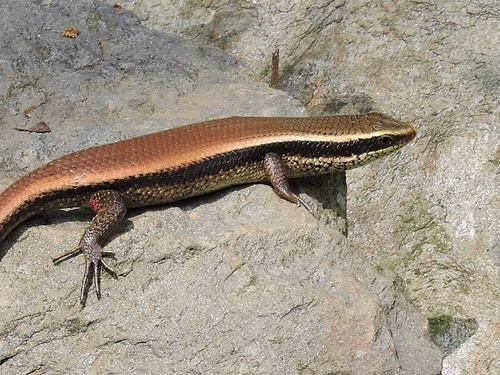
Eutropis carinata (Schneider, 1801)
Eutropis carinata (Schneider, 1801)
Eutropis carinata is a medium-sized diurnal terrestrial skink found across South Asia that lays eggs in late wet season.
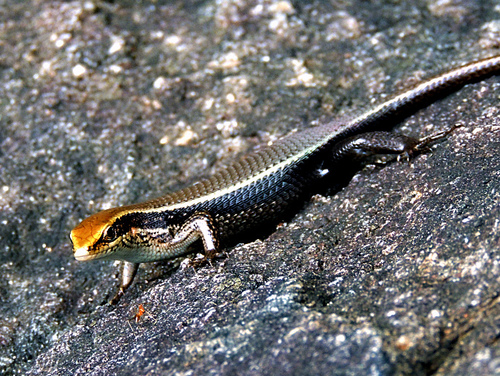
Eutropis madaraszi (Méhely, 1897)
Eutropis madaraszi (Méhely, 1897)
Eutropis madaraszi is a widespread terrestrial Sri Lankan skink with distinct color patterns, found across multiple elevations and habitats.
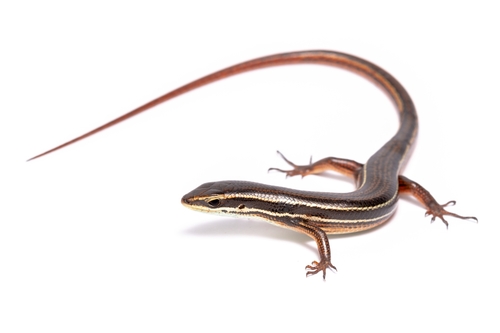
Aspronema dorsivittatum (Cope, 1862)
Aspronema dorsivittatum (Cope, 1862)
The Paraguay mabuya, Aspronema dorsivittatum, is a species of skink native to five South American countries.
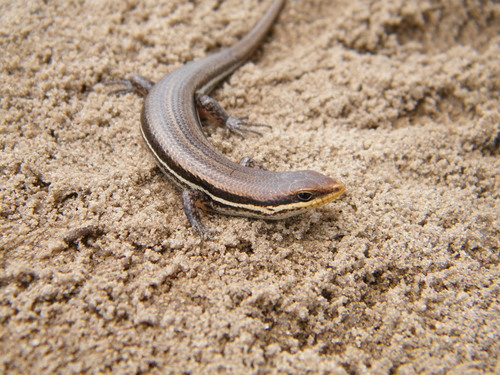
Brasiliscincus heathi (Schmidt & Inger, 1951)
Brasiliscincus heathi (Schmidt & Inger, 1951)
Brasiliscincus heathi, the Brazilian mabuya, is an ovoviviparous skink species endemic to Brazilian savannas.
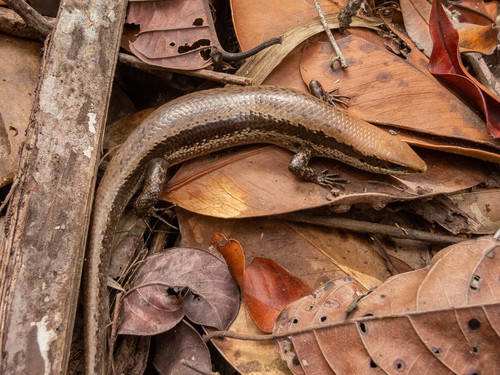
Copeoglossum nigropunctatum (Spix, 1825)
Copeoglossum nigropunctatum (Spix, 1825)
Copeoglossum nigropunctatum is a South American skink species with distinctive copper-colored skin and striped flanks.
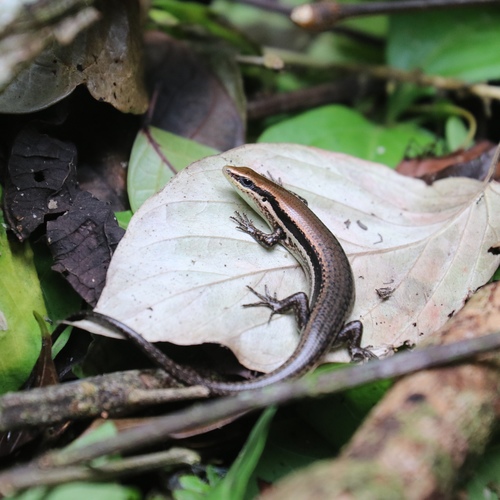
Marisora unimarginata (Cope, 1862)
Marisora unimarginata (Cope, 1862)
Marisora unimarginata, the Central American mabuya, is a skink species found in three Central American countries.
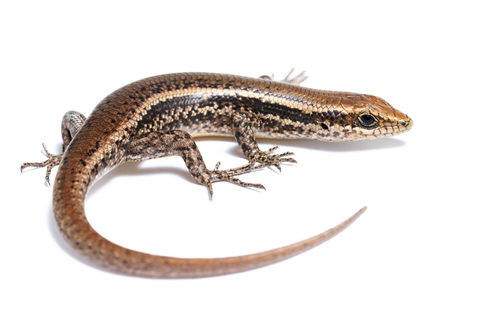
Notomabuya frenata (Cope, 1862)
Notomabuya frenata (Cope, 1862)
Notomabuya frenata is a viviparous, diurnal skink with larger females, that eats mostly small arthropods and occasionally other lizards or conspecifics.
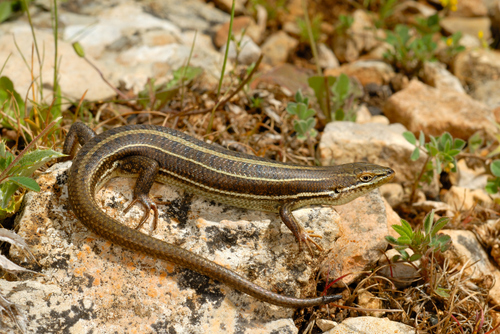
Heremites vittatus (Olivier, 1804)
Heremites vittatus (Olivier, 1804)
Heremites vittatus, the bridled mabuya, is a skink species from North Africa and the Middle East that feeds on insects and arthropods.
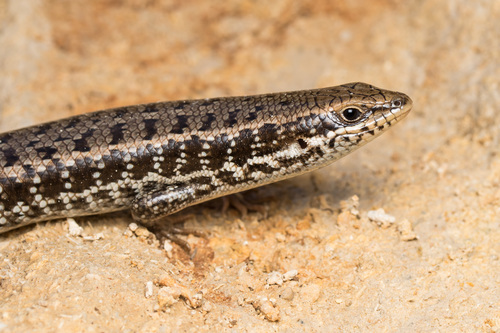
Heremites auratus (Linnaeus, 1758)
Heremites auratus (Linnaeus, 1758)
Heremites auratus is a skink species confirmed to live in Greece and Turkey, with possible wider distribution.
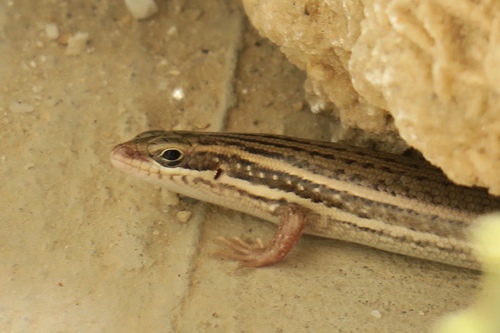
Heremites septemtaeniatus (Reuss, 1834)
Heremites septemtaeniatus (Reuss, 1834)
Heremites septemtaeniatus, the golden grass mabuya or southern grass skink, is a skink species found in the Middle East.
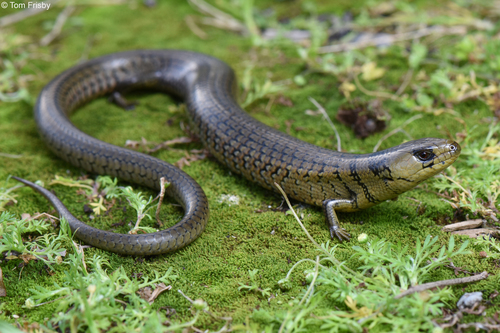
Cyclodomorphus michaeli Wells & Wellington, 1984
Cyclodomorphus michaeli Wells & Wellington, 1984
Cyclodomorphus michaeli, the coastal she-oak slender bluetongue, is an endemic Australian scincid lizard.
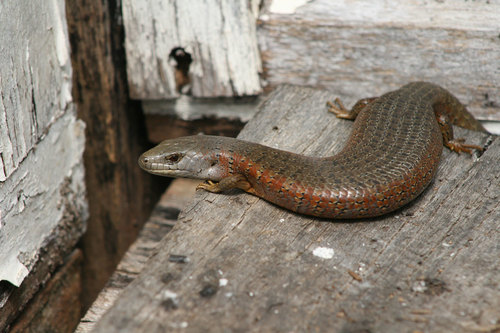
Cyclodomorphus casuarinae (Duméril & Bibron, 1839)
Cyclodomorphus casuarinae (Duméril & Bibron, 1839)
Cyclodomorphus casuarinae, the she-oak skink, is a large, snake-like viviparous skink endemic to Tasmania, Australia.
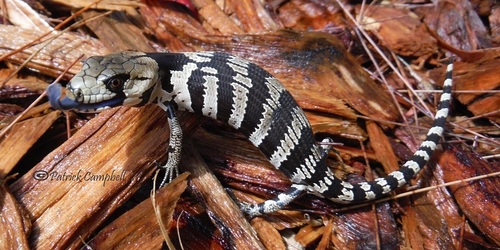
Cyclodomorphus gerrardii (Gray, 1845)
Cyclodomorphus gerrardii (Gray, 1845)
Cyclodomorphus gerrardii is a relatively large, pink-tongued lizard endemic to eastern Australia, living in moist forest habitats.

Corucia zebrata Gray, 1855
Corucia zebrata Gray, 1855
Corucia zebrata, the Solomon Islands skink, is the largest extant skink, an arboreal herbivorous reptile endemic to the Solomon Islands region.
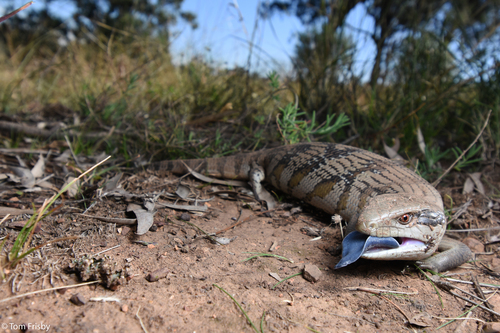
Tiliqua scincoides (White, 1790)
Tiliqua scincoides (White, 1790)
Tiliqua scincoides, the blue-tongued skink, is a large diurnal omnivorous lizard popular as a pet, native to Australia and nearby areas.
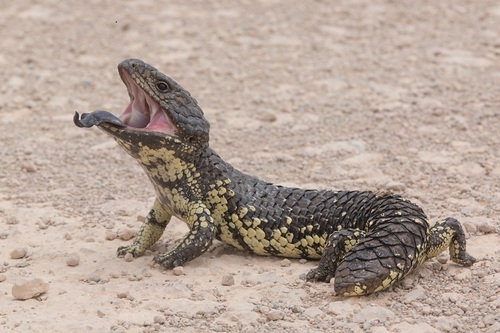
Tiliqua rugosa (Gray, 1825)
Tiliqua rugosa (Gray, 1825)
Tiliqua rugosa, also called two-headed skink, is a viviparous monogamous skink found in arid/semiarid Australia with unique traits including its blue tongue.
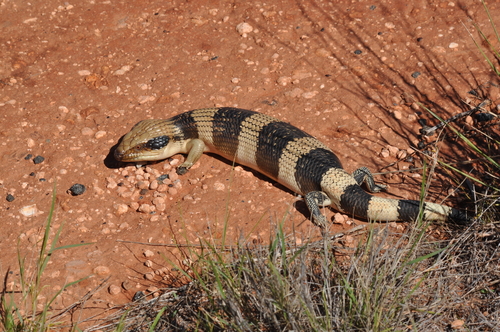
Tiliqua occipitalis (Peters, 1863)
Tiliqua occipitalis (Peters, 1863)
Tiliqua occipitalis, the western blue-tongued skink, is a large rare Australian skink named for its distinctive blue tongue.
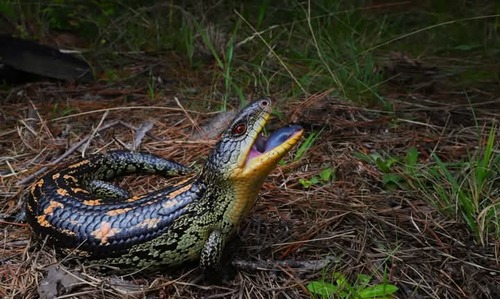
Tiliqua nigrolutea (Quoy & Gaimard, 1824)
Tiliqua nigrolutea (Quoy & Gaimard, 1824)
The blotched blue-tongued lizard is a large Australian viviparous skink, often kept as a pet and harmless to humans.
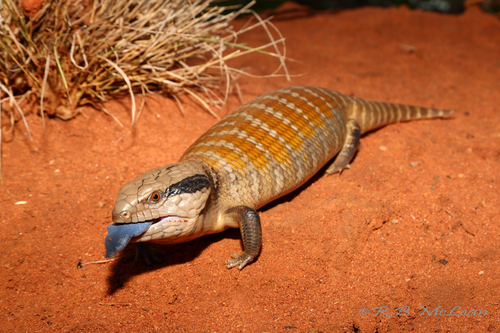
Tiliqua multifasciata Sternfeld, 1919
Tiliqua multifasciata Sternfeld, 1919
Tiliqua multifasciata, the Centralian blue-tongue, is a large viviparous skink found across arid inland Australia.
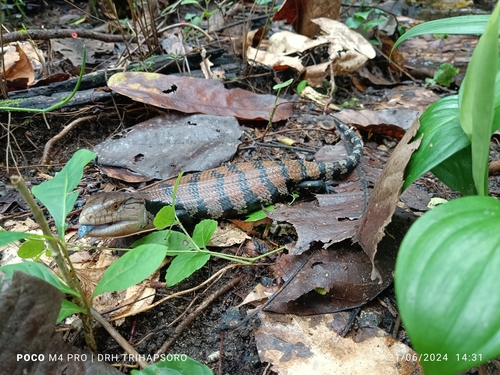
Tiliqua gigas (Schneider, 1801)
Tiliqua gigas (Schneider, 1801)
Tiliqua gigas is a large blue-tongued skink species with three distinct subspecies varying in pattern and tail size.
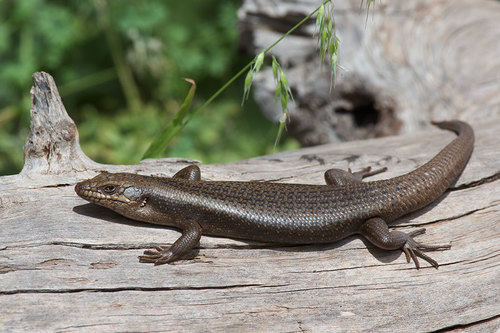
Egernia striolata (Peters, 1870)
Egernia striolata (Peters, 1870)
Egernia striolata, the tree-crevice skink, is a social Australian lizard that lives in tree and rock crevices.
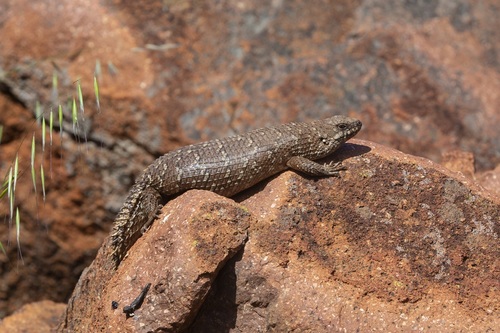
Egernia stokesii (Gray, 1845)
Egernia stokesii (Gray, 1845)
Egernia stokesii is a social Australian skink with stable social groups, omnivorous diet, and live birth.
Start Exploring Nature Today
Download iNature for free. 10 identifications on us. No account needed. No credit card required.
Download Free on App Store
