Saturniidae
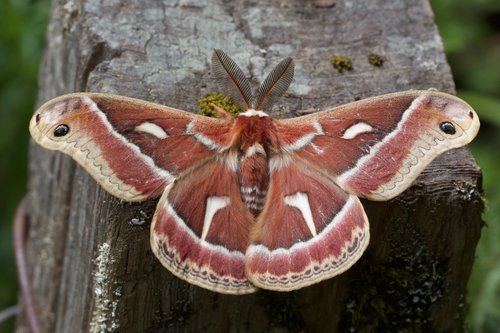
Hyalophora euryalus Boisduval, 1855
Hyalophora euryalus Boisduval, 1855
Hyalophora euryalus (ceanothus silkmoth) is a Saturniidae moth found from British Columbia to Baja California with larvae feeding on various woody plants.
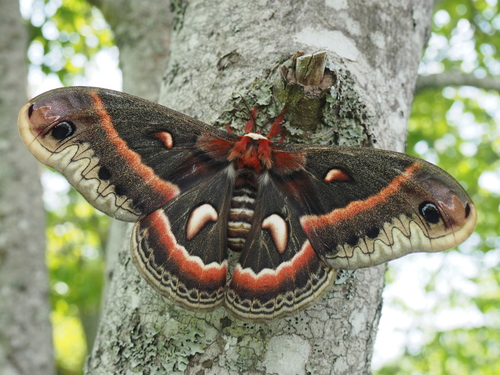
Hyalophora cecropia Linnaeus, 1758
Hyalophora cecropia Linnaeus, 1758
Hyalophora cecropia, the cecropia moth, is North America's largest native giant silk moth.
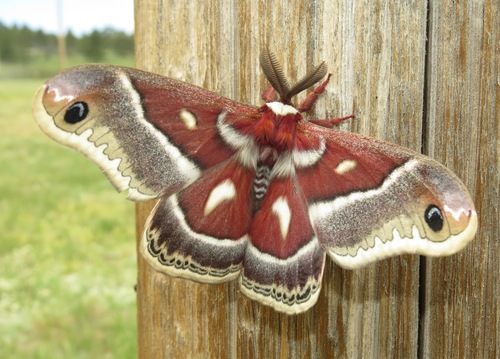
Hyalophora gloveri Strecker, 1872
Hyalophora gloveri Strecker, 1872
Glover's silkmoth (Hyalophora gloveri) is a Saturniidae moth found in western North America and northern Mexico.
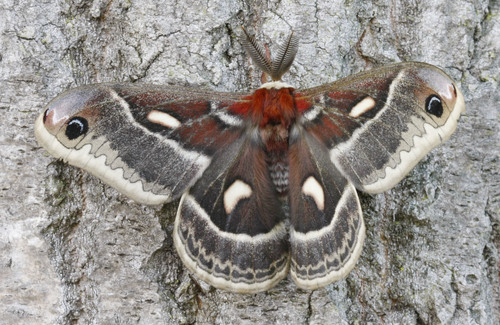
Hyalophora columbia Smith, 1865
Hyalophora columbia Smith, 1865
Hyalophora columbia, the Columbia or larch silkmoth, is a Saturniidae moth found across North America, described in 1865.
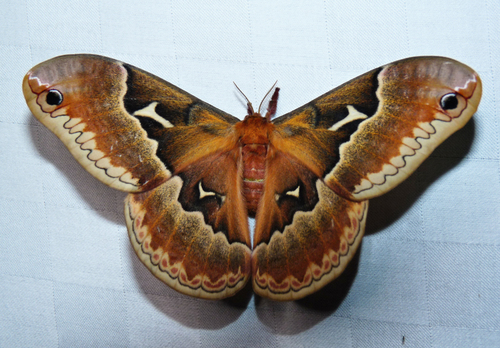
Callosamia angulifera Walker, 1855
Callosamia angulifera Walker, 1855
Callosamia angulifera, the tuliptree silkmoth, is a Saturniidae moth found in North America whose larvae feed on tuliptree.
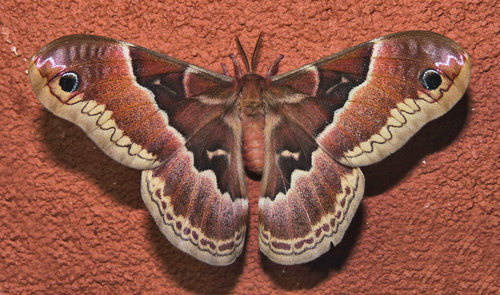
Callosamia promethea Drury, 1773
Callosamia promethea Drury, 1773
Callosamia promethea, the promethea silkmoth, is a Saturniidae moth native to eastern U.S. deciduous forests with unique sex-separated activity periods.
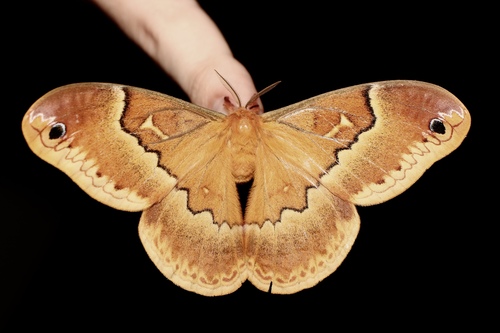
Callosamia securifera Maassen
Callosamia securifera Maassen
Callosamia securifera, the sweetbay silkmoth, is a diurnal saturniid moth named for its sweetbay magnolia host, described in 1873.
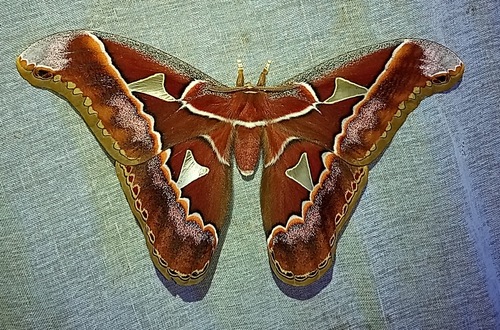
Rothschildia orizaba Westwood, 1854
Rothschildia orizaba Westwood, 1854
Rothschildia orizaba (Orizaba silkmoth) is a Saturniidae moth described in 1854, found in Mexico, Central and South America.

Rothschildia erycina Shaw
Rothschildia erycina Shaw
Rothschild's silk moth (Rothschildia erycina) is a Saturniidae moth ranging from Mexico to South America, found in tropical forests and wet savannahs.
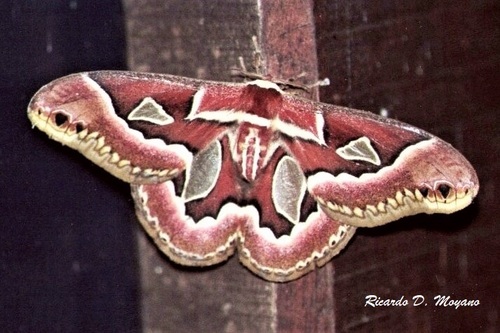
Rothschildia jacobaeae Walker, 1855
Rothschildia jacobaeae Walker, 1855
Rothschildia jacobaeae, the Brazilian silk moth, is a Saturniidae moth endemic to Argentina and Brazil.
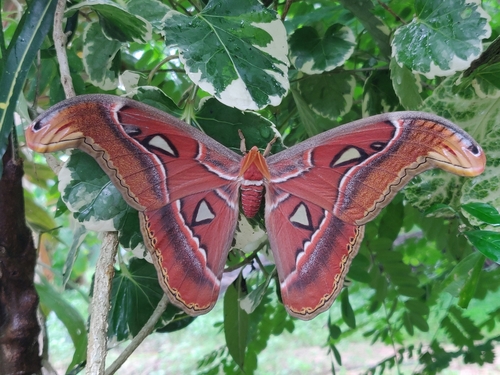
Attacus taprobanis Moore
Attacus taprobanis Moore
Attacus taprobanis is a large moth species closely related to Attacus atlas, with distinct characteristics and specific ecological traits.
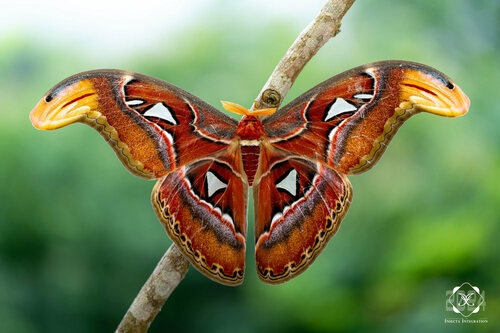
Attacus atlas (Linnaeus, 1758)
Attacus atlas (Linnaeus, 1758)
The Atlas moth (Attacus atlas) is a very large saturniid moth endemic to Asian forests, first described in 1758 by Carl Linnaeus.
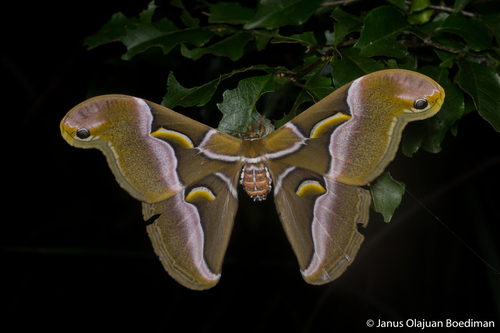
Samia wangi Naumann & Peigler, 2001
Samia wangi Naumann & Peigler, 2001
Samia wangi, the lesser Atlas moth, is a Saturniidae moth found across parts of East Asia.
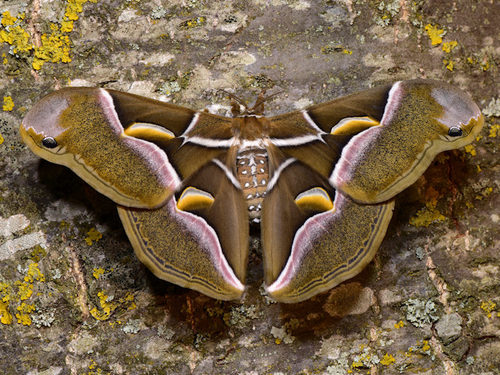
Samia cynthia Drury, 1773
Samia cynthia Drury, 1773
Samia cynthia (ailanthus silkmoth) is a saturniid moth used for silk production with distinct large patterned wings.
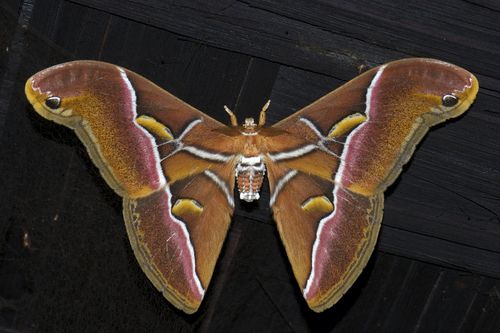
Samia canningi Hutton, 1859
Samia canningi Hutton, 1859
Samia canningi, the wild eri silk moth, is a Saturniidae moth found in southeastern Asia and China, wild ancestor of domesticated Samia ricini.
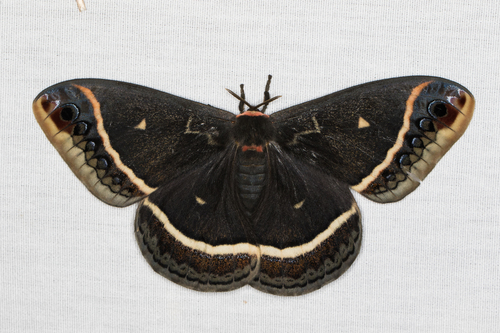
Eupackardia calleta Westwood, 1854
Eupackardia calleta Westwood, 1854
Eupackardia calleta is the calleta silkmoth found in the southwestern US, Mexico and Guatemala, with culturally used cocoons.
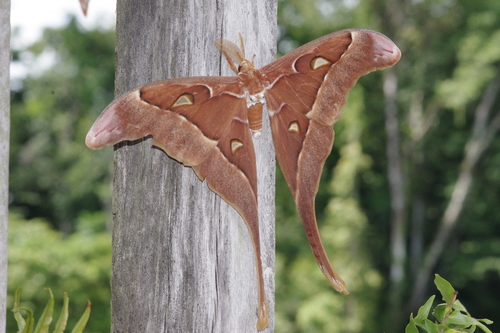
Coscinocera hercules Miskin, 1879
Coscinocera hercules Miskin, 1879
Coscinocera hercules is Australia's largest moth, with the largest wing surface area of any living insect, and has distinct adult and larval forms.
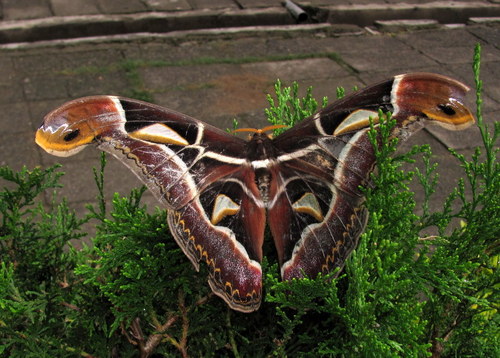
Archaeoattacus edwardsii White, 1859
Archaeoattacus edwardsii White, 1859
Archaeoattacus edwardsii, the world’s one of the largest moths and Asia’s largest, lives across South and Southeast Asia.
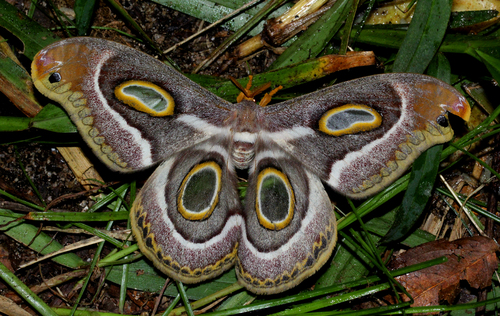
Epiphora mythimnia Westwood, 1849
Epiphora mythimnia Westwood, 1849
Epiphora mythimnia, the white ringed Atlas moth, is found across multiple countries in southern and eastern Africa.
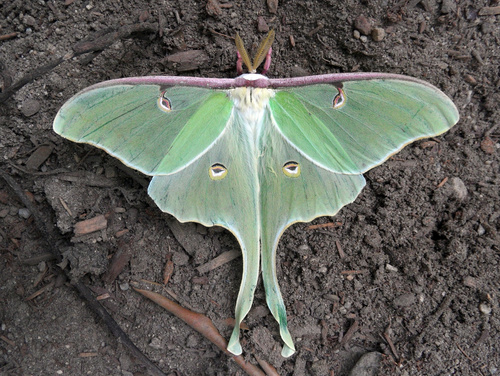
Actias luna Linnaeus, 1758
Actias luna Linnaeus, 1758
Actias luna, the Luna moth, is a North American moth with green wings, described by its life stages and life cycle.
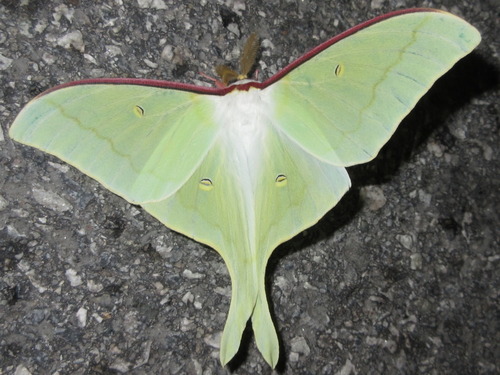
Actias artemis Bremer & Grey, 1853
Actias artemis Bremer & Grey, 1853
Actias artemis is a moth native to Russia, Korea, and China, a close relative and look-alike of the American Luna moth.
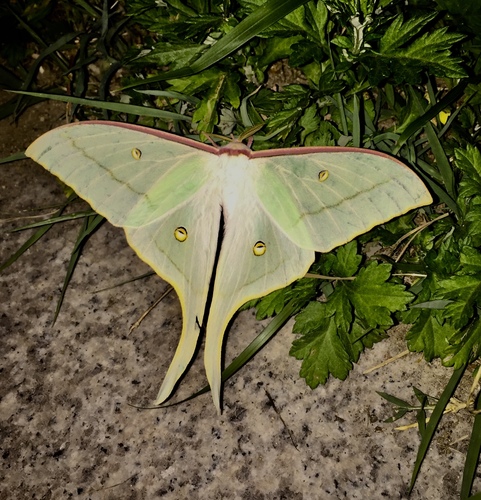
Actias gnoma Butler, 1877
Actias gnoma Butler, 1877
The Japanese moon moth (Actias gnoma) is a Saturniidae moth found in Japan and the Russian Far East.

Actias maenas Doubleday, 1847
Actias maenas Doubleday, 1847
The Malaysian moon moth (Actias maenas) is an Indomalayan Saturniid moth with distinct color differences between sexes and a well-documented life cycle.
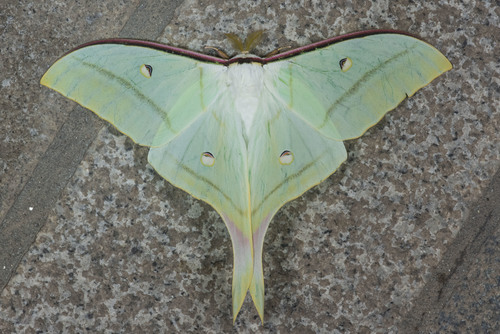
Actias ningpoana Felder, 1862
Actias ningpoana Felder, 1862
Actias ningpoana, the Chinese moon moth, is a large Saturniidae moth native to parts of East and South Asia.
Related Families
Start Exploring Nature Today
Download iNature for free. 10 identifications on us. No account needed. No credit card required.
Download Free on App Store
