Phyllostomidae
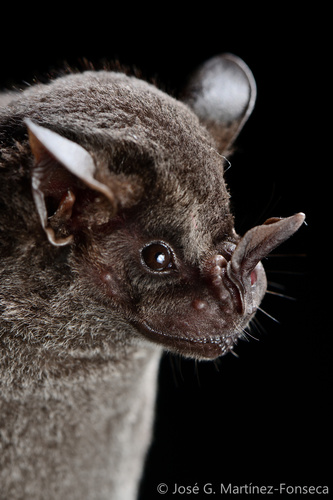
Artibeus obscurus (Schinz, 1821)
Artibeus obscurus (Schinz, 1821)
Artibeus obscurus, the dark fruit-eating bat, is a small neotropical bat found across the Amazon Basin in multiple forest and savanna habitats.
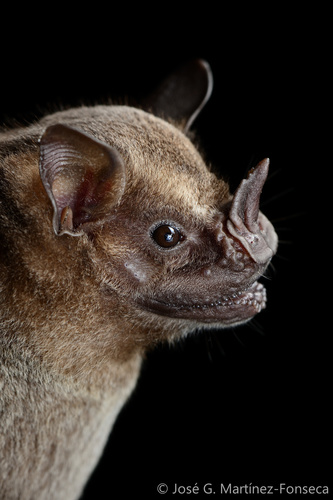
Artibeus planirostris (Spix, 1823)
Artibeus planirostris (Spix, 1823)
Artibeus planirostris, the flat-faced fruit-eating bat, is a moderately sized South American bat with three recognized subspecies.
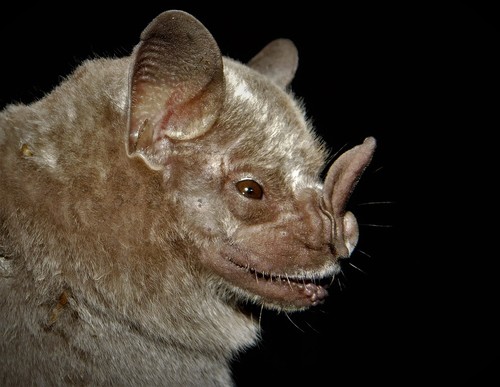
Artibeus jamaicensis Leach, 1821
Artibeus jamaicensis Leach, 1821
Artibeus jamaicensis, the Jamaican fruit bat, is a medium-sized bat found from Mexico to South America and the Caribbean.
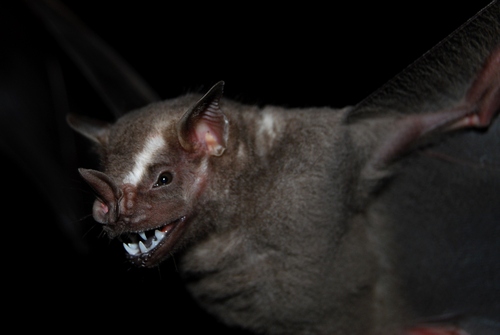
Artibeus lituratus (Olfers, 1818)
Artibeus lituratus (Olfers, 1818)
Artibeus lituratus is a species with unique heart structures, observed carrying heavy fruit long distances in Panama.
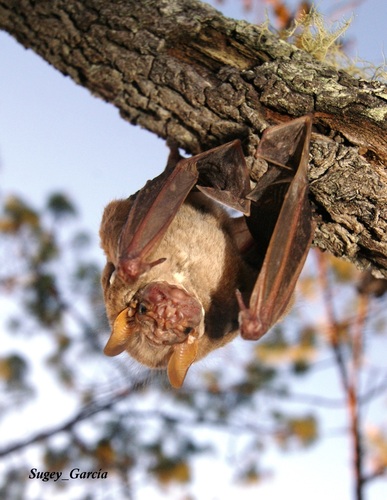
Centurio senex Gray, 1842
Centurio senex Gray, 1842
Centurio senex, the wrinkle-faced bat, is a distinctive leaf-nosed bat with two recognized subspecies found across Central and South America.
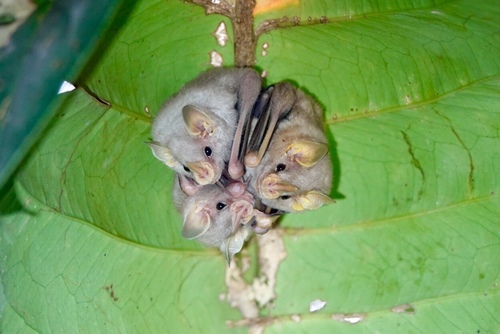
Mesophylla macconnelli Thomas, 1901
Mesophylla macconnelli Thomas, 1901
MacConnell's bat (Mesophylla macconnelli) is a monotypic bat species native to South and Central America.
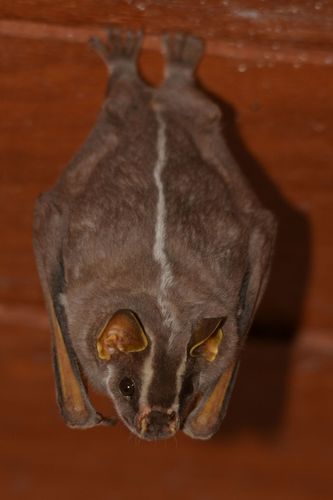
Platyrrhinus lineatus (E.Geoffroy, 1810)
Platyrrhinus lineatus (E.Geoffroy, 1810)
Platyrrhinus lineatus, the white-lined broad-nosed bat, is a bat species found across multiple countries in South America.
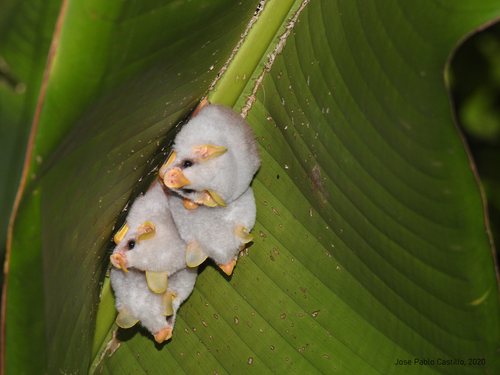
Ectophylla alba H.Allen, 1892
Ectophylla alba H.Allen, 1892
Ectophylla alba, the Honduran white bat, is a small bright white Central American bat with yellow-orange skin pigmentation.
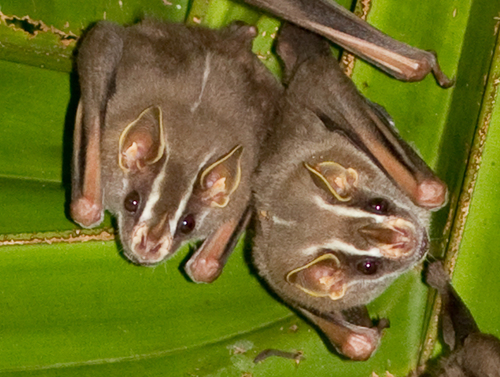
Uroderma bilobatum Peters, 1866
Uroderma bilobatum Peters, 1866
Uroderma bilobatum is a medium-sized striped frugivorous bat found from Mexico to South America and Trinidad.
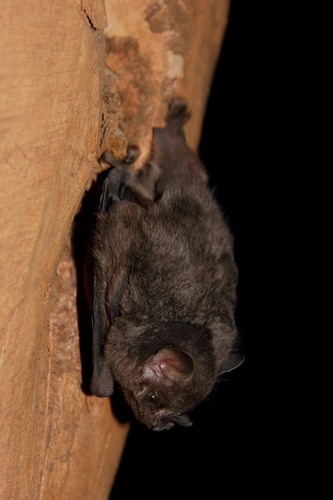
Artibeus aztecus aztecus
Artibeus aztecus aztecus
Artibeus aztecus aztecus is a large, tailless nocturnal bat subspecies found in Central America with a varied plant and insect diet.
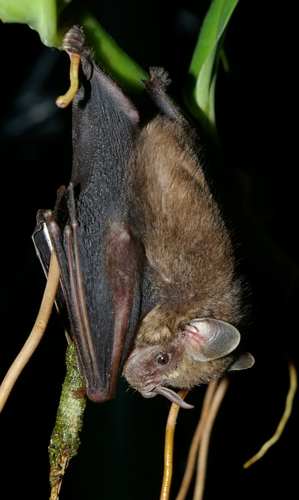
Artibeus phaeotis phaeotis
Artibeus phaeotis phaeotis
Artibeus phaeotis phaeotis, the pygmy fruit-eating bat, is a small nocturnal frugivorous bat native to Central American tropical deciduous forest.
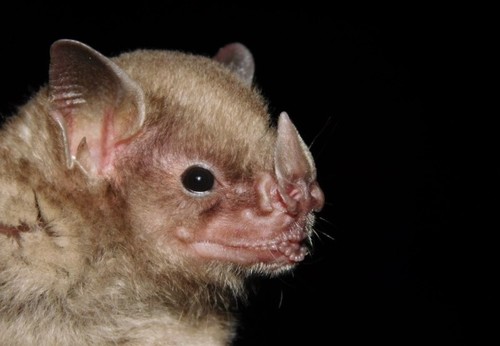
Sturnira hondurensis Goodwin, 1940
Sturnira hondurensis Goodwin, 1940
Sturnira hondurensis Goodwin, 1940 is a nocturnal frugivorous bat that roosts in specific trees and feeds mostly on Solanaceae fruits.
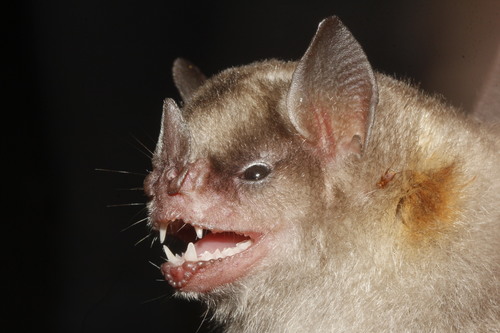
Sturnira parvidens Goldman, 1917
Sturnira parvidens Goldman, 1917
Sturnira parvidens is a medium-sized bat found from Mexico through Central America to northern Costa Rica, in varied forest habitats.
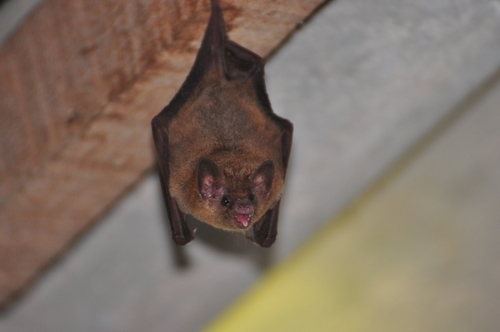
Glossophaga soricina (Pallas, 1766)
Glossophaga soricina (Pallas, 1766)
Pallas's long-tongued bat (Glossophaga soricina) is a nectar-feeding bat from South and Central America with a fast metabolism.
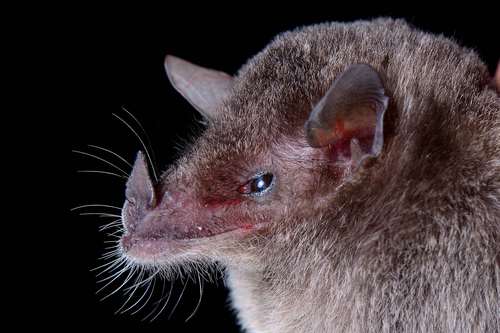
Anoura geoffroyi Gray, 1838
Anoura geoffroyi Gray, 1838
Anoura geoffroyi, Geoffroy's tailless bat, is a medium-sized nectar-feeding bat found across the Neotropics.
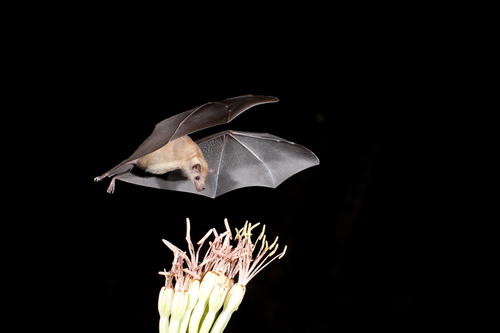
Leptonycteris yerbabuenae Martínez & Villa-R., 1940
Leptonycteris yerbabuenae Martínez & Villa-R., 1940
Leptonycteris yerbabuenae, the lesser long-nosed bat, is a small nectar-feeding migratory bat found across southern North America and northern Central America.
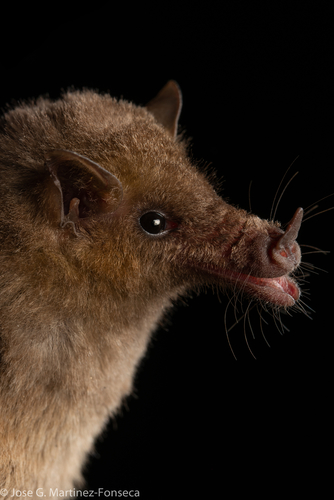
Choeronycteris mexicana Tschudi, 1844
Choeronycteris mexicana Tschudi, 1844
Choeronycteris mexicana, the Mexican long-tongued bat, is a medium-sized nectar-feeding bat found from the southwestern US to Central America.
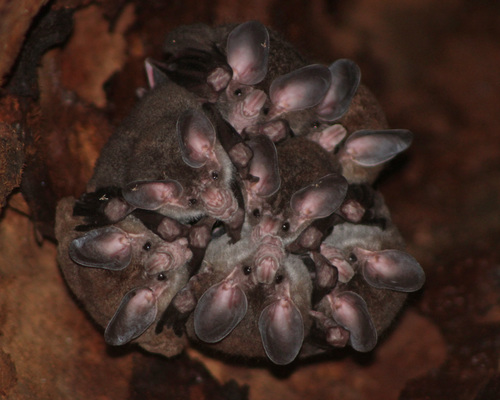
Chrotopterus auritus (Peters, 1856)
Chrotopterus auritus (Peters, 1856)
Chrotopterus auritus, the big-eared woolly bat, is a large predatory Neotropical bat that has one large pup per cycle over 100 days gestation.
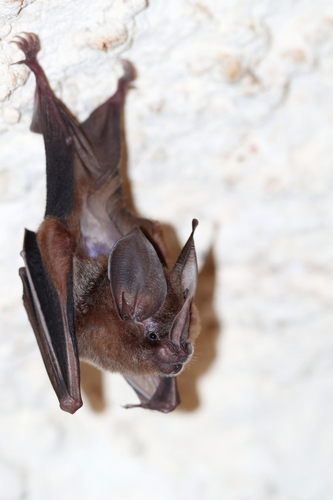
Mimon cozumelae Goldman, 1914
Mimon cozumelae Goldman, 1914
Mimon cozumelae, the Cozumelan golden bat, is a lowland Neotropical bat with a known diet and daytime roosting preferences.
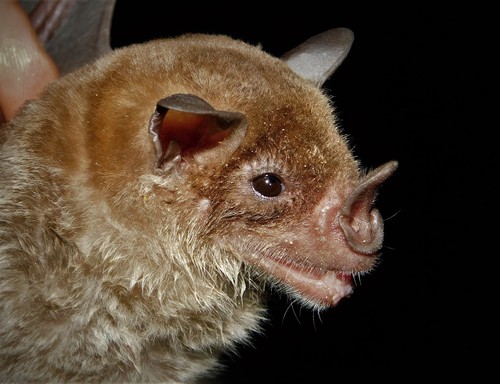
Phyllostomus discolor Wagner, 1843
Phyllostomus discolor Wagner, 1843
Phyllostomus discolor, the pale spear-nosed bat, is a robust phyllostomid bat found from southern Mexico to central South America.
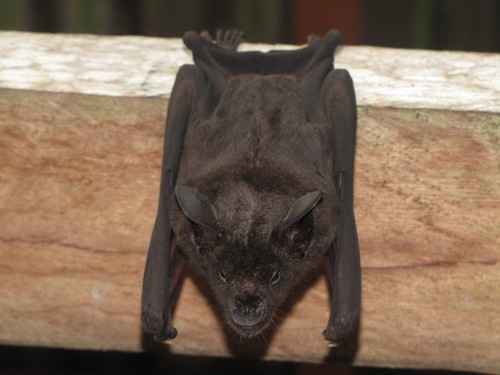
Phyllostomus hastatus (Pallas, 1767)
Phyllostomus hastatus (Pallas, 1767)
Phyllostomus hastatus, the greater spear-nosed bat, is a large omnivorous Phyllostomidae bat from Central and South America.
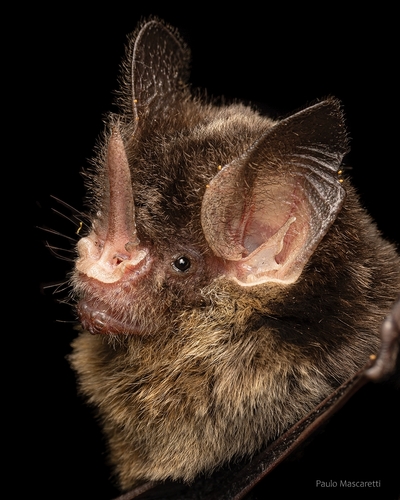
Gardnerycteris crenulatum (E.Geoffroy, 1803)
Gardnerycteris crenulatum (E.Geoffroy, 1803)
Gardnerycteris crenulatum, the striped hairy-nosed bat, is a Neotropical bat species with distinct physical and behavioral traits.
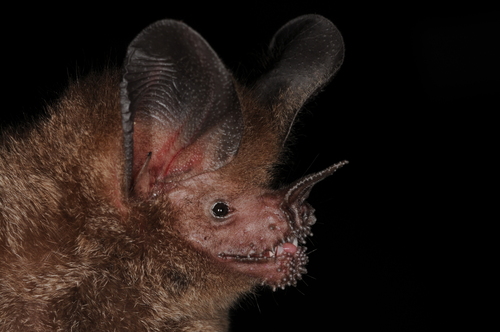
Trachops cirrhosus (Spix, 1823)
Trachops cirrhosus (Spix, 1823)
Trachops cirrhosus, the fringe-lipped bat, is a medium omnivorous neotropical bat with characteristic warty lips.
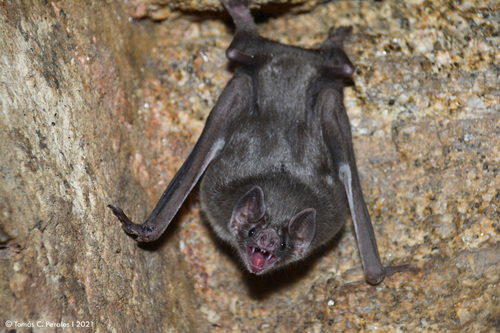
Desmodus rotundus (E.Geoffroy, 1810)
Desmodus rotundus (E.Geoffroy, 1810)
Desmodus rotundus, the common vampire bat, is a New World bat with unique land movement abilities, detailed in this species description.
Related Families
Start Exploring Nature Today
Download iNature for free. 10 identifications on us. No account needed. No credit card required.
Download Free on App Store
