Phalacrocoracidae
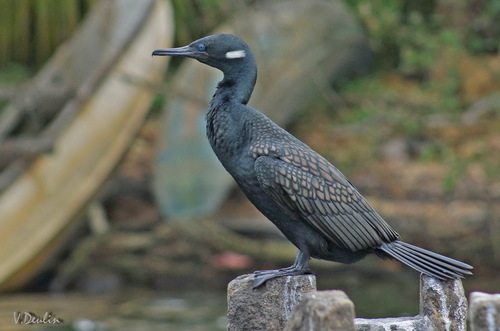
Phalacrocorax fuscicollis Stephens, 1826
Phalacrocorax fuscicollis Stephens, 1826
Phalacrocorax fuscicollis is a medium-sized cormorant found in South and Southeast Asian freshwater and coastal wetland habitats.
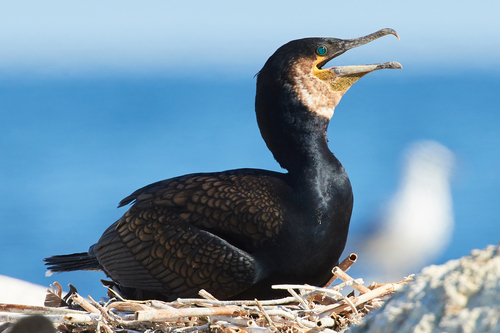
Phalacrocorax carbo (Linnaeus, 1758)
Phalacrocorax carbo (Linnaeus, 1758)
Phalacrocorax carbo, the great cormorant, is a widespread large fish-eating diving bird with varied subspecies.
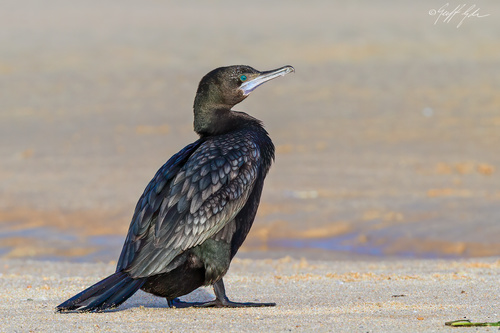
Phalacrocorax sulcirostris (Brandt, 1837)
Phalacrocorax sulcirostris (Brandt, 1837)
Phalacrocorax sulcirostris, the little black cormorant, is a small waterbird found across Australasia that feeds mainly on fish.
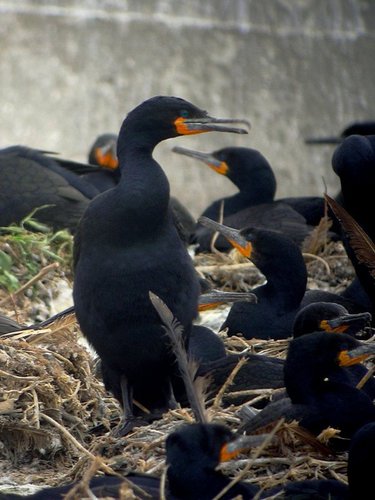
Phalacrocorax capensis (Sparrman, 1788)
Phalacrocorax capensis (Sparrman, 1788)
Phalacrocorax capensis, the Cape cormorant, is a glossy blue-black coastal seabird native to southwestern Africa with declining populations.
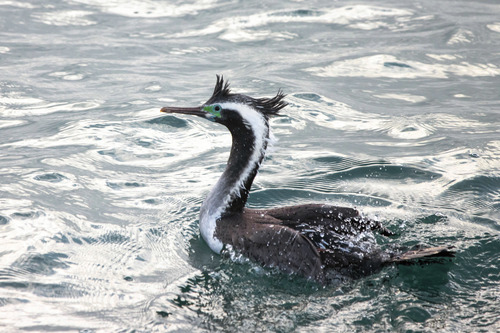
Phalacrocorax punctatus (Sparrman, 1786)
Phalacrocorax punctatus (Sparrman, 1786)
Phalacrocorax punctatus, the spotted shag, is a medium-sized marine bird endemic to New Zealand.
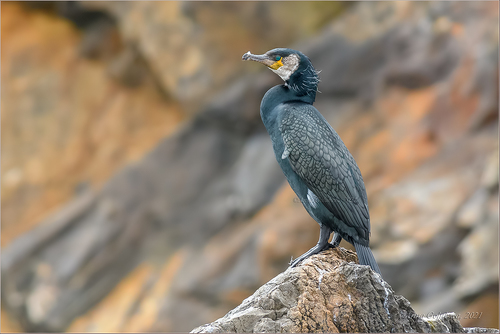
Phalacrocorax capillatus (Temminck & Schlegel, 1849)
Phalacrocorax capillatus (Temminck & Schlegel, 1849)
Phalacrocorax capillatus (Japanese cormorant) is a large migratory cormorant native to the east Palearctic, used in traditional Japanese fishing.
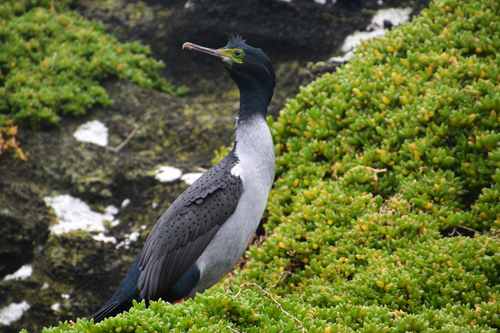
Phalacrocorax featherstoni Buller, 1873
Phalacrocorax featherstoni Buller, 1873
Phalacrocorax featherstoni, the Pitt shag, is a yellow-footed shag native to New Zealand's Chatham Islands.
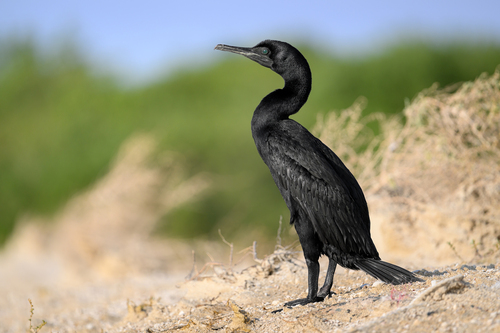
Phalacrocorax nigrogularis Ogilvie-Grant & H.O.Forbes, 1899
Phalacrocorax nigrogularis Ogilvie-Grant & H.O.Forbes, 1899
The Socotra cormorant is a Vulnerable cormorant species endemic to the Persian Gulf and Arabian Peninsula southeast coast.
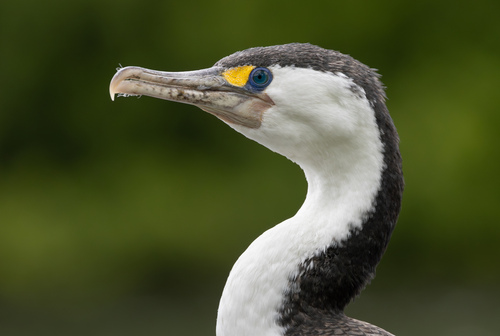
Phalacrocorax varius (Gmelin, 1789)
Phalacrocorax varius (Gmelin, 1789)
Phalacrocorax varius, the pied cormorant, is a medium-sized fish-eating seabird found in Australia and New Zealand.
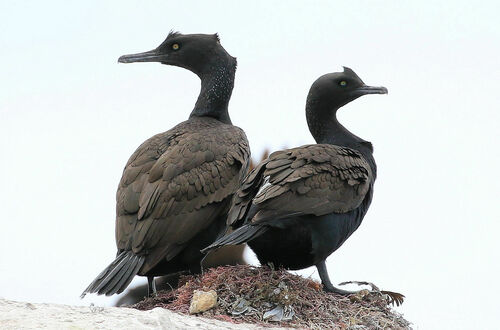
Phalacrocorax neglectus (Wahlberg, 1855)
Phalacrocorax neglectus (Wahlberg, 1855)
This is a description of the physical traits, diet and breeding habits of the bank cormorant Phalacrocorax neglectus.
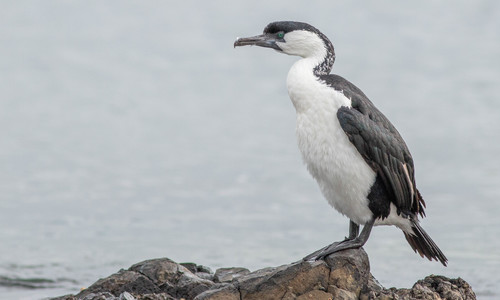
Phalacrocorax fuscescens (Vieillot, 1817)
Phalacrocorax fuscescens (Vieillot, 1817)
Phalacrocorax fuscescens, the black-faced cormorant, is an endemic Australian coastal marine cormorant with distinctive black facial skin and pied plumage.
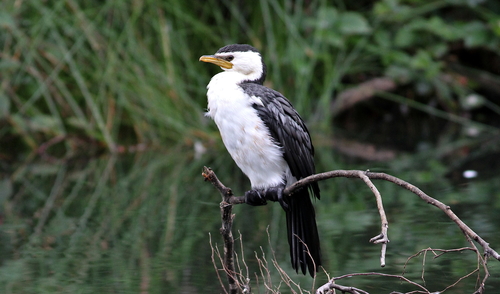
Microcarbo melanoleucos (Vieillot, 1817)
Microcarbo melanoleucos (Vieillot, 1817)
Microcarbo melanoleucos, the little pied cormorant, is a small waterbird found across Australasia and nearby islands with two plumage morphs.
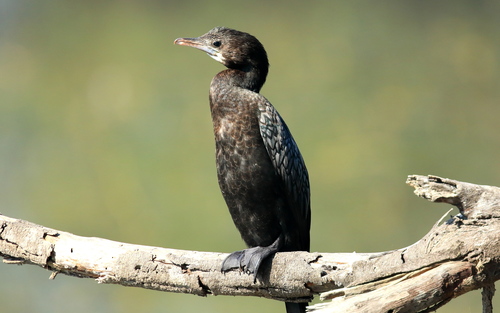
Microcarbo niger (Vieillot, 1817)
Microcarbo niger (Vieillot, 1817)
The little cormorant (Microcarbo niger) is a small waterbird found across South and Southeast Asia that feeds on fish and nests in wetland areas.
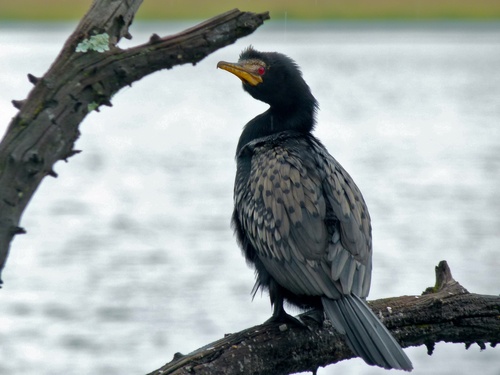
Microcarbo africanus (Gmelin, 1789)
Microcarbo africanus (Gmelin, 1789)
Microcarbo africanus is a small widespread non-threatened cormorant that breeds in freshwater wetlands and quiet coasts.
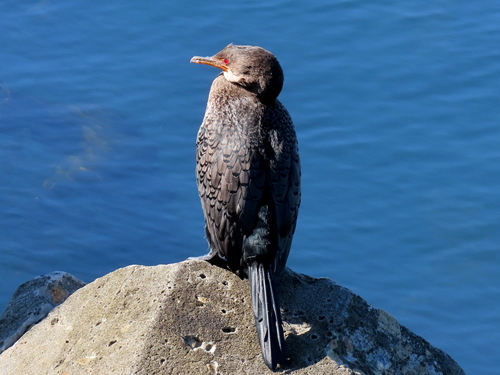
Microcarbo coronatus (Wahlberg, 1855)
Microcarbo coronatus (Wahlberg, 1855)
Microcarbo coronatus, the crowned cormorant, is a small southern African coastal cormorant with distinct plumage features.
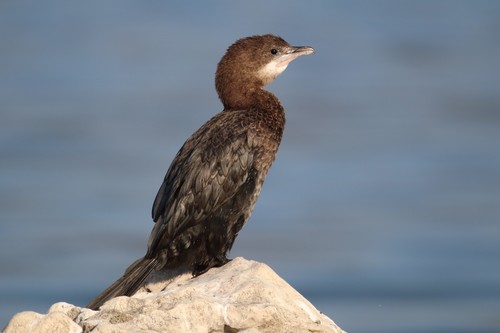
Microcarbo pygmaeus (Pallas, 1773)
Microcarbo pygmaeus (Pallas, 1773)
Microcarbo pygmaeus, the pygmy cormorant, is a small Phalacrocoracidae seabird that breeds in southeast Europe and southwest Asia.
Leucocarbo verrucosus (Cabanis, 1875)
Leucocarbo verrucosus (Cabanis, 1875)
Leucocarbo verrucosus, the Kerguelen shag, is the smallest blue-eyed shag native to the Kerguelen archipelago.
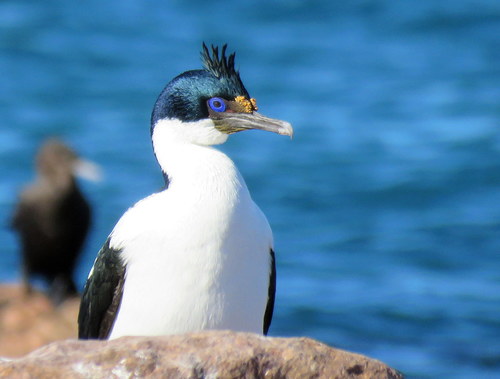
Leucocarbo atriceps bransfieldensis (Murphy, 1936)
Leucocarbo atriceps bransfieldensis (Murphy, 1936)
This is a physical description of the imperial shag Leucocarbo atriceps bransfieldensis covering size, plumage, features and variations across ages and taxa.
Leucocarbo atriceps (King, 1828)
Leucocarbo atriceps (King, 1828)
Leucocarbo atriceps, the imperial shag, is a medium-sized seabird with distinct plumage and physical features that vary by age and season.
Leucocarbo atriceps georgianus (Lonnberg, 1906)
Leucocarbo atriceps georgianus (Lonnberg, 1906)
Leucocarbo atriceps georgianus is a subspecies of imperial shag with distinct plumage and physical features that vary by age and season.
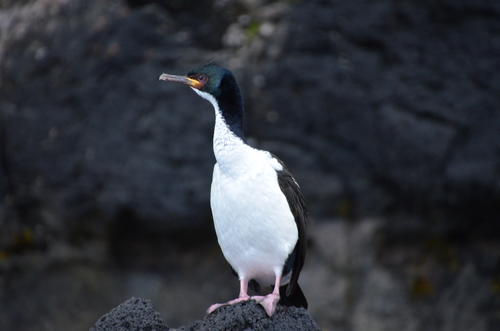
Leucocarbo colensoi (Buller, 1888)
Leucocarbo colensoi (Buller, 1888)
Leucocarbo colensoi, the Auckland shag, is a vulnerable endemic New Zealand cormorant restricted to the Auckland Islands.
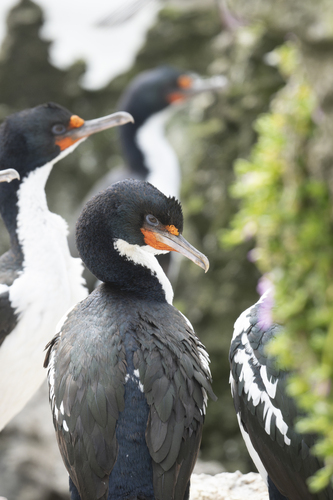
Leucocarbo onslowi (H.O.Forbes, 1893)
Leucocarbo onslowi (H.O.Forbes, 1893)
Leucocarbo onslowi, the Chatham Islands shag, is an endemic non-migratory seabird of New Zealand's Chatham Islands.
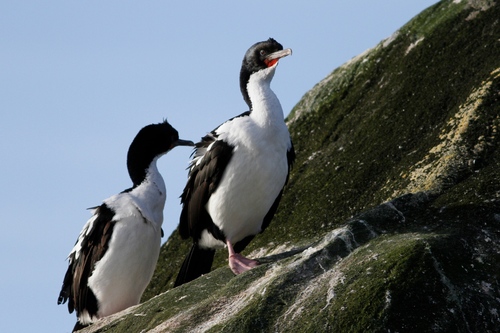
Leucocarbo chalconotus (G.R.Gray, 1845)
Leucocarbo chalconotus (G.R.Gray, 1845)
Leucocarbo chalconotus, the Stewart Island shag, is a dimorphic New Zealand seabird with a heavily reduced population that needs targeted conservation.

Leucocarbo carunculatus (Gmelin, 1789)
Leucocarbo carunculatus (Gmelin, 1789)
Leucocarbo carunculatus is a large non-migratory New Zealand cormorant with an estimated 2022 population of 792.
Related Families
Start Exploring Nature Today
Download iNature for free. 10 identifications on us. No account needed. No credit card required.
Download Free on App Store
