Nyctaginaceae
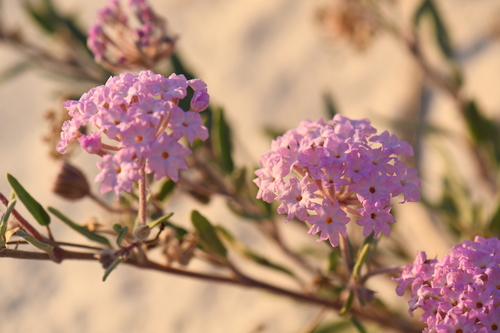
Abronia angustifolia Greene
Abronia angustifolia Greene
Abronia angustifolia is a North American sand-loving plant with fragrant evening-blooming spherical flower clusters, native to arid regions of the US Southwest and northern Mexico.
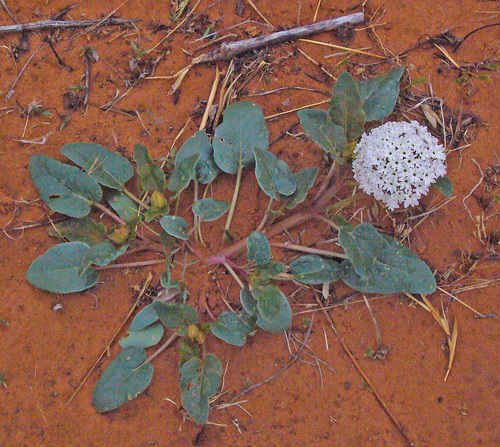
Abronia fragrans Nutt. ex Hook.
Abronia fragrans Nutt. ex Hook.
Abronia fragrans, or sweet sand-verbena, is a North American prairie perennial with cultural and medicinal uses for Indigenous peoples.
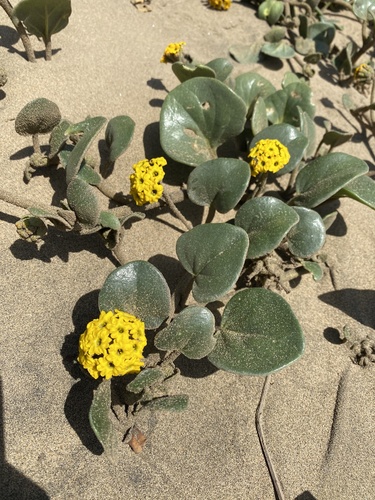
Abronia latifolia Eschsch.
Abronia latifolia Eschsch.
Abronia latifolia is a perennial coastal sand-verbena native to North America's west coast with edible roots and saltwater requirements.
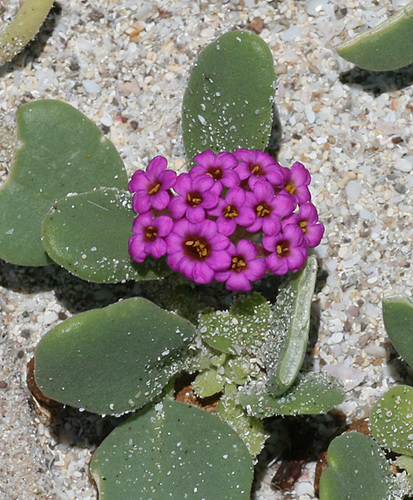
Abronia maritima Nutt. ex S.Watson
Abronia maritima Nutt. ex S.Watson
Abronia maritima, or red sand verbena, is a rare beach-adapted perennial halophyte native to west coast North American dunes.
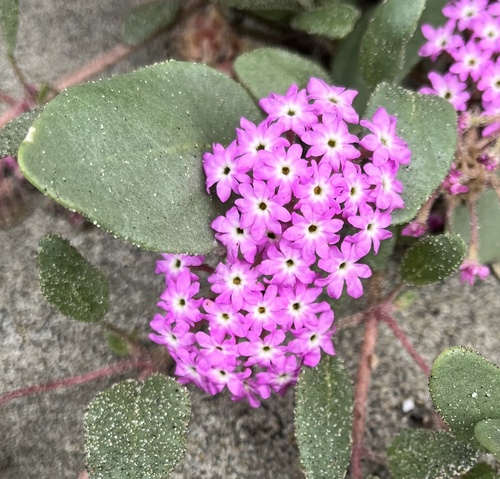
Abronia umbellata Lam.
Abronia umbellata Lam.
Abronia umbellata is a prostrate annual pink sand verbena native to the North American Pacific coast, sometimes used in California native gardening.
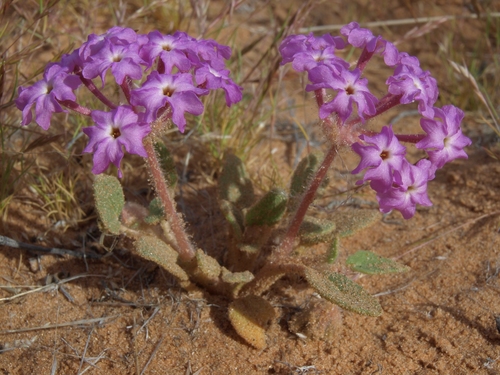
Abronia villosa S.Watson
Abronia villosa S.Watson
Abronia villosa S.Watson is a short hairy sticky annual wildflower with sweet fragrance growing prostrate in sandy deserts and coastlines.
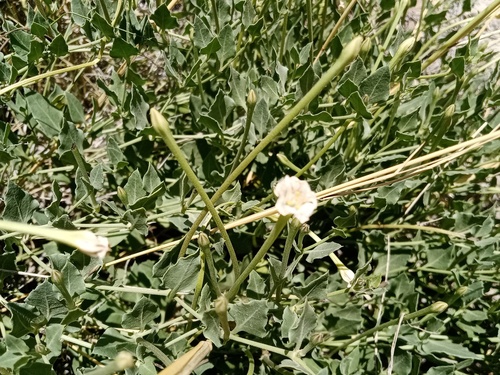
Acleisanthes longiflora A.Gray
Acleisanthes longiflora A.Gray
The lectotype for Acleisanthes longiflora A.Gray, originally mis - designated as holotype, is Wright 310 from Texas in 1849. Gray's protologue cited multiple collections, exsiccatum 599 combines two Wright's materials, and typification needs correction per ICN rules.
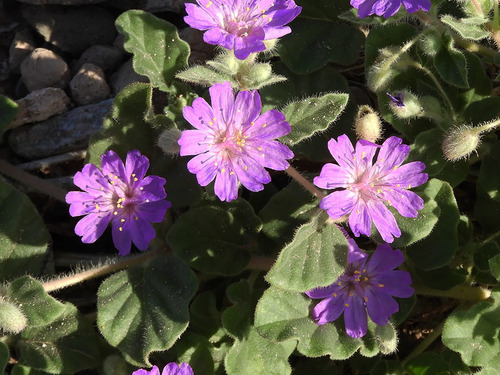
Allionia incarnata L.
Allionia incarnata L.
Allionia incarnata is a flowering Nyctaginaceae plant native to the Americas, with dark pink flowers and three accepted varieties.
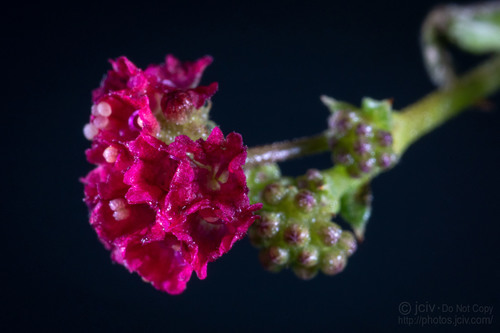
Boerhavia coccinea Mill.
Boerhavia coccinea Mill.
Boerhavia coccinea Mill. is a sprawling perennial herb with uncertain native range, used widely as medicine, food, and animal feed.
Boerhavia diffusa L.
Boerhavia diffusa L.
Boerhavia diffusa L. is a widespread creeping perennial herb with an unconfirmed exact native range across many global regions.
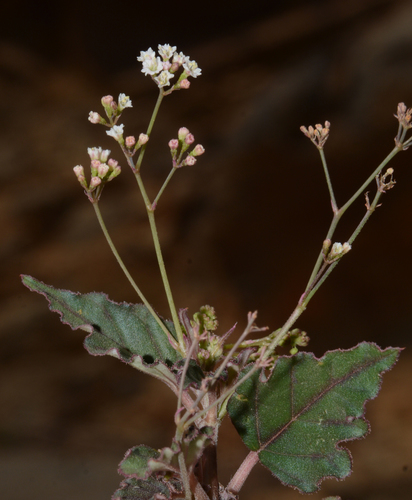
Boerhavia erecta L.
Boerhavia erecta L.
Boerhavia erecta L. is a perennial herb used as traditional medicine, food, and cattle forage in parts of Africa.
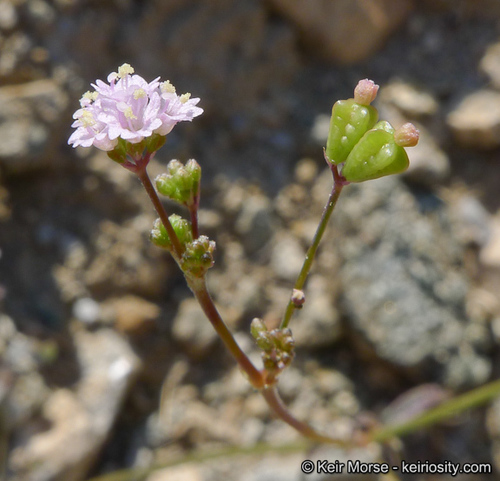
Boerhavia triquetra S.Watson
Boerhavia triquetra S.Watson
Boerhavia triquetra is a small hardy annual herb native to the deserts of southwestern US and northern Mexico.
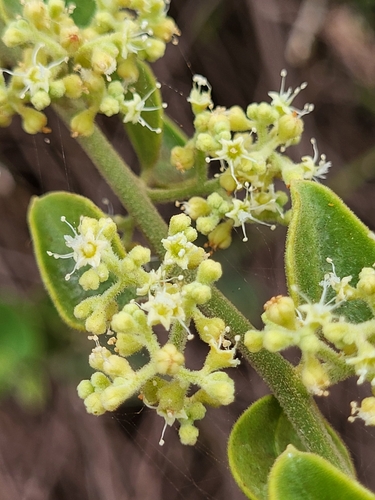
Cryptocarpus pyriformis Kunth
Cryptocarpus pyriformis Kunth
Cryptocarpus pyriformis is the sole species of genus Cryptocarpus, native to Ecuador, Peru and the Galápagos Islands.
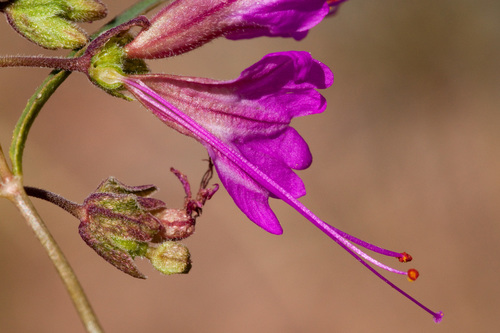
Mirabilis coccinea (Torr.) Benth. & Hook.fil.
Mirabilis coccinea (Torr.) Benth. & Hook.fil.
Scarlet four o'clock (Mirabilis coccinea) is a night-blooming spring wildflower native to the southwestern US and northwestern Mexico.
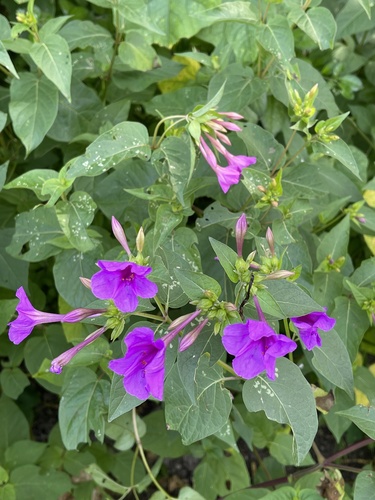
Mirabilis jalapa L.
Mirabilis jalapa L.
Mirabilis jalapa (four o'clock flower) is a colorful herbaceous plant native to the Americas, grown ornamentally and used for food coloring and herbal medicine.
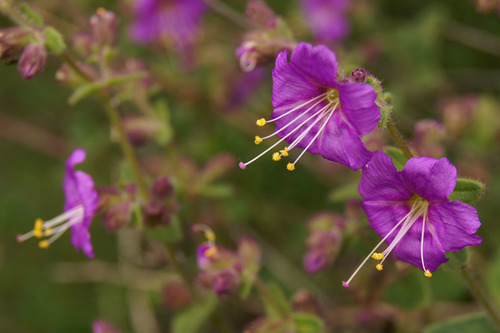
Mirabilis laevis (Benth.) Curran
Mirabilis laevis (Benth.) Curran
Mirabilis laevis (desert wishbone-bush) is a recently redefined four o'clock family flowering plant found in the US Southwest and northwest Mexico.
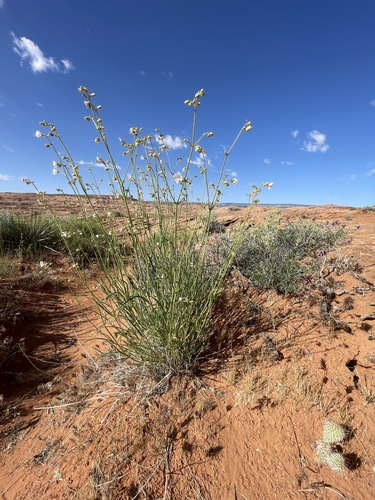
Mirabilis linearis (Pursh) Heimerl
Mirabilis linearis (Pursh) Heimerl
Mirabilis linearis, or narrowleaf four o'clock, is a plant with documented traditional uses by the Zuni people.
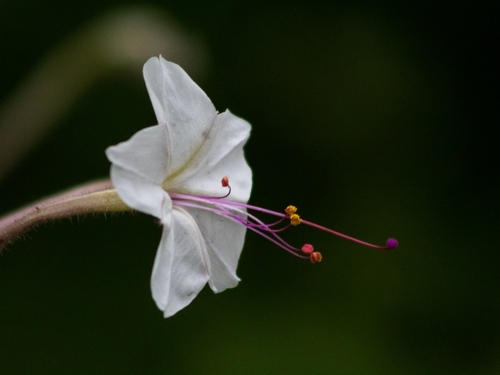
Mirabilis longiflora L.
Mirabilis longiflora L.
Mirabilis longiflora L. is a tender herbaceous perennial native to scrubby canyons and riverbanks of the southwestern US and northern Mexico.
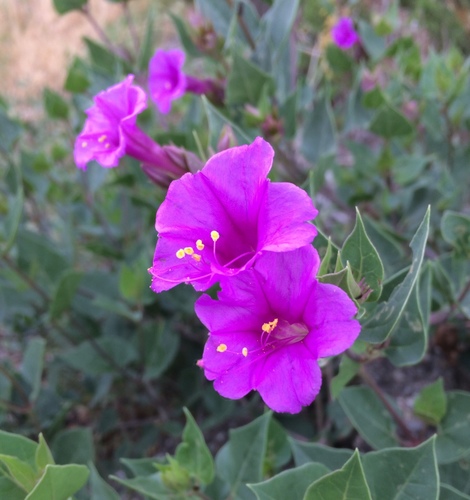
Mirabilis multiflora (Torr.) A.Gray
Mirabilis multiflora (Torr.) A.Gray
Mirabilis multiflora is a perennial herb pollinated by hawkmoths, with traditional medicinal uses among the Zuni people.
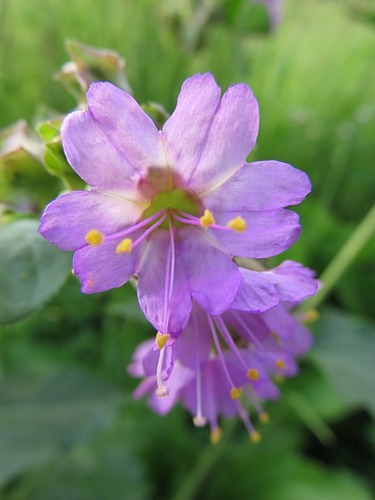
Mirabilis nyctaginea (Michx.) Mac Mill.
Mirabilis nyctaginea (Michx.) Mac Mill.
Mirabilis nyctaginea, wild four o'clock, is a North American four o'clock plant that has traditional medicinal uses by the Skiri Pawnee.
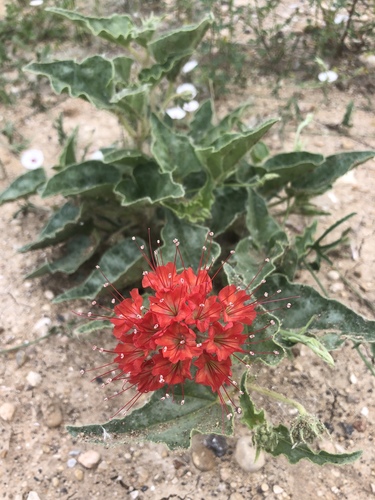
Nyctaginia capitata Choisy
Nyctaginia capitata Choisy
Nyctaginia capitata, devil's bouquet, is the only species in the monotypic genus Nyctaginia of the Nyctaginaceae family, native from southern central USA to northeastern Mexico.
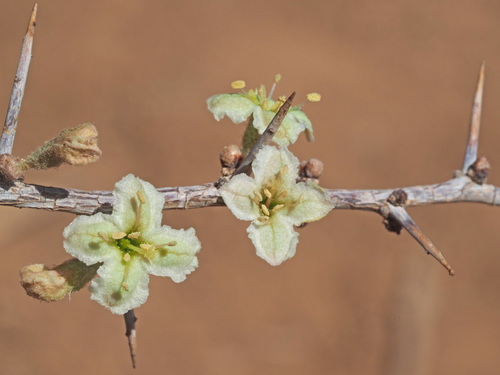
Phaeoptilum spinosum Radlk.
Phaeoptilum spinosum Radlk.
Phaeoptilum spinosum is the only species in genus Phaeoptilum, a drought-resistant fodder shrub found in central Namibia.
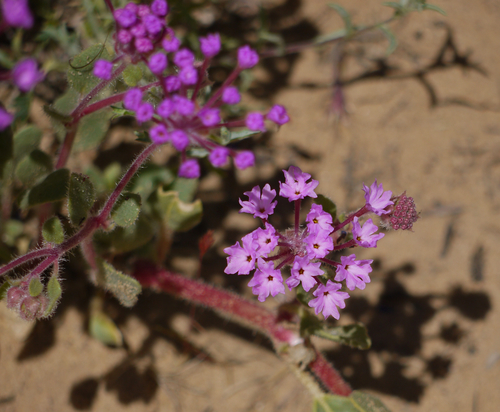
Abronia pogonantha Heimerl
Abronia pogonantha Heimerl
Abronia pogonantha, Mojave sand-verbena, is an annual flowering Nyctaginaceae plant native to California and Nevada.
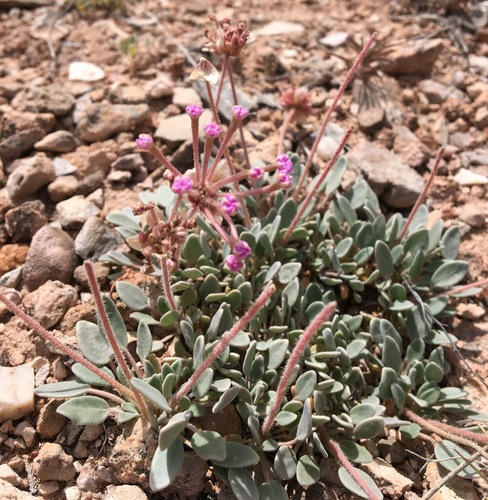
Abronia nana S.Watson
Abronia nana S.Watson
Abronia nana S.Watson is a low-growing sandy-environment adapted flowering plant with fragrant clustered colorful blooms.
Related Families
Start Exploring Nature Today
Download iNature for free. 10 identifications on us. No account needed. No credit card required.
Download Free on App Store
