Muscidae
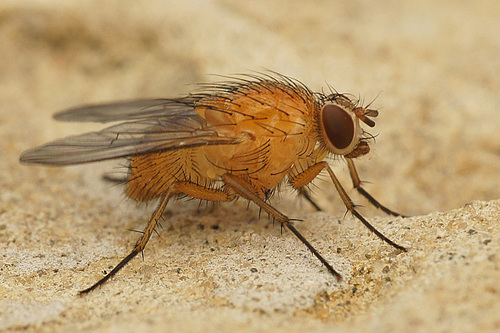
Phaonia pallida (Fabricius, 1787)
Phaonia pallida (Fabricius, 1787)
Phaonia pallida is an orange-bodied fly found in parts of the Palearctic, most often in deciduous woodlands and spruce forest edges.
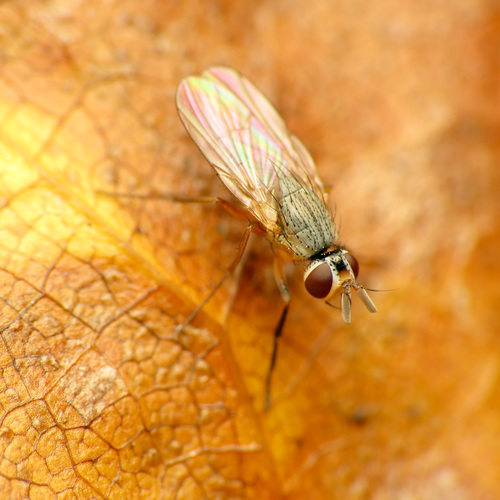
Atherigona reversura Villeneuve, 1936
Atherigona reversura Villeneuve, 1936
Atherigona reversura (bermudagrass stem maggot) is a small insect pest of bermudagrass with a known partial life cycle and current management recommendations.
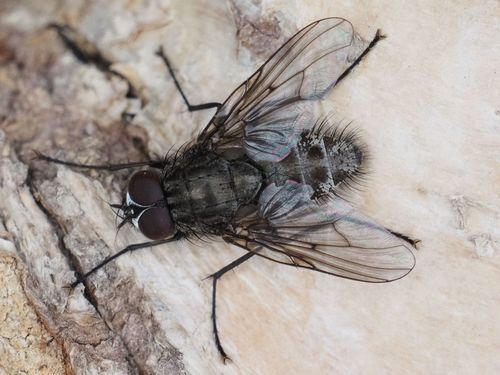
Helina evecta (Harris, 1780)
Helina evecta (Harris, 1780)
Helina evecta (Harris, 1780) is a Muscidae family fly found across parts of Europe, Asia, North Africa, and northern South America.
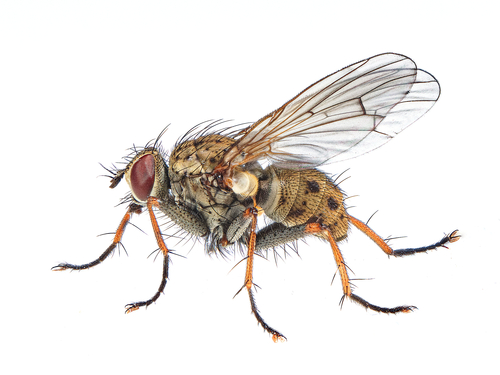
Coenosia tigrina (Fabricius, 1775)
Coenosia tigrina (Fabricius, 1775)
Coenosia tigrina, the hunter fly, is a predatory Muscidae fly found in the Palearctic, with larvae that eat earthworms.
Coenosia agromyzina (Fallén, 1825)
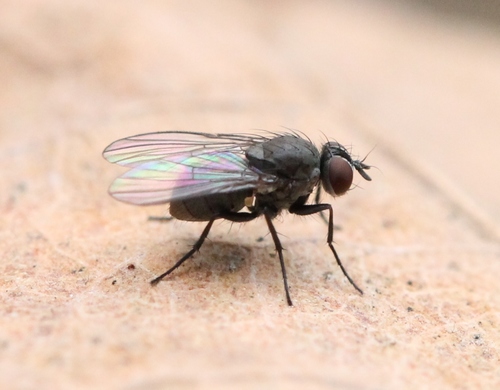
Coenosia agromyzina (Fallén, 1825)
Coenosia agromyzina is a small common fly species found in the Palearctic realm with characteristic dark body coloration.
Pygophora apicalis Schiner, 1868
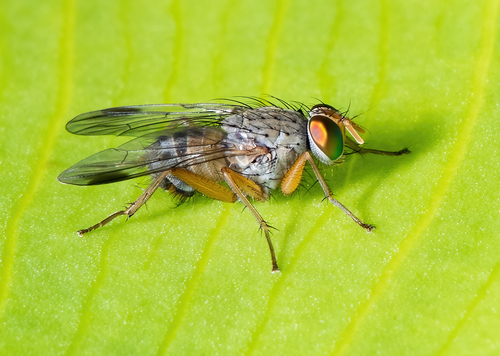
Pygophora apicalis Schiner, 1868
Pygophora apicalis Schiner, 1868 is a fly species with sexually dimorphic traits, presumed predatory adults, and undescribed larvae.
Stomoxys calcitrans (Linnaeus, 1758)
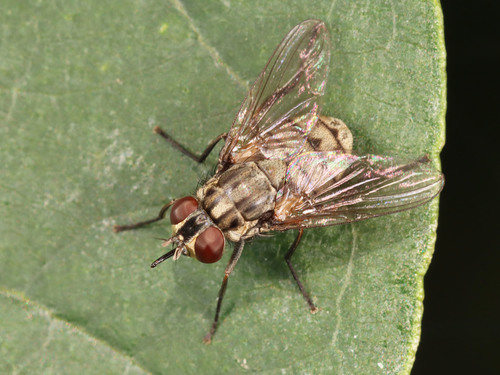
Stomoxys calcitrans (Linnaeus, 1758)
Stomoxys calcitrans, the blood-sucking stable fly, is now widespread globally, thought to originate from Eurasia or Africa.
Musca domestica Linnaeus, 1758
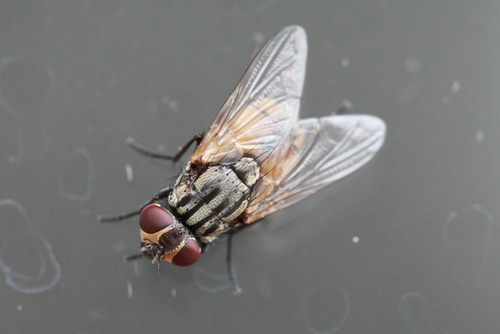
Musca domestica Linnaeus, 1758
This is a full description of the common housefly, Musca domestica Linnaeus, 1758, covering its appearance, distribution, life cycle, and ecology.
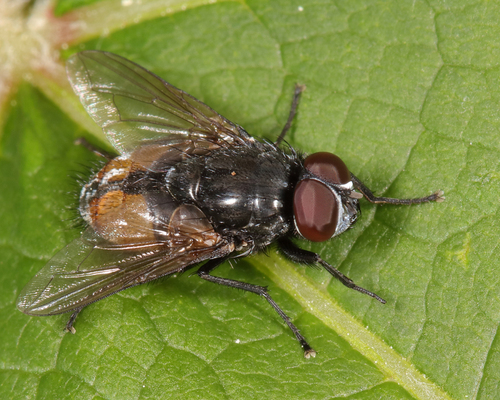
Musca autumnalis De Geer, 1776
Musca autumnalis De Geer, 1776
Musca autumnalis, the face fly, is a fly species related to houseflies that is native to much of Eurasia and northern Africa, and introduced to North America and St. Helena.
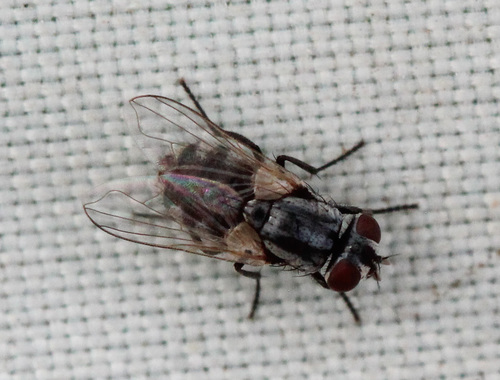
Musca vetustissima Walker, 1849
Musca vetustissima Walker, 1849
Musca vetustissima, the Australian bush fly, is a dung fly that can spread pathogens and prefers breeding in human feces.
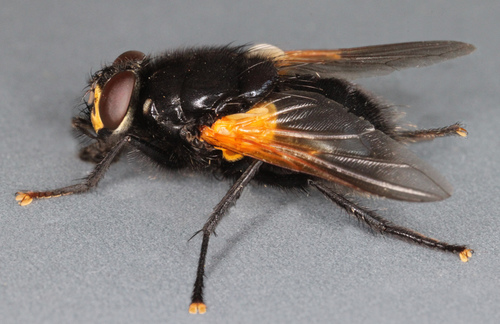
Mesembrina meridiana (Linnaeus, 1758)
Mesembrina meridiana (Linnaeus, 1758)
Mesembrina meridiana is a stout medium-large black fly with orange markings, widespread across Europe, parts of Asia, North Africa, and the Near East.
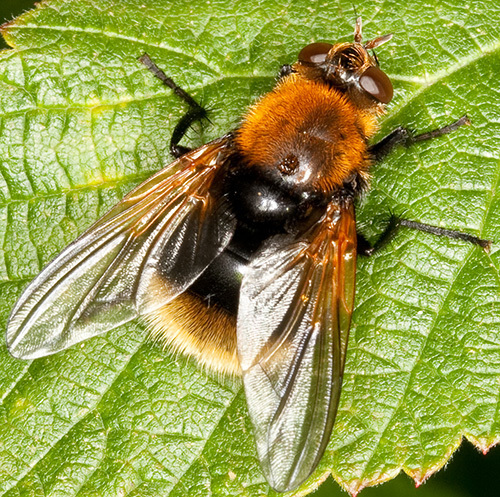
Mesembrina mystacea (Linnaeus, 1758)
Mesembrina mystacea (Linnaeus, 1758)
Mesembrina mystacea is a bumblebee-mimicking fly species found across the Palaearctic realm, with bumblebee-like coloration and sexual dimorphism.
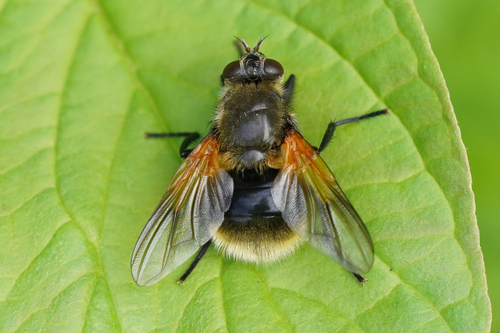
Mesembrina decipiens Loew, 1873
Mesembrina decipiens Loew, 1873
Mesembrina decipiens is a fly species in the Muscidae family with two recognised documented synonyms.
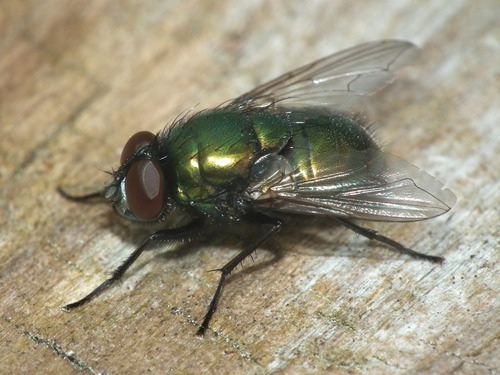
Neomyia cornicina (Fabricius, 1775)
Neomyia cornicina (Fabricius, 1775)
Neomyia cornicina is a common fly species native to the Palaearctic and introduced to the Nearctic.
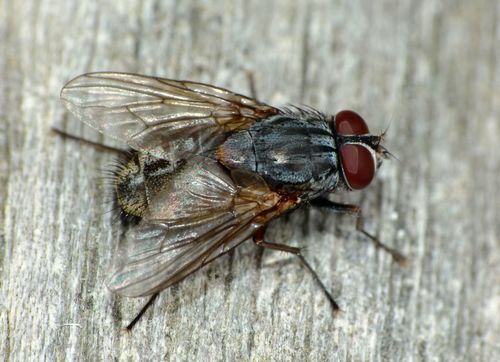
Muscina stabulans (Fallén, 1817)
Muscina stabulans (Fallén, 1817)
Muscina stabulans, the false stable fly, is a muscid fly with distinct physical traits and habitat preferences for rural, natural, and carrion environments.
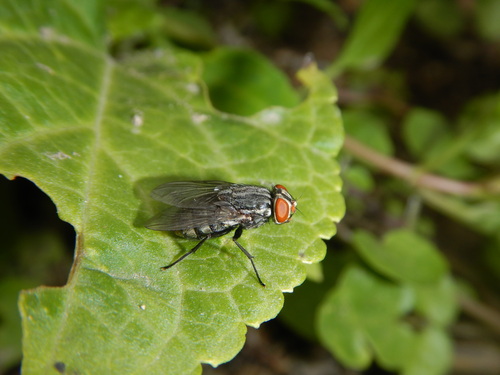
Synthesiomyia nudiseta (Wulp, 1883)
Synthesiomyia nudiseta (Wulp, 1883)
Synthesiomyia nudiseta is a large muscid fly found in tropical/subtropical regions, notable for its large predatory larvae.
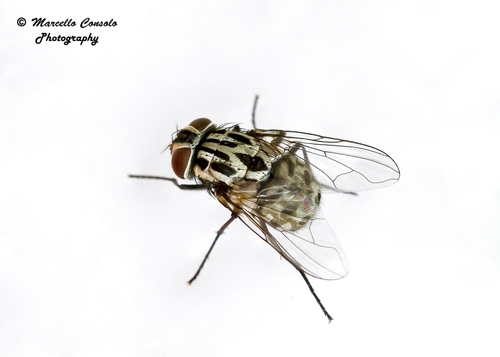
Graphomya maculata (Scopoli, 1763)
Graphomya maculata (Scopoli, 1763)
Graphomya maculata is a widespread fly species with distinct abdominal patterns differing by sex.
Related Families
Start Exploring Nature Today
Download iNature for free. 10 identifications on us. No account needed. No credit card required.
Download Free on App Store
