Mimidae

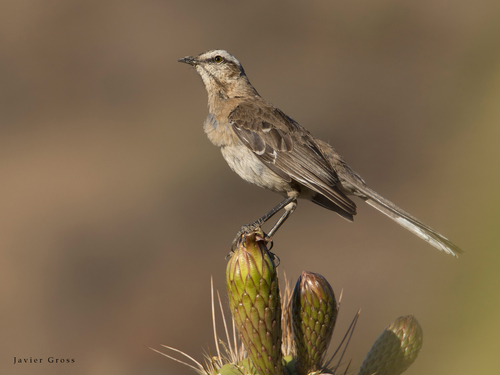
Mimus saturninus (Lichtenstein, 1823)
Mimus saturninus (Lichtenstein, 1823)
Mimus saturninus, the chalk-browed mockingbird, has four subspecies across open habitats in central-eastern South America.
Mimus thenca (Molina, 1782)
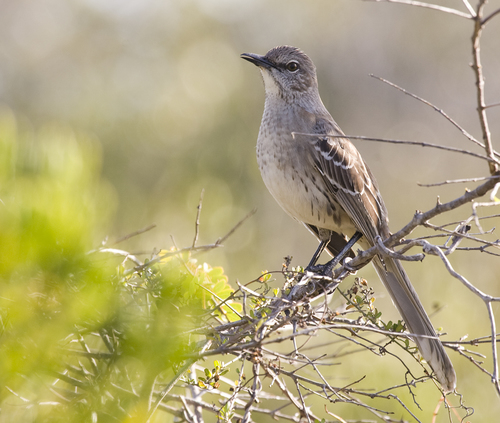
Mimus thenca (Molina, 1782)
Mimus thenca, the Chilean mockingbird, is a 28-29cm bird found in Chile and small parts of Argentina across scrub-dominated habitats.
Mimus gundlachii Cabanis, 1855
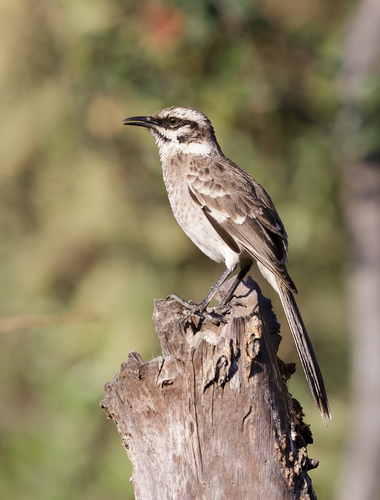
Mimus gundlachii Cabanis, 1855
This is a physical and distribution description of the Bahama mockingbird, Mimus gundlachii.
Mimus longicaudatus Tschudi, 1844
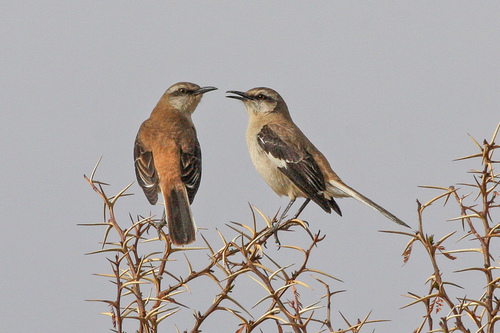
Mimus longicaudatus Tschudi, 1844
Mimus longicaudatus, the long-tailed mockingbird, has four described subspecies found along Ecuador and Peru’s Pacific coast and one inland site.
Mimus dorsalis (Orbigny & Lafresnaye, 1837)
Mimus dorsalis (Orbigny & Lafresnaye, 1837)
Mimus dorsalis, the brown-backed mockingbird, is a bird ranging from Bolivia to northwestern Argentina that inhabits arid landscapes.
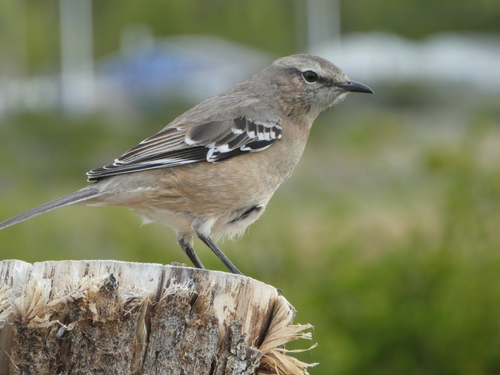
Mimus patagonicus (Orbigny & Lafresnaye, 1837)
Mimus patagonicus (Orbigny & Lafresnaye, 1837)
Mimus patagonicus, the Patagonian mockingbird, is a South American mockingbird found in open habitats of Argentina and Chile.
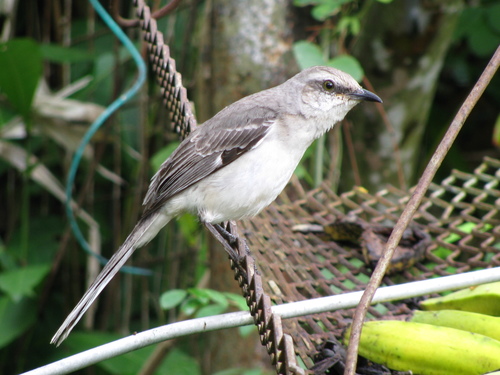
Mimus gilvus (Vieillot, 1808)
Mimus gilvus (Vieillot, 1808)
Mimus gilvus, the tropical mockingbird, is a Neotropical mockingbird with multiple subspecies differing in size and plumage, occupying open lowland to mid-elevation habitats.
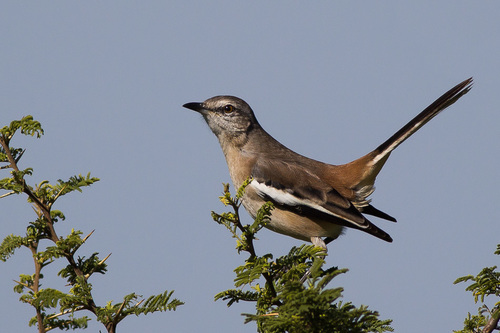
Mimus triurus (Vieillot, 1818)
Mimus triurus (Vieillot, 1818)
Mimus triurus, the white-banded mockingbird, is a bird of South America with distinctive plumage and varied habitat.
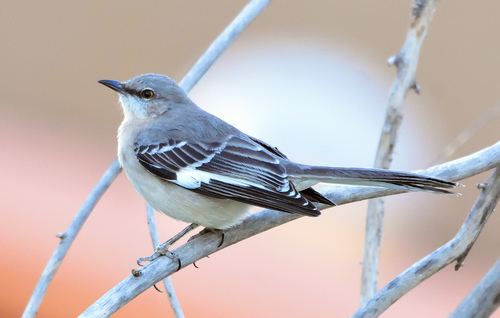
Mimus polyglottos (Linnaeus, 1758)
Mimus polyglottos (Linnaeus, 1758)
This is a detailed physical, measurement, distribution and habitat description of the northern mockingbird, Mimus polyglottos.
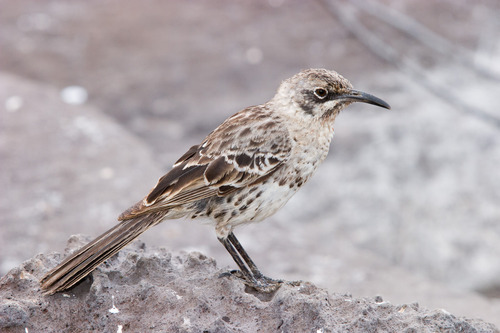
Mimus macdonaldi (Ridgway, 1890)
Mimus macdonaldi (Ridgway, 1890)
Mimus macdonaldi is a Galápagos mockingbird endemic to Española Island, with the largest bill among Galápagos mockingbirds.
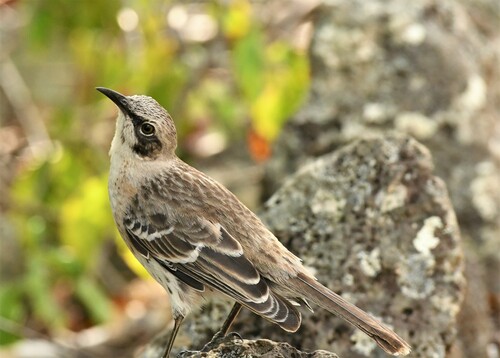
Mimus melanotis (Gould, 1837)
Mimus melanotis (Gould, 1837)
Mimus melanotis, the San Cristóbal mockingbird, is an endemic Galápagos bird found only on San Cristóbal Island.
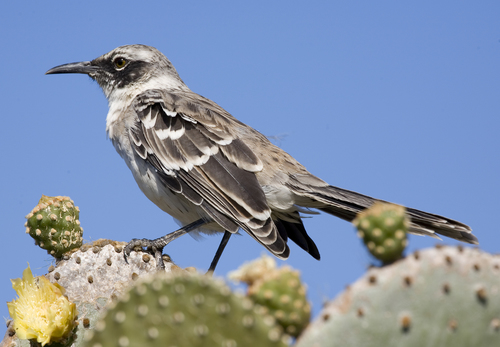
Mimus parvulus (Gould, 1837)
Mimus parvulus (Gould, 1837)
Mimus parvulus, the Galápagos mockingbird, is a widespread omnivorous mockingbird species endemic to the Galápagos Islands.
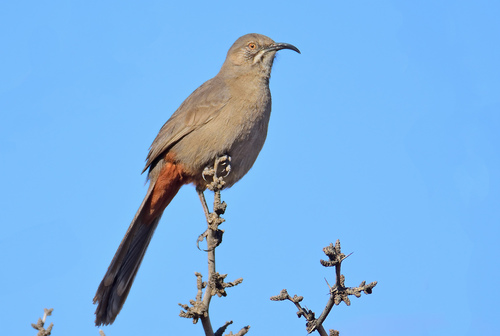
Toxostoma crissale Henry, 1858
Toxostoma crissale Henry, 1858
Toxostoma crissale, the crissal thrasher, is a 32 cm desert bird named for its colored crissum, with a distinctive curved bill and song.
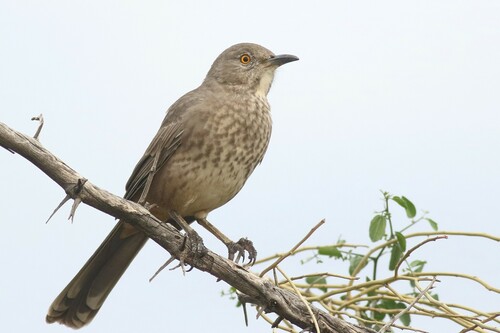
Toxostoma bendirei (Coues, 1873)
Toxostoma bendirei (Coues, 1873)
Bendire's thrasher is a bird species that lives in southwestern US drylands, with two recognized subspecies and key distinguishing features from the similar curve-billed thrasher.
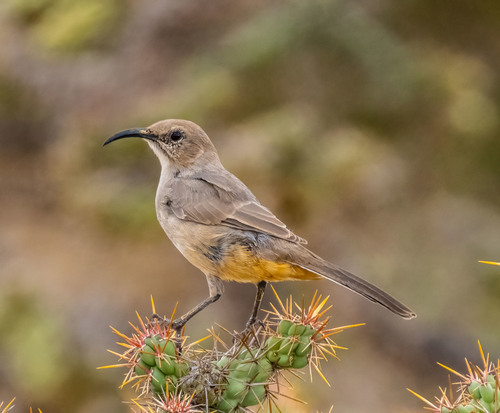
Toxostoma lecontei Lawrence, 1851
Toxostoma lecontei Lawrence, 1851
LeConte's thrasher is a resident desert bird of the southwestern US, currently listed globally as least concern despite local population declines.
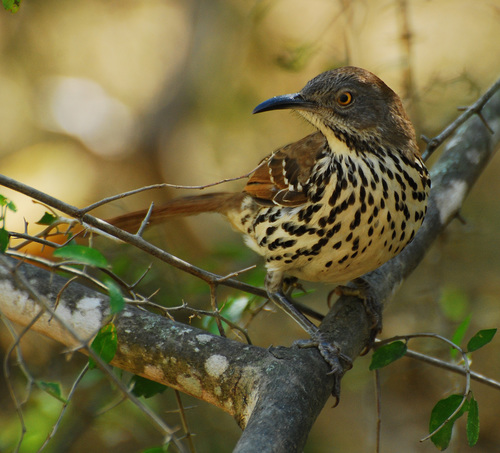
Toxostoma longirostre (Lafresnaye, 1838)
Toxostoma longirostre (Lafresnaye, 1838)
Toxostoma longirostre is a large thrasher resident from southern Texas to central Veracruz, Mexico, with two distinct subspecies.
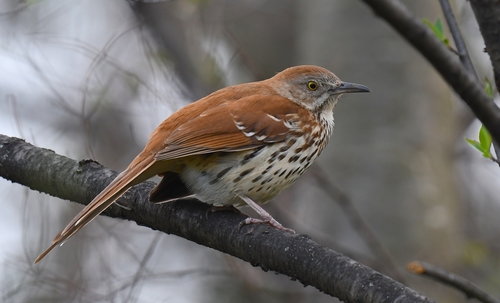
Toxostoma rufum (Linnaeus, 1758)
Toxostoma rufum (Linnaeus, 1758)
Toxostoma rufum, the brown thrasher, is a moderately sized North American passerine bird with two subspecies.
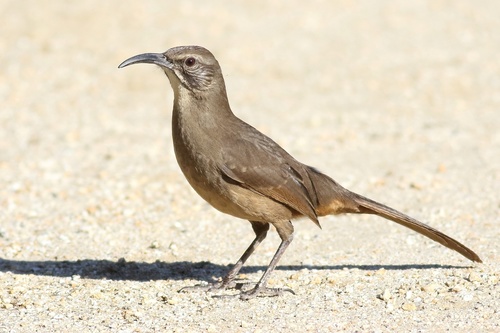
Toxostoma redivivum (Gambel, 1845)
Toxostoma redivivum (Gambel, 1845)
California thrasher (Toxostoma redivivum) is the largest thrasher, a year-round resident bird restricted mainly to California, with a unique dense-shrub niche.
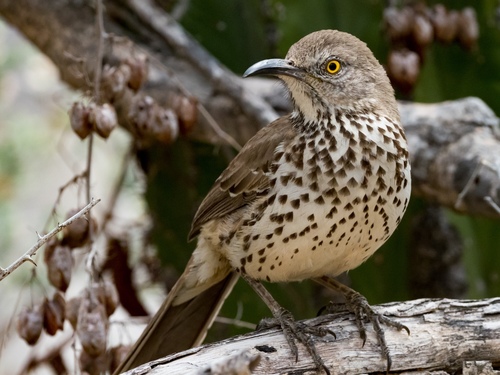
Toxostoma cinereum (Xantus de Vesey, 1860)
Toxostoma cinereum (Xantus de Vesey, 1860)
Toxostoma cinereum, the gray thrasher, is a medium-sized spotted bird native mostly to Baja California, inhabiting arid open landscapes.
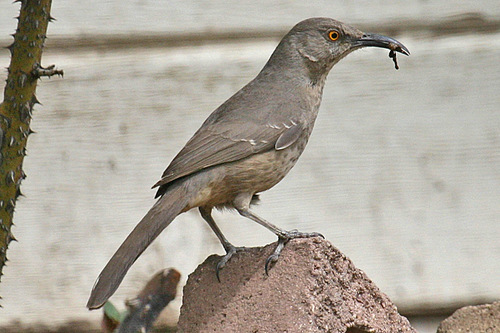
Toxostoma curvirostre (Swainson, 1827)
Toxostoma curvirostre (Swainson, 1827)
Toxostoma curvirostre, the curve-billed thrasher, is a medium-sized bird found in the southwestern US and most of Mexico.
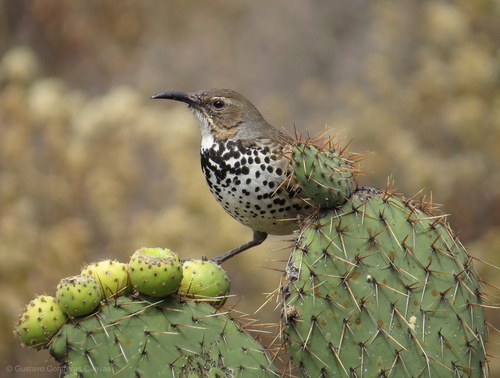
Toxostoma ocellatum (P.L.Sclater, 1862)
Toxostoma ocellatum (P.L.Sclater, 1862)
Toxostoma ocellatum, the ocellated thrasher, is a brown-spotted bird native to different regions of Mexico.
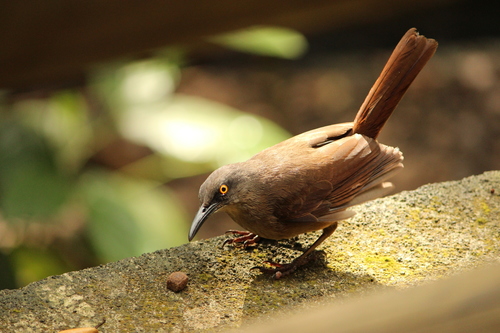
Cinclocerthia ruficauda (Gould, 1836)
Cinclocerthia ruficauda (Gould, 1836)
Cinclocerthia ruficauda, the brown trembler, is a brown bird with four subspecies distributed across the Lesser Antilles.
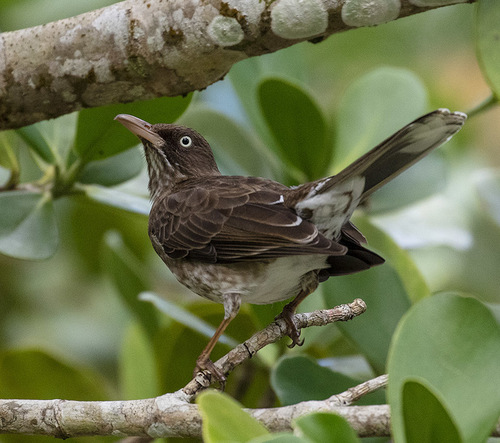
Margarops fuscatus (Vieillot, 1808)
Margarops fuscatus (Vieillot, 1808)
Pearly-eyed thrasher is the largest Mimidae species found across the West Indies, an aggressive omnivore that competes for nesting sites with Puerto Rican amazons.
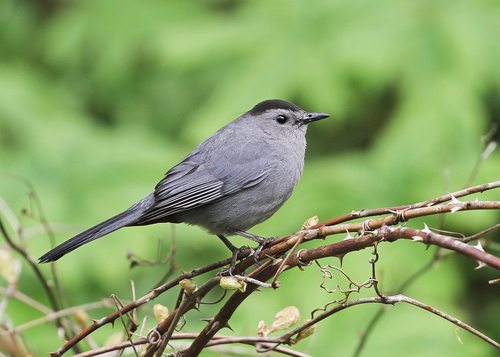
Dumetella carolinensis (Linnaeus, 1766)
Dumetella carolinensis (Linnaeus, 1766)
Dumetella carolinensis (gray catbird) is a North American migratory bird with distinct plumage, found in dense shrubby habitats.
Related Families
Start Exploring Nature Today
Download iNature for free. 10 identifications on us. No account needed. No credit card required.
Download Free on App Store
