Meliphagidae
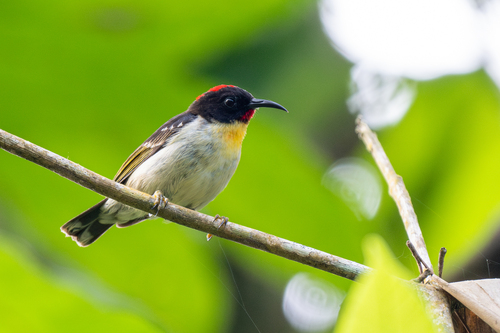
Myzomela jugularis Peale, 1849
Myzomela jugularis Peale, 1849
Myzomela jugularis, the sulphur-breasted myzomela, is Fiji's smallest endemic resident bird found in various forest and human-altered habitats.
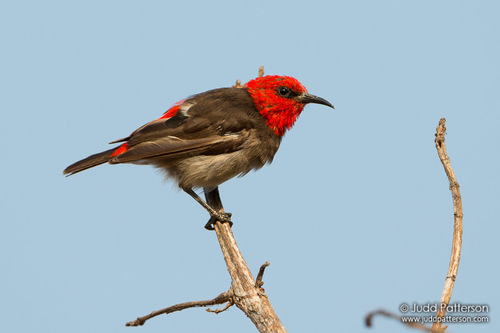
Myzomela erythrocephala Gould, 1840
Myzomela erythrocephala Gould, 1840
Myzomela erythrocephala, the red-headed myzomela, is a small sexually dimorphic mangrove-specialist honeyeater found in northern Australia and New Guinea.
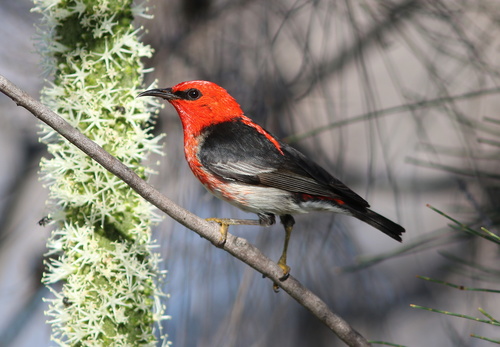
Myzomela sanguinolenta (Latham, 1801)
Myzomela sanguinolenta (Latham, 1801)
Myzomela sanguinolenta, the scarlet myzomela, is the smallest Australian native honeyeater found along Australia’s east coast.
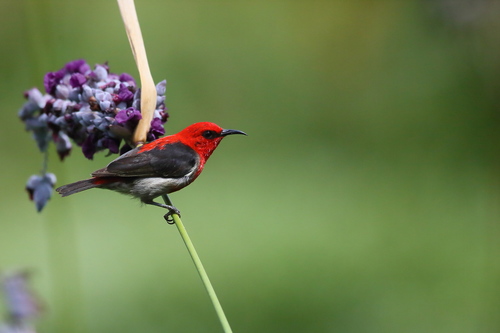
Myzomela chloroptera Walden, 1872
Myzomela chloroptera Walden, 1872
Myzomela chloroptera, the Sulawesi myzomela, is an Indonesian endemic bird in the honeyeater family.
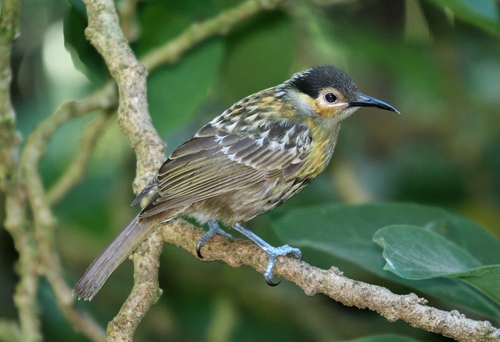
Xanthotis macleayanus (E.P.Ramsay, 1875)
Xanthotis macleayanus (E.P.Ramsay, 1875)
Macleay's honeyeater is an Australian-endemic honeyeater found only in a restricted range of northern Queensland.
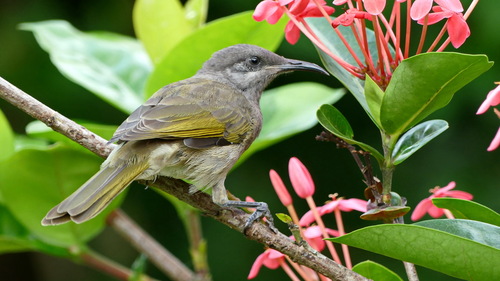
Lichmera incana (Latham, 1790)
Lichmera incana (Latham, 1790)
Lichmera incana, the grey-eared honeyeater, is a small New Caledonian and Vanuatu honeyeater with distinct plumage and nesting habits.
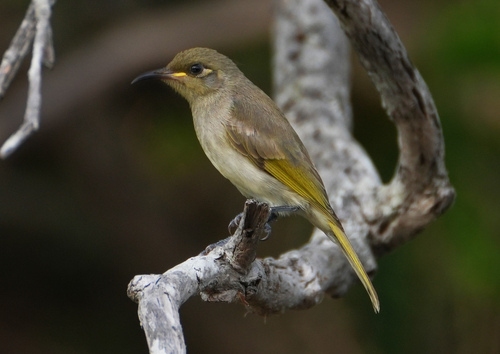
Lichmera indistincta (Vigors & Horsfield, 1827)
Lichmera indistincta (Vigors & Horsfield, 1827)
The brown honeyeater (Lichmera indistincta) is a nectar-eating Meliphagidae bird found across Australia, New Guinea and Indonesia.
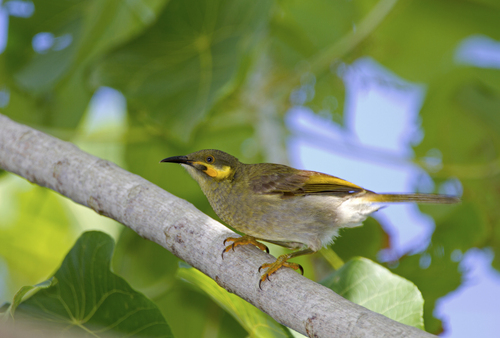
Foulehaio carunculatus (J.F.Gmelin, 1788)
Foulehaio carunculatus (J.F.Gmelin, 1788)
Foulehaio carunculatus is a Central Pacific-endemic honeyeater once considered conspecific with two related species.
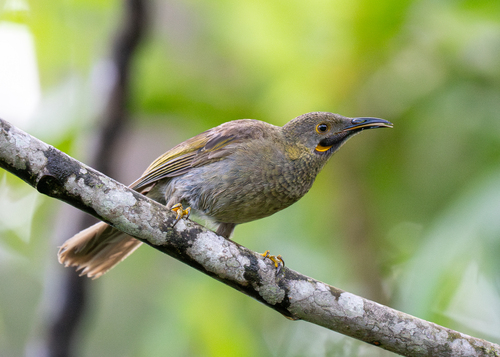
Foulehaio procerior (Finsch & Hartlaub, 1867)
Foulehaio procerior (Finsch & Hartlaub, 1867)
Foulehaio procerior, the kikau or western wattled honeyeater, is a Fijian-endemic honeyeater species once lumped with two related species.
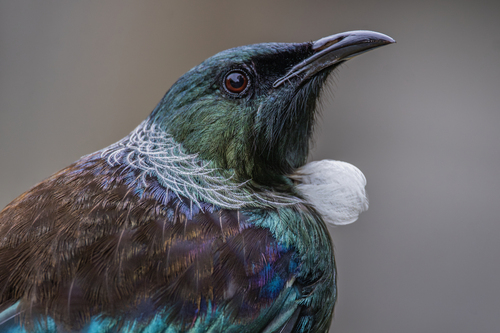
Prosthemadera novaeseelandiae (J.F.Gmelin, 1788)
Prosthemadera novaeseelandiae (J.F.Gmelin, 1788)
Prosthemadera novaeseelandiae, the tūī, is a large New Zealand native honeyeater with distinctive plumage and aggressive territorial behaviour.
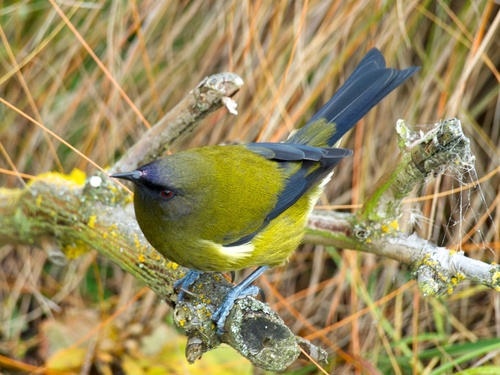
Anthornis melanura (Sparrman, 1786)
Anthornis melanura (Sparrman, 1786)
Anthornis melanura, the New Zealand bellbird, is a medium honeyeater native to New Zealand's islands.
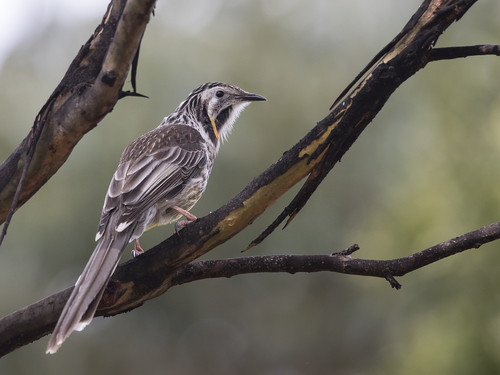
Anthochaera paradoxa (Daudin, 1800)
Anthochaera paradoxa (Daudin, 1800)
Anthochaera paradoxa, the yellow wattlebird, is the largest honeyeater, endemic to Tasmania with a wide range of habitats.
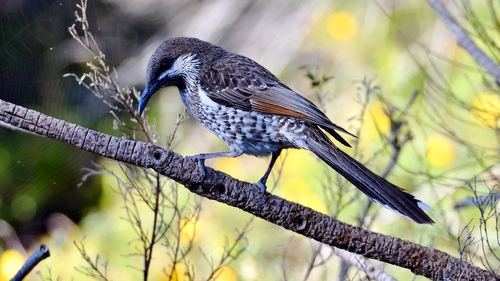
Anthochaera lunulata Gould, 1838
Anthochaera lunulata Gould, 1838
Anthochaera lunulata, the western wattlebird, is a large honeyeater found in the high rainfall zone of southwestern Australia.
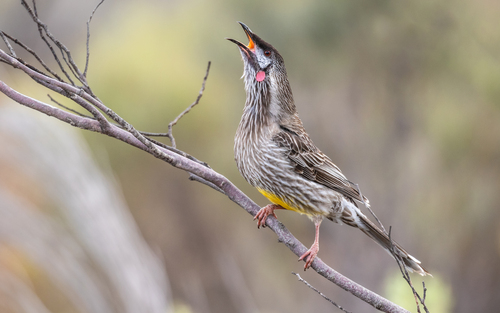
Anthochaera carunculata (Shaw, 1790)
Anthochaera carunculata (Shaw, 1790)
Anthochaera carunculata, the red wattlebird, is a large Australian honeyeater with distinctive pink wattles, found in open eucalypt woodland and forests.
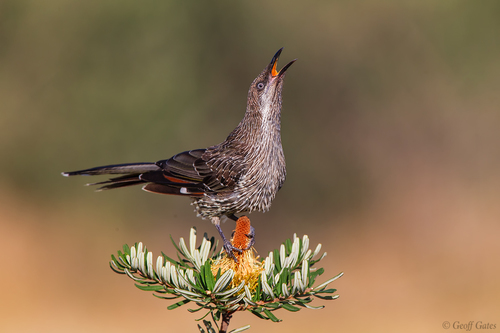
Anthochaera chrysoptera (Latham, 1801)
Anthochaera chrysoptera (Latham, 1801)
Anthochaera chrysoptera, the little wattlebird, is the smallest wattlebird, lacking wattles, found in a range of Australian woodlands and gardens.

Anthochaera phrygia (Shaw, 1794)
Anthochaera phrygia (Shaw, 1794)
Anthochaera phrygia, the regent honeyeater, is a boldly patterned Australian bird with a greatly reduced, fragmented range after 2019–2020 bushfires.
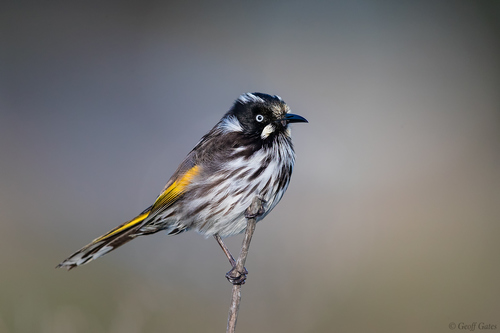
Phylidonyris novaehollandiae (Latham, 1790)
Phylidonyris novaehollandiae (Latham, 1790)
The New Holland honeyeater (Phylidonyris novaehollandiae) is an active Australian honeyeater that feeds mainly on nectar and pollinates native plants.
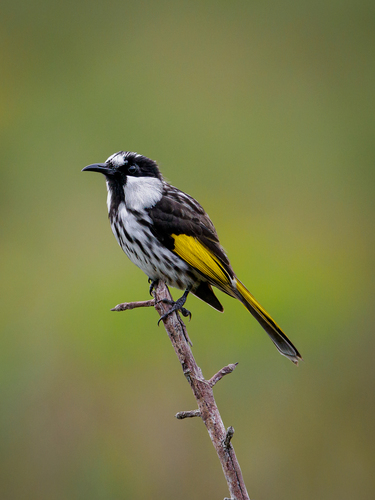
Phylidonyris niger (Bechstein, 1811)
Phylidonyris niger (Bechstein, 1811)
The white-cheeked honeyeater is a medium-sized black and white honeyeater endemic to eastern and southwestern Australia.
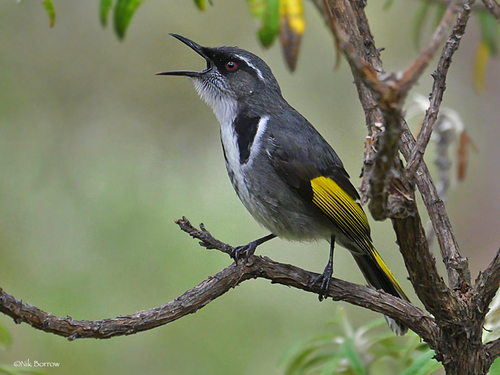
Phylidonyris pyrrhopterus (Latham, 1801)
Phylidonyris pyrrhopterus (Latham, 1801)
The crescent honeyeater is a Least Concern passerine bird native to southeastern Australia, preferring dense vegetation.
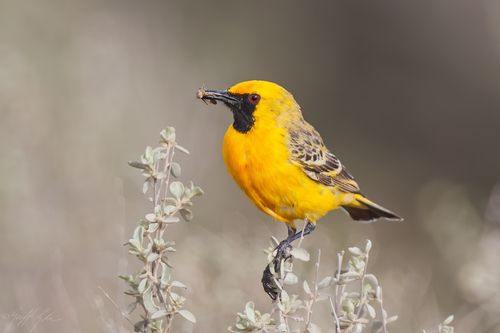
Epthianura aurifrons Gould, 1838
Epthianura aurifrons Gould, 1838
The orange chat (Epthianura aurifrons) is a small nomadic songbird endemic to Australia, living mainly in arid and semi-arid saline habitats.
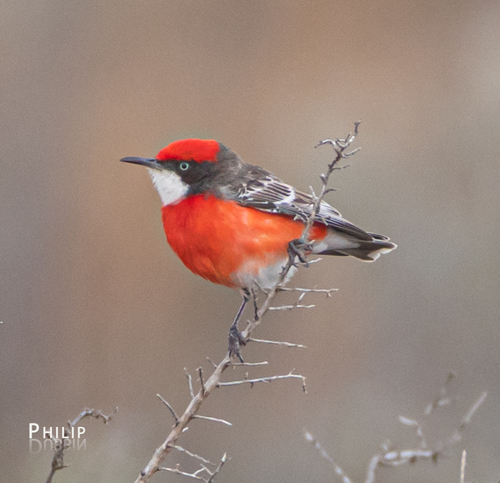
Epthianura tricolor Gould, 1841
Epthianura tricolor Gould, 1841
Epthianura tricolor, the crimson chat, is a small nomadic bird native to arid and semi-arid regions of Australia.
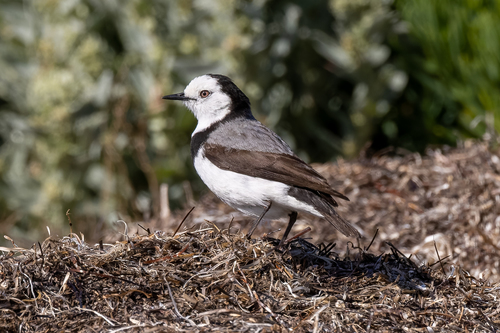
Epthianura albifrons (Jardine & Selby, 1828)
Epthianura albifrons (Jardine & Selby, 1828)
Epthianura albifrons, the white-fronted chat, is an Australian endemic bird found in open low vegetation habitats across southern Australia.
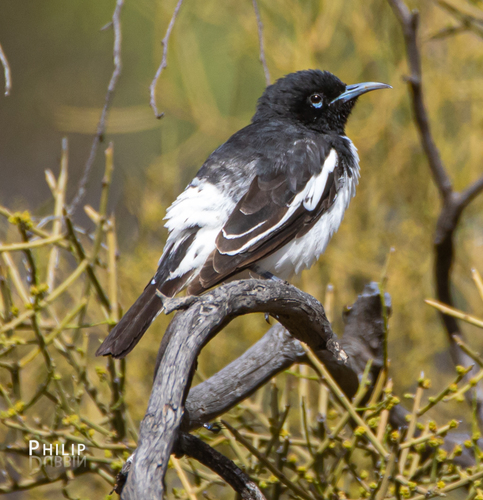
Certhionyx variegatus R.Lesson, 1830
Certhionyx variegatus R.Lesson, 1830
Certhionyx variegatus (pied honeyeater) is a mid-sized Australian honeyeater found in arid and semi-arid zones.
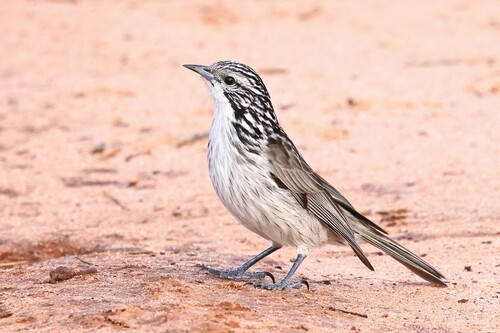
Plectorhyncha lanceolata Gould, 1838
Plectorhyncha lanceolata Gould, 1838
Plectorhyncha lanceolata, the striped honeyeater, is a medium Australian honeyeater found across eastern Australia in varied habitats.
Related Families
Start Exploring Nature Today
Download iNature for free. 10 identifications on us. No account needed. No credit card required.
Download Free on App Store
